
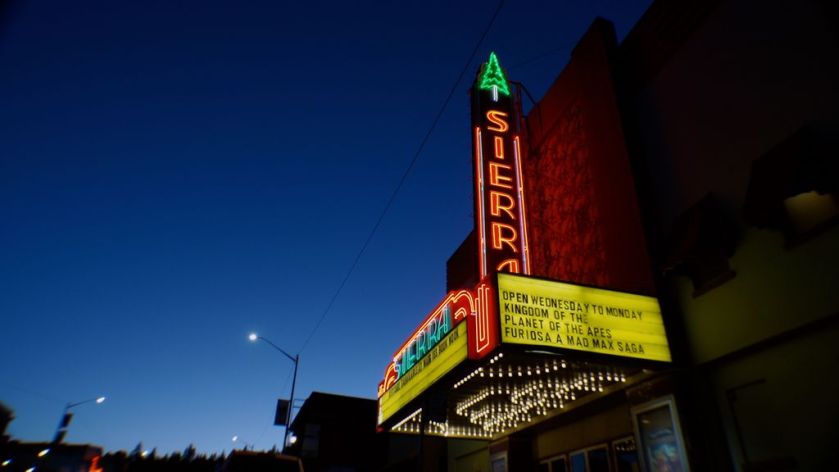
Rustin Thompson’s “The Last Picture Shows” is a heartfelt journey across the American West in search of something that once sat at the center of countless small towns: the movie theater. Traveling 10,825 miles through 10 states and visiting 123 theaters, Thompson documents what remains of a fading piece of American culture. Along the way, he finds abandoned cinemas slowly being reclaimed by nature, once grand movie houses falling apart, theaters that have recently closed, and a handful of remarkable places still alive because of the people determined to save them.
The documentary is at its best when it simply lets these theaters and their caretakers tell their stories. The interviews with longtime theater owners are especially poignant. These people are not just running businesses, but many see themselves as guardians of their communities’ history. They talk about their theaters with the kind of affection usually reserved for family members, and it becomes clear that keeping the doors open is about much more than selling tickets. It is about preserving a gathering place, a piece of Main Street Americana, and a shared experience that has slowly disappeared.
Thompson fills the film with beautiful images of old marquees, fading neon signs, empty auditoriums, and forgotten movie palaces. There is a real sense of nostalgia in seeing these spaces frozen in time. At the same time, the repeated images of boarded-up windows, abandoned buildings, and theaters left to decay carry with them a tinge of sadness. It is difficult not to feel a sense of loss watching these once vibrant places reduced to rubble or left to the elements.
The film also connects the decline of these theaters to a larger shift in how we experience movies. Streaming has made films more accessible than ever, but it has also changed the tradition of sitting in a dark room with strangers and sharing laughter, fear, and emotion together. This documentary understands that something important is lost when watching a movie becomes a solitary activity at home instead of a communal event.
Thompson thoughtfully weaves in references to Peter Bogdanovich’s 1971 classic “The Last Picture Show,” creating a connection between the disappearing movie houses of the past and the uncertain future facing theatrical exhibition today. The documentary explores the challenges independent theaters face from streaming, corporate consolidation, and changing audience habits, but it avoids becoming completely hopeless and negative. Some theaters are surviving through creative solutions, including nonprofit models, community support, special events, and the determination of people who refuse to let these historic spaces vanish.
There is not a lot of complexity to the film’s structure, and at times the repeated shots of abandoned theaters and the somber music make its melancholy message feel heavy-handed. The real strength and sincerity of the documentary comes from the passionate theater owners who keep these places alive and remind us why they matter.
“The Last Picture Shows” feels like a love letter to movie theaters and the magic of watching films on the big screen. It is a beautifully nostalgic and often bittersweet portrait of a disappearing American tradition, but it is also a hopeful reminder that as long as people care enough to preserve these spaces, the movie house can still be a place of wonder, connection, and community.
By: Louisa Moore


So sad.
LikeLike