
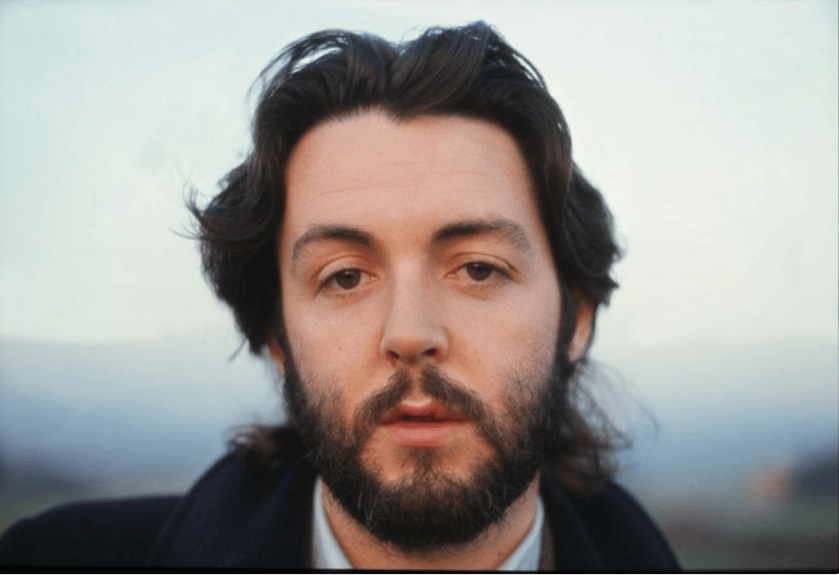
Morgan Neville’s documentary “Man on the Run” picks up in 1970, right after The Beatles fall apart and Paul McCartney finds himself at a pretty low point. Despite being one of the biggest musicians on the planet, he’s struggling with depression, drinking too much, and wondering if he’ll ever write another great song. With his future suddenly uncertain, McCartney decides to start over, forming the band Wings with his wife Linda and trying to prove he can make it without the infamous band that made him a superstar.
Rather than retreading familiar Beatles history, the documentary focuses on McCartney’s often bumpy journey into his next chapter. Wings gets off to a rough start, facing plenty of criticism and skepticism, while McCartney struggles to find his footing as a bandleader. The film follows the group through its growing pains, legal troubles, personal setbacks, and eventual success with “Band on the Run.”
McCartney is a fantastic subject and is surprisingly open about the experience, reflecting on his insecurities, his complicated relationship with John Lennon, and the fear that his best days might already be behind him. He’s also willing to laugh at himself, which gives the film a welcome sense of humor and keeps it from feeling like a stuffy music history lesson.
Neville skips the usual dry talking head interviews in favor of a lively mix of archival footage, vintage audio, rare home movies, and Linda McCartney’s personal photographs. The result feels less like a traditional biography and more like flipping through an old family album, complete with all the messy, unpredictable moments that come with it. Footage of Paul and Linda on their Scottish farm is especially lovely, as are glimpses of the band recording in Lagos. The fast, creative editing keeps things moving, capturing the playful, restless energy that has always been part of McCartney’s personality.
Linda is a particularly important part of the story, and the film gives her the credit she deserves. She wasn’t simply standing by her husband during a difficult time, but she helped him get through it and became an integral part of Wings despite the criticism she faced for her musical abilities. Their relationship gives the documentary much of its heart, and it’s refreshing to see her contributions treated as more than a footnote in Paul’s career.
Neville sometimes plays things a little too safely. McCartney’s struggles get plenty of attention, but the film is less interested in exploring some of the less flattering aspects of his time with Wings (including complaints about his controlling leadership and the frustrations of former band members). For all its personal moments, it occasionally feels more like a carefully managed celebration than a truly unfiltered portrait. It’s not an overt puff piece, but it would’ve been a whole lot more interesting if Neville had chosen to explore more of the negative aspects of McCartney’s life.
There’s still a lot to enjoy here. The archival material is terrific, McCartney’s candor makes him more relatable, and the focus on his post-Beatles years offers a refreshing change from the endless retelling of the band’s breakup. “Man on the Run” may not dig as deeply as it could, but it’s an entertaining (and often touching) look at a musician trying to figure out what comes next, and discovering that he still has plenty of great music left in him.
By: Louisa Moore

