
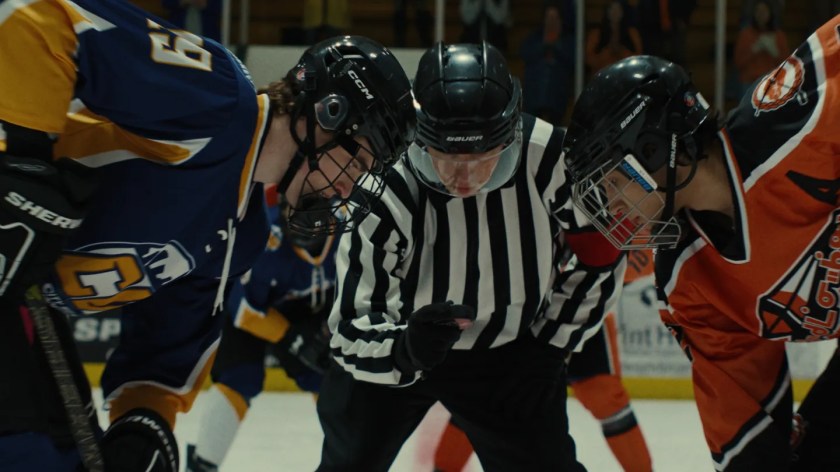
“Smudge the Blades” feels like a familiar sports movie that has finally found a story worth telling in a different setting. There’s a little bit of “The Mighty Ducks” and “The Bad News Bears” in its DNA, from a struggling youth team, an unlikely coach, plenty of attitude, and a community that slowly starts pulling together. But director, writer, and actor Cody Lightning takes that familiar formula to the ice rinks of Northern Alberta and gives it a distinctly Indigenous perspective.
The Treaty 6 Blades are a U-18 team of Indigenous teenagers trying to survive their final year of eligibility. Their coach (Ed Helms) is hardly a model of inspiration, and things get worse when the team is kicked out of its league. Enter the local Zamboni driver (Lightning) who offers to take over as coach. His motives aren’t exactly noble at first because he’s only hoping to get closer to hockey mom Chanelle Okimâw (Jana Schmieding), but somewhere along the way, he starts taking the kids and the team seriously.
That’s where the movie becomes more interesting than its familiar setup suggests. These aren’t interchangeable underdog characters waiting for a big game to teach them a life lesson, but the players have their own personalities, relationships, and real world problems that feel authentic. The film makes room for details that feel specific to their community, but Lightning isn’t in your face with it. It’s like when one player smudges his hockey equipment and brings an Indigenous cultural practice right into the middle of a sports movie, and does so without treating it like a novelty.
That cultural specificity makes the film feel different from other sports underdog stories. Lightning doesn’t simply put Indigenous characters into a conventional hockey story, but puts Indigenous life at the center of the story. Hockey becomes more than a sport for these kids, but a place to belong, a source of structure, and a surrogate family when everything outside the rink feels unstable. The film also isn’t afraid to acknowledge the harder realities surrounding these kids, including generational trauma, difficult home environments, and the systemic double standards they encounter in organized sports.
And yet, this isn’t a relentlessly heavy movie. It’s raunchy, funny, occasionally ridiculous, and clearly having fun with the genre. The cast helps a lot, bringing plenty of personality and genuine warmth to balance out all the crude jokes and dysfunctional behavior.
The hockey itself is another pleasant surprise although there isn’t as much of it as you might expect. When the movie gets on the ice, it’s energetic and entertaining (much of the cast are also actual hockey players, and it shows). Lightning also trusts his audience enough not to water down the hockey terminology, which makes it especially fun for people who actually follow the sport.
The main problem is pacing, and this one has some clunky and low moments. The movie occasionally feels like it’s waiting for the next scene to arrive, with some stretches dragging more than they should. The sports movie blueprint is still pretty obvious too, and this one doesn’t have any shocking revelations or surprises. But the familiarity of the structure matters less because of what Lightning puts inside it.
Funny, scrappy, and a little messy, “Smudge the Blades” takes a well-worn underdog story and gives it a community, a culture, and a set of problems that feel much more specific than the usual “kids learn teamwork” formula. The real payoff isn’t just whether the Blades can win, but it’s watching these kids find some pride and solidarity in a place that hasn’t always given them much of either.
By: Louisa Moore

