
War may be over, but for the children of Miwa Nishikawa’s “Children Untold,” survival has only just begun.
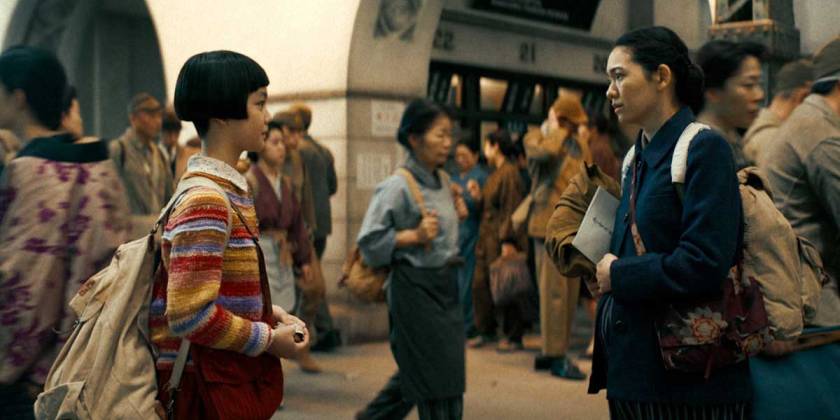
Set amid the ruins of postwar Tokyo, Nishikawa’s sweeping, deeply affecting drama follows 12 year old Kotoko (Ami Koyae), an orphan who disguises herself as a boy and joins a loose band of children surviving through odd jobs, theft, black market trading, and the uneasy protection of a local gang. Her former teacher Sone (Fumi Nikaidô) is consumed by poverty and guilt as she searches for the student she could not protect.
Adapted from Nishikawa’s forthcoming novel, the film is a compassionate but clear eyed portrait of childhood stolen by war. Nishikawa refuses to romanticize the children’s resilience or reduce them to helpless victims. Survival means work and sometimes violence, and it demands ingenuity, compromise, and the willingness to abandon almost everything that once defined them.
Kotoko’s transformation is the heart of the film. Once a model student and the daughter of a classical musician, she is forced to shed her name, her history, and her identity as a girl in order to navigate a dangerous, male dominated underworld. Her disguise is not simply a means of concealment but a painful rejection of the person she once was. The children learn the mechanics of black markets and criminal syndicates with the speed demanded by necessity. In that sense, their survival becomes an act of resistance, a refusal to let defeat, poverty, and abandonment determine whether they have a future.
Nishikawa’s depiction of postwar Japan extends beyond the children themselves. Adults are also left psychologically scarred by defeat, poverty, and shame. The film understands that the devastation of war does not end when the fighting stops, but it lingers in families, institutions, and the moral compromises people make simply to get through another day.
The performances are exceptional. Koyae is astonishing in her first leading role, giving Kotoko a remarkable mixture of vulnerability, intelligence, and emotional restraint. She makes the character’s hardening feel gradual and painful rather than theatrical. Nikaido brings considerable depth to Sone, whose search for Kotoko is driven as much by remorse as by affection. Koji Yakusho, in a smaller but pivotal role, brings authority and menace without overplaying either.
Water is Nishikawa’s most striking recurring image. It carries the weight of grief, most painfully when Kotoko refuses to accept the body of her brother pulled from a river. But water also suggests the possibility of renewal, washing away the physical remnants of war and offering a way forward. The duality captures the film’s larger understanding of survival, a place where grief and hope can occupy the same space.
The film’s extended runtime eventually begins to work against it, especially when Nishikawa begins to mistake duration for depth. The result is a certain loss of momentum in the latter stages, diluting some of the emotional impact that the earlier sections build so carefully.
The film’s ambitions are substantial, though, and Nishikawa largely meets them. The film is not merely a story about orphans left behind by war, but a story about what happens when a society fails its children. It’s that question that gives the film its lasting urgency. Across a world where children continue to bear the consequences of conflicts they did not create, Nishikawa asks what war leaves behind and what responsibility adults have toward those forced to live among its ruins.
“Children Untold” is painful, unsentimental, and overwhelmingly moving. Its imperfections are real, but so is its power. This is a grave and beautifully observed film about the cost of surviving childhood when childhood itself has been taken away.
By: Louisa Moore

