
Alex Huston Fischer and Eleanor Wilson’s “Wicker” is a wonderfully strange movie that you can’t help but fall in love with. A delightfully original, darkly funny adult fairy tale, it takes a completely bonkers premise and turns it into a sweet, wickedly entertaining story about love, marriage, and the freedom to embrace the idea of “wanting what you want.”
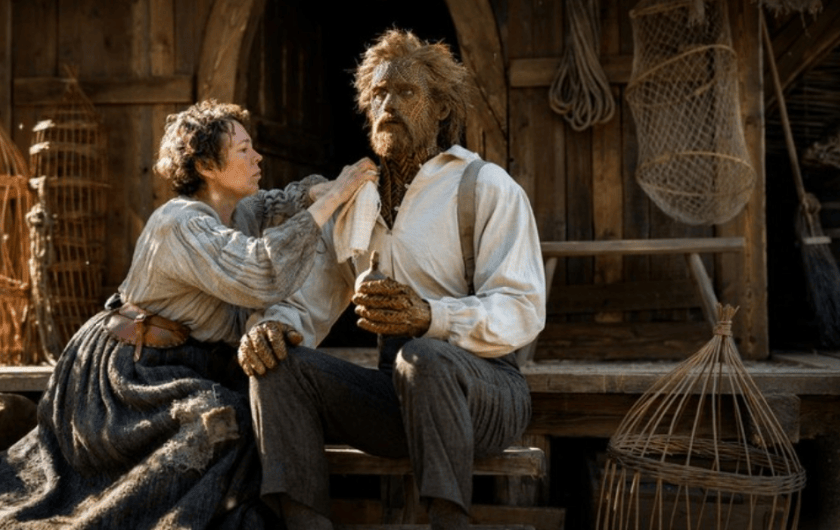
Olivia Colman stars as a lonely, ostracized fisherwoman living in a small medieval village where she’s constantly mocked for being unmarried and rather smelly. Fed up with her miserable neighbors and their narrow-minded attitudes, she commissions the local basketmaker (Peter Dinklage) to create her a husband out of wicker. What arrives is a woven man (Alexander Skarsgård), a handsome, gentle, attentive husband who turns out to be pretty much everything the village’s actual husbands aren’t. Naturally, this doesn’t go over particularly well with the locals and turns nearly everyone into a green eyed monster.
It’s absurd to be sure, but there’s some wonderfully sharp feminist commentary here. The film takes aim at traditional marriage, patriarchal expectations, and a society that is determined to punish women who don’t play by its rules. The joke, of course, is that a woman finds more happiness, affection, and genuine partnership with a bundle of twigs than the other women in the village have with their human husbands.
The humor is deliciously dark and often laugh-out-loud funny, and the performances are terrific. Colman brings so much personality and vulnerability to the Fisherwoman, while Skarsgård is surprisingly tender and charming despite being disguised underneath an armor of wicker. Their chemistry is a big part of what makes this unlikely romance work so well.
The technical side of the film is just as impressive. The makeup, costumes, effects, and production design are fabulous, creating a wonderfully eccentric world that feels like a fairy tale with a decidedly mischievous streak.
Funny, provocative, a little raunchy, and surprisingly heartfelt, “Wicker” is one of the more unusual (and satisfying) films of the year. More than anything, it is a celebration of female independence and the right to define happiness on your own terms.
By: Louisa Moore

