
There’s a simple question at the heart of director Cyrus Neshvad’s “Child”: What would you do to save your little boy? It’s an easy question to ask until the answer requires you to do something you can never take back.
Greg (Malik Zidi) is a doctor, and his young son Léo (Leo Todesco) lies unconscious and intubated in a hospital bed, slowly dying after a horrific accident. Greg and his wife Anne (Brigitte Urhausen) are already shattered by what happened, with grief and blame driving a wedge between them. But when conventional medicine offers no hope, parental desperation takes over and they travel across Europe to an illegal clinic to obtain a trafficked organ for their son.
It’s obviously an appalling choice, but the movie is smart enough not to make it easy to dismiss the couple as monsters. Greg and Anne are simply terrified parents running out of time, which is what makes the situation so uncomfortable. You can understand their desperation while knowing exactly how unforgivable their decision is.
The film gradually shifts gears, evolving from an ethical thriller into something much darker, with missing child posters, an increasingly oppressive atmosphere, and hints that something unnatural may be lurking in the woods.
That tonal shift won’t work for everyone. The film moves from a brutally realistic moral dilemma into bleak, slightly supernatural horror, and Neshvad pushes that transition pretty far. The supernatural elements don’t replace the psychological horror, but they amplify it. By the time Anne and Greg are trapped in the woods, the real monster may be the overwhelming guilt they brought with them.
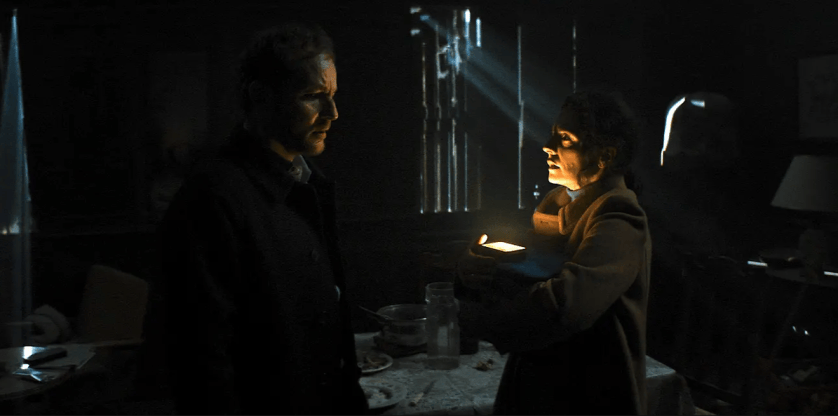
The first hour is particularly effective because Neshvad understands that you don’t need to show the monster to make an audience afraid. Much of the tension comes from what might be around the next corner, or what the characters suspect is happening just outside their view. The darkness feels alive. Every sound matters. Escape starts to seem less and less possible.
And then there’s that wonderfully nasty question hanging over everything: What would you do?
Most of us would recoil from the idea of buying an organ on the black market, especially one taken from another child. But the story deliberately puts that decision in the hands of parents whose son is dying. It doesn’t excuse what they do, but it asks how much morality can bend before love becomes something monstrous. This is a story of damaged people make increasingly terrible choices while convincing themselves they have no other option.
The narrative does get a little overstuffed once it fully embraces its supernatural side, and the transition from ethical drama to creature-in-the-woods horror is definitely a leap. Still, there’s something refreshing about a psychological horror film willing to take that risk.
By: Louisa Moore

