
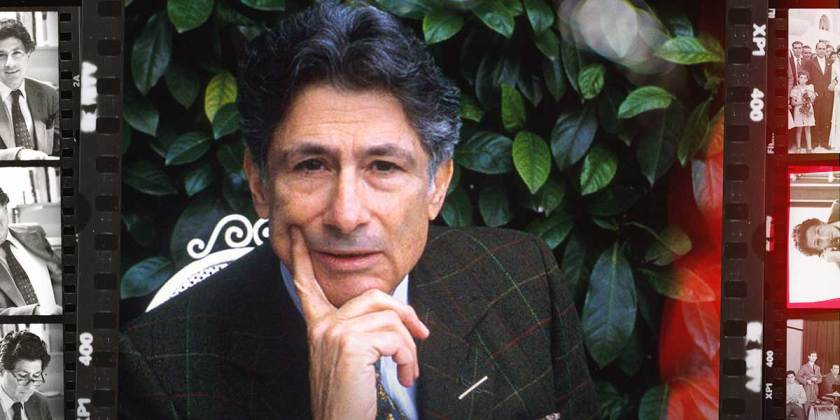
Director Maiken Baird’s “Edward Said: Between Worlds” offers a fascinating introduction to one of the most influential and outspoken intellectuals of the 20th century. Told entirely through archival footage and Said’s own words, the documentary lets him convey his story in a way that feels immediate and remarkably alive.
Born in Jerusalem in 1935, Said experienced displacement and exile firsthand, experiences that would shape both his scholarship and his political activism. The film traces his journey from his childhood in Palestine to his career as a professor at Columbia University, where he became a major figure in postcolonial studies through groundbreaking works such as Orientalism and The Question of Palestine. It also thoughtfully follows his increasingly outspoken advocacy for Palestinian rights and his criticism of Western foreign policy and the ways Palestinians were portrayed in the media.
What makes the film especially interesting is simply listening to Said speak. He was exceptionally intelligent, articulate, and willing to challenge assumptions, whether he was discussing literature, politics, identity or the complicated experience of belonging to more than one world. His ability to move between academia, television, and political discourse made him an unusually visible public intellectual, and his observations often feel strikingly relevant today.
Baird makes smart use of an extraordinary amount of archival material, including childhood home movies, television appearances, lectures, interviews and recordings from the Edward Said Archive at Columbia University. Rather than relying on contemporary talking heads to explain the subject’s importance, the film trusts Said’s own voice. That approach gives the documentary a sense of intimacy and allows his personality to come through alongside his ideas.
The result is both educational and deeply human. I especially appreciated how much the film taught me about Palestinian history and about the political and cultural forces that shaped Said’s thinking. His story is complicated, and the documentary doesn’t reduce him to a single role of cholar, activist, Palestinian, American, exile or public intellectual. He occupied all of those worlds at once.
“Edward Said: Between Worlds” isn’t simply a portrait of an important scholar, but it provides an opportunity to hear a remarkable thinker make sense of a world that was already deeply divided and to consider how much of what he was saying still resonates now.
By: Louisa Moore

