
The documentary “Once Upon a Time in Harlem” is quite an achievement. The film brings the Harlem Renaissance to life in this fascinating time capsule, letting its legends tell their stories with remarkable honesty and candor.
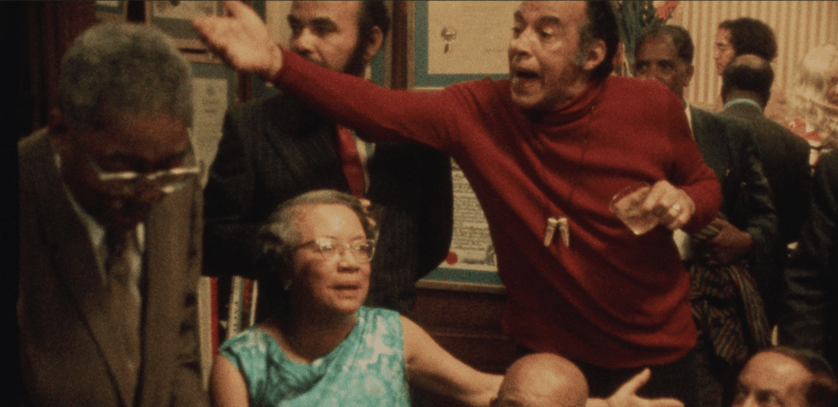
One afternoon in August 1972, legendary filmmaker William Greaves brought together an extraordinary group of artists, writers, musicians, scholars, and cultural figures for a party at Duke Ellington’s townhouse and left cameras rolling. Fifty years later, Greaves’ son David finally brought that footage to life. The result is this vibrant time capsule of one of the 20th century’s most important artistic movements (and a lovely, personal addition to his father’s legacy).
The documentary features a stunning who’s who of leading figures and luminaries of the Harlem Renaissance. Aaron Douglas, Arna Bontemps, Richard Bruce Nugent, James Van Der Zee, and Ida Mae Cullen are among the many familiar names who show up (but don’t worry if you’ve never heard of these people before, you’ll leave knowing so much about them).
There are no talking heads or experts telling the audience what it all means, but viewers get to watch as the guests drink, reminisce, crack jokes, gossip, and occasionally argue around a punch bowl. It feels less like watching a history lesson and more like getting to hang out at a party you’d give anything to attend.
That intimacy is largely due to Greaves’ roving 16mm cameras. They move through the gathering with commanding freedom, catching fleeting expressions, private exchanges, and moments of genuine camaraderie. The contemporary editing preserves the grain and texture of the original footage while giving it an immediacy that reaches well beyond the 1970s. This is a film where the past and present collide both in subject and in visual style.
What makes the film especially compelling is that its subjects are not unified on the hot topics that are discussed. They disagree (sometimes vehemently) about everything from art and politics to responsibility and what the Harlem Renaissance actually meant. The film asks difficult questions about who Black art is for, what artists owe to their communities, and how creative ownership can be protected without sacrificing artistic freedom. I was absolutely fascinated by all of it.
“Once Upon a Time in Harlem” does more than preserve a remarkable gathering. It captures culture as something argued over, inherited, challenged, and kept alive. By allowing these voices to speak without the safety of hindsight, the film turns cinematic history into something immediate and human.
By: Louisa Moore

