
I’m not usually a fan of hybrid documentaries, but “Ba’s Book” really won me over. It’s an unusual film that’s part documentary, part recreation, and part family history, but those pieces fit together naturally. Director Ashley Da-Le Duong takes the memoir her quiet, reserved father wrote for her and turns it into a way of revisiting his past, particularly his childhood in a Vietnamese village during the Vietnam War and his later experiences in Iran. In an attempt to put his words on screen, Duong crafts a film about a family reckoning with memory, loss, displacement, and the stories they left behind.
Duong’s father has spent most of his life carrying these experiences quietly. When she discovers that he has written them down in a series of letters to her, she becomes fascinated by the idea of bringing those memories to life. Convincing her parents to return to Vietnam takes some effort, but eventually they make the journey back to his childhood village where he is reunited with his siblings. Those scenes are genuinely moving, partly because they feel so unforced. You get the sense that the film is not simply documenting a reunion but allowing a family to reconnect with a part of itself that had been lost.
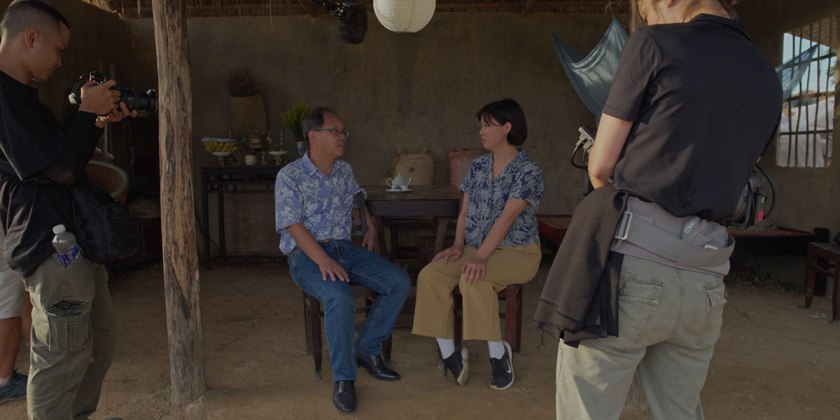
The most interesting thing about the film is the way Duong recreates her father’s memories. She builds a downsized replica set of the family home in Vietnam and brings actors in to portray the younger versions of her parents and relatives. This isn’t a conventional reenactment, and real family members are deeply involved in the process. They help cast the actors, offer corrections, give direction, and even help construct the set. They’re essentially stepping into the filmmaking process and taking ownership of their own history, which is a clever way to make a documentary.
That approach pays off beautifully. Watching family members tell actors how they remember past events becomes a fascinating way of showing how memory works. The same event can live differently in different people’s minds. There’s the historical record of what happened, and then there’s the emotional truth of how it was experienced. This film is interested in both.
One of the most memorable moments comes when Duong’s father meets the actor playing his younger self. There’s something powerful about watching the two of them connect. The scene could have felt artificial or overly sentimental, but instead it becomes a strange and moving conversation between the man he was and the man he has become.
The film also carries the heavy legacy of displacement. The Vietnam War and the Iranian Revolution shaped this family in ways that extend far beyond the events themselves. There are wounds that don’t necessarily disappear when people leave a country or survive a conflict. They can become part of family life, passed down through silences, memories, estrangements, and stories that are difficult to tell.
What I appreciated most is that Duong doesn’t rush to turn any of this into a neat lesson about healing. She gives her family room to remember, disagree, participate, and sometimes simply sit with the past. The filmmaking itself becomes part of that process. By putting her father and other family members in the position of correcting the actors and shaping the recreation, she gives them control over a story that might otherwise have been told entirely from the outside.
Sad in places and funny in others, “Ba’s Book” is a tender story about memory, legacy, and the complicated ways families carry history. It’s a thoughtful, deeply personal film about what it means to remember, what gets lost when families are displaced, and the importance of having a hand in telling your own story. Sometimes making a film about the past is really a way of figuring out how to live with it.
By: Louisa Moore

