
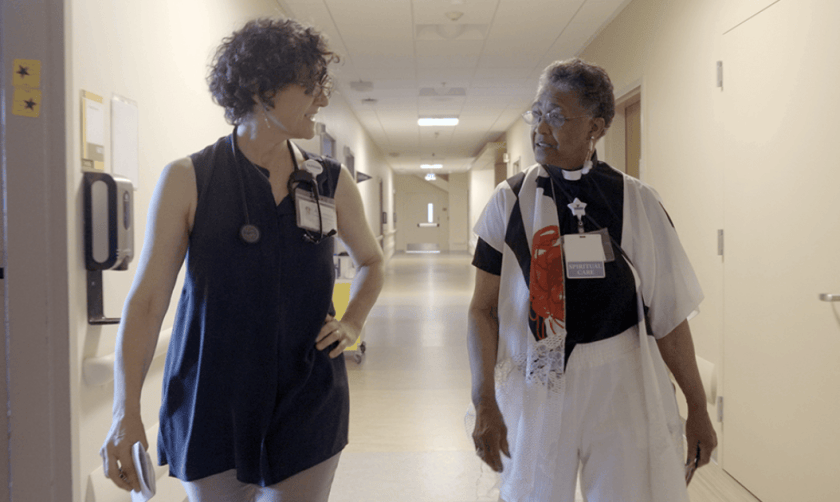
Some documentaries aim to inform and others to provoke, but “The Chaplain & The Doctor” does something quieter and more radical by inviting viewers to care more deeply. Set within the palliative care unit of Highland Hospital in Oakland, director Jessica Zitter‘s film unfolds like a gentle but persistent conversation about what it really means to heal.
At its center are two remarkable women, Betty Clark, an 80-year-old African American chaplain whose presence radiates warmth and hard-earned wisdom, and Zitter herself, a white Jewish doctor trained in the logic and interventions of modern medicine. On paper, they represent two very different approaches to care: spiritual versus clinical, intuitive versus empirical. In practice, their relationship becomes something far more layered and transformative.
What makes the film so compelling is how naturally their bond develops. There’s no forced “lesson” here. Instead, we watch as Dr. Zitter gradually opens herself to perspectives she wasn’t trained to value. Through Chaplain Clark, she begins to see that healing isn’t always about curing, but that presence, listening, and spiritual acknowledgment can be just as vital as any procedure. Their dynamic has the rhythm of a true buddy film, full of humor, mutual respect, and the occasional friction that comes from confronting deeply ingrained beliefs.
The documentary also doesn’t shy away from the systemic realities shaping their work. It thoughtfully explores how race, bias, and institutional structures affect patient care, particularly for communities of color. These themes come into sharper focus when Chaplain Clark herself becomes a patient, and Dr. Zitter is forced to confront the healthcare system from the other side. It’s in these moments that the film hits its emotional peak, grounding its broader critiques in something intensely personal.
Religion (as the title suggests) plays a significant role, but the film handles it with nuance. It doesn’t overtly preach, but instead observes how spiritual care can offer comfort, meaning, and dignity at the end of life. Even for viewers who lean more secular (raises hand), there’s something undeniably moving about the way Chaplain Clark meets people where they are, treating emotional and spiritual pain as inseparable from the physical.
Ultimately, the documentary is less about medicine itself and more about the humanity within it. It gently argues that the best care doesn’t come from choosing between science and spirituality, but from allowing them to coexist. In a healthcare system often defined by speed, hierarchy, and detachment, this film offers a vision of something slower, more connected, and profoundly compassionate.
“The Chaplain & The Doctor” is a quietly hopeful documentary that’s a simple, powerful reminder that being present for another person might be the most important form of care we have.
By: Louisa Moore

