
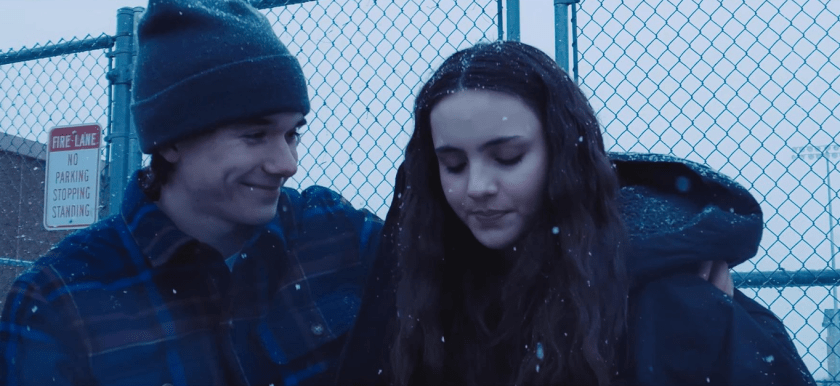
“What Tomorrow Brings” may be a tiny independent production, but it’s fueled by an impressive amount of passion. Writer, director, and producer Matt Engelbert set out to make a feature on a shoestring budget, and he pulled it off in a pretty remarkable way. The entire 97 minute movie was shot on an iPhone 15 Pro Max using long, uninterrupted takes instead of cutting within scenes. It was also a true family effort. Engelbert’s daughters, Joely and Phoebe, co-wrote the screenplay and star in the movie, while other family members contributed everything from the music and sound to wardrobe, catering, and supporting roles.
The story centers on Clara (Joely Engelbert), a high school senior whose life has been turned upside down. Her father has died and her mother leaves, saying she needs to find a place that will “make her better.” Suddenly, Clara is raising her 10-year-old sister Ruby (Phoebe Engelbert) on her own while trying to survive her senior year. She does everything she can to make Ruby feel safe and loved, hiding just how fragile she’s becoming herself.
That’s what the movie understands so well. Clara works overtime to convince everyone around her that everything is under control while she’s carrying grief, fear, and a devastating secret completely alone. The pressure keeps building until the trauma she’s buried refuses to stay buried any longer, and watching her slowly unravel feels painfully believable.
The film captures what trauma can actually feel like. It doesn’t simply disappear because you ignore it, but it lingers, grows heavier, and eventually demands to be confronted. Clara sacrifices her own childhood, education, and emotional well being to give Ruby some sense of stability, but that responsibility comes at a tremendous cost. Her love for her sister is genuine, yet trying to protect Ruby from every painful truth only leaves Clara more isolated.
The decision to shoot almost entirely in long, unbroken takes turns out to be more than a filmmaking experiment. It puts the audience right alongside Clara with no easy escape, letting scenes breathe even when they’re uncomfortable. You feel trapped with her as the tension slowly mounts, which fits the story surprisingly well.
What really stood out to me, though, was the writing. The dialogue feels honest, and the relationship between Clara and Ruby never comes across as forced. The script balances sweet, funny moments between the sisters with an underlying sadness that never fully goes away. Both girls feel like real people, and it’s easy to become invested in what happens to them.
The film certainly has its rough edges. Background noise, occasional soft focus, echoing sound, shaky camera movement, and some scenes that run longer than they need to all remind you this was made with very limited resources. Those technical shortcomings are highly distracting.
But it’s the ambition behind “What Tomorrow Brings” that is hard not to respect. This is a deeply personal story told with creativity, determination, and very little money. For fans of true independent filmmaking, it’s worth seeing for that reason alone. And for teenagers or families who have experienced grief, trauma, or the weight of growing up too fast, Clara’s story may resonate in a way that feels surprisingly honest and even comforting.
By: Louisa Moore

