
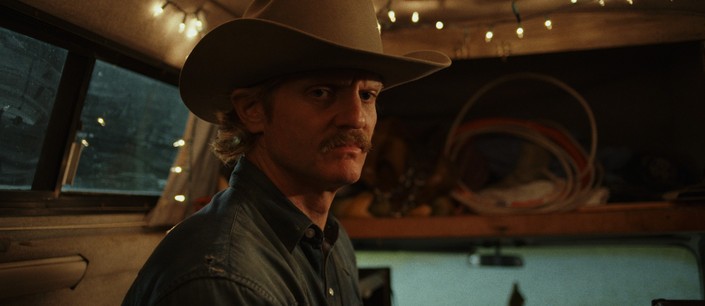
Written, directed, and starring Nathan Grubbs in his directorial debut, “Cowboy” feels rough around the edges in all the right ways. Set against the humid, haunted backdrop of New Orleans, the film follows war veteran Juno (Grubbs) as he survives on the fringes of society by pulling small time heists with his friend Mo (Marc Senter) and selling the stolen goods to a shady pawn shop owner named Crane (Eddie Steeples). This straightforward crime story exposes a deeper layer that embraces a bruised, emotional Southern noir about guilt, redemption, and the desperate hope for a second chance.
The film wears its influences proudly. You can feel shades of Quentin Tarantino and Martin Scorsese in the chapter-based storytelling, freeze frame techniques, and carefully curated music choices that initially romanticize Juno’s reckless lifestyle. The film eventually grows beyond those inspirations and becomes a deeply human story about a damaged man trying to live with the consequences of his mistakes.
The film looks incredible. Alex Vendler’s cinematography gives the project a dusty modern Western aesthetic even while surrounded by highways, cheap motels, cars, and phones. The visual style creates this fascinating old fashioned feeling where rodeo dreams and old school outlaw mythology still somehow exist in present day Louisiana. It’s gritty and beautiful at the same time, and it’s executed so well.
I also loved how real everyone looks. These aren’t polished and handsome Hollywood stars, but the actors feel raw, weathered, exhausted, and lived-in. That authenticity gives the movie a touch of gravitas, which makes Juno’s journey of being injured in combat and spiraling into a life of crime hit harder.
Juno’s attempt at redemption feels messy, complicated, and painfully human rather than overly sentimental. The horse theft storyline becomes the film’s emotional turning point, leading to tragedy, prison, and eventually Juno’s attempt to reconnect with people whose lives he shattered. The movie handles forgiveness in a surprisingly mature way and never resorts to taking easy shortcuts. Grubbs understands that redemption is something earned slowly, if it’s earned at all.
With its intimate, character-driven approach to filmmaking, “Cowboy” is ultimately a story about loss, regret, horses, and the fragile possibility of becoming a better person after completely wrecking your life. It’s a brilliantly modern take on a genre that blends raw poetic realism with subtle callbacks to the great Southern noir and redemption stories that inspired it.
By: Louisa Moore

