
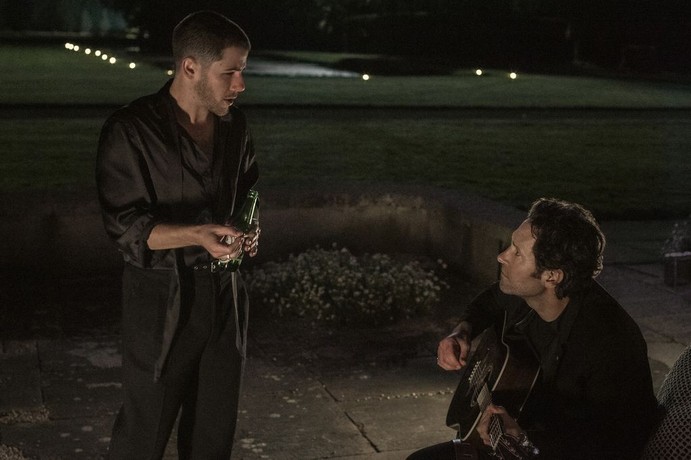
John Carney‘s “Power Ballad” is warmhearted, funny, sincere, and filled with the kind of characters he has spent his entire career writing (and directing) so well. Built on original songs, powered by two immensely charming lead performances, and featuring a story that asks some genuinely interesting questions about creativity, ownership, and what success actually means, it hits all the familiar notes that are hallmarks of a Carney film. In other words, it’s an easy one to like.
Rick (Paul Rudd) is a wedding singer whose dreams of musical stardom are long behind him. One night, he crosses paths with Danny (Nick Jonas), a former boy band heartthrob whose own career is hanging by a thread. The two connect over their shared love of music, spend an evening jamming together, and seem to form the beginnings of a genuine friendship. Things sour when Danny steals one of Rick’s songs and turns it into a massive pop hit, suddenly finding himself back on top while his new “friend” is left watching someone else enjoy the success that should have been his.
This is a story about artistic ownership, asking the question “who really owns a song: the person who writes it, or the person who performs it?” The film explores the frustration and heartbreak of seeing your creative work transformed into someone else’s victory (and massive payday). It’s a conflict that feels especially relevant in an industry where image and charisma often matter more than the actual act of creation. You know Taylor Swift’s biggest hits, but have you ever taken a moment to look up the songwriter? Carney doesn’t offer easy answers, but he does a good job presenting both sides of the argument and showing how messy these situations can become when ego, ambition, friendship, and money get involved.
What really makes the movie work is the chemistry between Jonas and Rudd, and you couldn’t ask for better casting here. Rudd brings so much humanity to Rick that it’s impossible not to root for him. He captures the specific sadness of a middle aged man who once dreamed bigger than the life he ended up with, but never turns Rick into a pathetic figure. There’s certainly frustration and bitterness there, but also warmth, humor, and a quiet dignity. Rudd has always been naturally likable, and that quality becomes the backbone of the entire film. Jonas is equally great. Danny could have easily been written as a shallow villain, but Jonas gives him enough vulnerability and insecurity to make him feel like a real person rather than a caricature of a pop star.
Carney once again proves that few filmmakers understand how to make a feel-good movie without drowning it in sentimentality. This isn’t some grand “follow your dreams and anything is possible” fairy tale, but is rooted in truth. It’s about being talented but not exceptional. About being good enough without ever becoming famous. About coming to terms with the roads you didn’t take and the person you didn’t become.
That aspect of the film really resonated with me, even if I don’t completely buy into its ultimate argument that fame isn’t everything and that a comfortable, meaningful life can be just as valuable as living out your wildest ambitions. It’s a sweet sentiment, and Carney sells it with enough conviction that it mostly works. But if we’re being realistic, the film occasionally feels a little too eager to reassure us that Rick’s quieter life is somehow equivalent to being a millionaire pop star. It’s a lovely idea, but I’m not entirely convinced most people wouldn’t choose the rock star lifestyle if given the opportunity.
The bigger issue is that the film often feels like John Carney repeating himself. As much as I love his work, this movie constantly feels like a greatest hits compilation of themes, ideas, and even original songs pulled from all of his previous films. The love of music as a transformative force, the tension between artistic purity and commercial success, the bittersweet acceptance of life’s compromises, and the celebration of ordinary people chasing creative dreams are all themes Carney has explored before, and explored better.
It’s not that Carney has lost his touch. There are moments here that remind you exactly why he’s one of the best filmmakers working in this particular space, and nobody understands music quite like he does. He has a unique gift for expressing what music means to people, how it shapes our identities, relationships, regrets, and dreams. Few directors can capture the feeling of sharing a song with someone the way Carney can, and he does it again here.
Is “Power Ballad” top-tier John Carney? Not even close. It feels like a filmmaker revisiting familiar territory rather than breaking new ground, but it’s still a warmly sincere and enjoyable dramedy about creativity, friendship, and ambition.
By: Louisa Moore

