
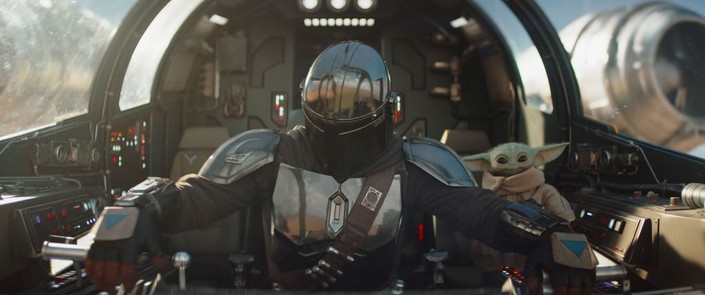
“Star Wars: The Mandalorian and Grogu” may not be the most ambitious “Star Wars” movie ever made, but it’s an entertaining, crowd-pleasing adventure that captures much of what fans have loved about the franchise for nearly five decades. Director Jon Favreau leans heavily into the beloved space Western roots of the series, delivering a retro throwback that feels closer in spirit to the original trilogy than many recent entries. Gen X viewers and longtime Star Wars fans in particular will appreciate the old school atmosphere, complete with practical effects, rugged heroes, strange alien worlds, and a sense of adventure that recalls the franchise’s earliest days.
Let’s start with the bad and end with the good. The story itself is fairly straightforward and sometimes wanders in multiple directions before finding its footing. There are a lot of lazy action sequences involving creatures, droids, and large scale battles, which make the film feel repetitive as one confrontation quickly leads to another. More often than not, the movie plays like an expanded episode of the television series more than a major cinematic event. The stakes are modest compared to some of the galaxy-shattering conflicts seen in previous Star Wars films, and the plot rarely reaches for deeper philosophical territory.
Yet despite those shortcomings, the film succeeds because it understands what audiences enjoy most about these characters. The relationship between Mandalorian Din Djarin (Pedro Pascal) and Grogu remains the emotional core of the story and continues to be one of the most endearing partnerships in modern franchise filmmaking. Watching their bond evolve is genuinely rewarding, particularly as Grogu becomes more confident, capable, and independent. Mando’s role shifts naturally from protector to mentor, creating a father and son dynamic that gives the movie warmth and emotional resonance amid all the blaster fire and explosions.
The screenplay also explores themes of family, legacy, and identity. Several characters struggle with the expectations and burdens left behind by previous generations (including Rotta the Hutt, voiced by Jeremy Allen White), while Mando and Grogu demonstrate how chosen family can be just as powerful as blood ties. These themes are woven into the story without overwhelming the adventure, and they add a surprising amount of substance.
Of course, much of the movie’s appeal comes from Grogu himself. The little green baby Yoda remains one of the most charming creations in the entire universe. Whether he’s getting into trouble, eating too many snackies, showing off new abilities, or simply reacting to the chaos around him, Grogu consistently steals every scene and provides some of the film’s biggest laughs. Younger viewers will undoubtedly be captivated by him, while longtime fans will appreciate how the character continues to grow without losing the qualities that made audiences fall in love with him in the first place. This doesn’t totally become an all-Grogu show though, which I appreciated.
The supporting cast includes a few familiar faces from the series that are written to fit comfortably into the larger story, and the movie does a respectable job of balancing fan service with accessibility. While viewers unfamiliar with the popular Disney+ series may miss some background details, the central story remains easy enough to follow thanks to the universal appeal of Mando and Grogu’s relationship.
While “Star Wars: The Mandalorian and Grogu” may not deliver the epic scope or groundbreaking storytelling that a lot of fans undoubtedly hoped for, the film accomplishes exactly what it sets out to do. It’s a fun, heartfelt adventure filled with likable characters, nostalgic Star Wars energy, exciting action, and plenty of charm. The movie successfully captures the spirit of classic Star Wars while continuing the journey of two beloved characters.
By: Louisa Moore

