
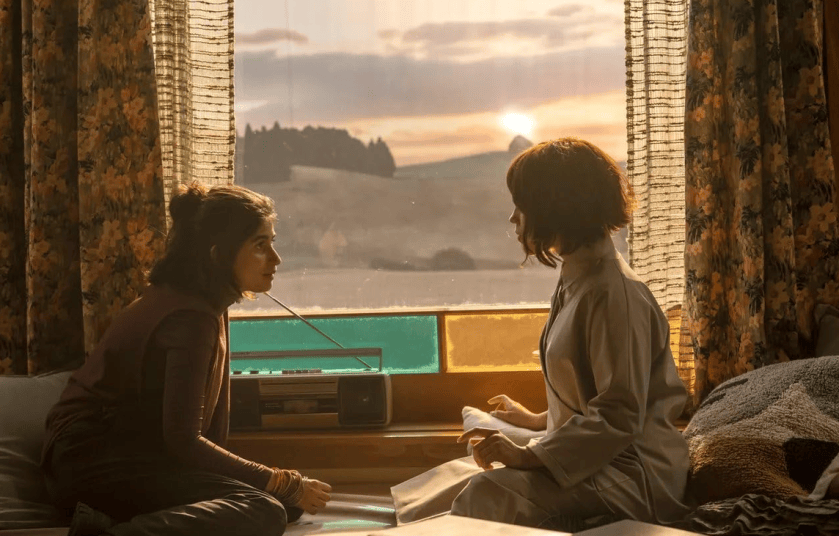
There’s something wonderfully strange about the eccentric “Klara and the Sun,” director Taika Waititi’s adaptation of Kazuo Ishiguro’s bestselling novel. This story about a robot girl designed to keep people from feeling lonely who winds up trying to save a grieving family sounds like a recipe for something relentlessly sad. But when you add in Waititi’s whimsical point of view and deadpan nature, the movie takes on a warmth and sweetness that make it surprisingly uplifting, even as it deals with some pretty dark ideas about grief, death, and what it means to be human.
Jenna Ortega is terrific as Klara, an Artificial Friend who sees the world with a kind of innocent wonder that the humans around her have lost. When she meets Josie (Mia Tharia), a seriously ill teenager living with her mother Chrissy (Amy Adams), Klara becomes determined to help her by praying to the sun to send its healing energy. Ortega brings a lovely sincerity to the role, and her chemistry with Tharia is natural and radiant. The casting is strong across the board (with Steve Buscemi and Natasha Lyonne showing up in memorable supporting roles), but these two are the heart of the movie.
Waititi’s fingerprints are all over the film, from its colorful pastel visuals to its offbeat humor. That irreverent streak won’t work for everyone, and there are moments when the silliness feels a little out of place given the seriousness of what’s happening. Personally, I liked the contrast. The bright, almost storybook look gives the film a welcome sense of whimsy, even as the story ventures into some pretty bleak territory.
Beneath all that sweetness, the film asks some uncomfortable questions. Can artificial intelligence genuinely love someone, or is it simply programmed to imitate love? And if a machine can offer the same comfort and devotion as a human being, does the distinction really matter?
Chrissy’s relationship with Klara adds an especially unsettling wrinkle. She’s not just looking for a companion for her sick daughter. She’s also confronting the possibility of losing Josie and, in her desperation, considering whether Klara might somehow take her place. The film isn’t particularly subtle about any of these compelling ideas, and Waititi (barely) keeps them from becoming too heavy-handed.
There’s plenty of sadness here, with the family still struggling with the loss of Josie’s older sister and the guilt and fear that come with having another sick child. Yet the movie never feels entirely bleak. Klara’s unwavering belief in the people she loves gives the story an unexpected lightness, and I found myself genuinely moved by the way it balances its darker themes with such an optimistic spirit.
“Klara and the Sun” is an odd little film, but I was completely charmed by it. It’s thoughtful without being overly serious, funny without losing sight of the emotion behind the narrative, and surprisingly comforting for a story so preoccupied with loss. I walked away feeling a little lighter and happier, which is no small accomplishment for a movie about death, grief, and a robot trying to understand the human heart.
By: Louisa Moore

