
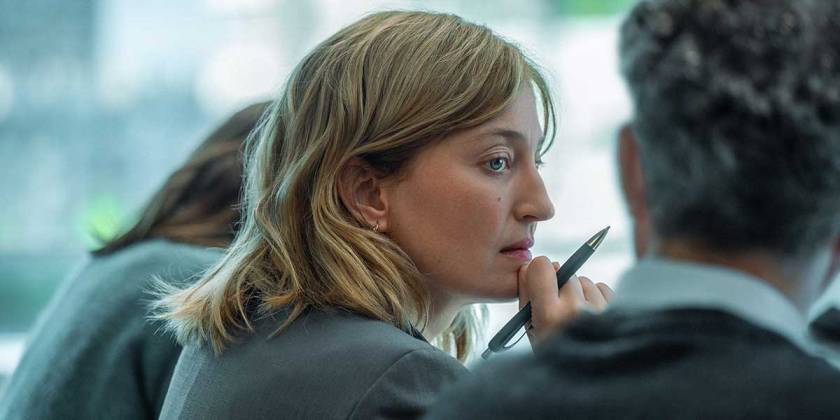
Stéphane Brizé’s “A Good Little Soldier” is a sharp, deeply cynical film about corporate life (and anyone who has spent too much time in an office will recognize more of it than they may want to).
Set inside the cold and sterile, glass and steel world of a major corporation, the film follows Carla (Alba Rohrwacher), a newly appointed Human Resources executive whose polished professionalism masks a deep insecurity. She has built her career by giving the company what it demands, including long hours, unquestioning loyalty, and less and less of herself. Her latest assignment is a familiar corporate contradiction: to protect employee well being while meeting increasingly ruthless performance targets.
Brizé has little patience for the comforting language of modern corporate culture. Popular buzzwords like “inclusion,” “diversity,” and “safe spaces” become hollow slogans when they threaten the interests of powerful employees. Carla is repeatedly asked to protect the institution rather than the people inside it, even when doing so means defending plainly toxic behavior.
The film’s dark humor makes its critique hit harder. The string of absurd meetings, carefully worded e-mails, and bureaucratic evasions are funny precisely because they feel so plausible. Then the comedy gives way to something more painful. Carla’s professional compromises begin to follow her home, where even her relationship with her teenage son starts to resemble another performance review. She stops listening to him and starts managing him, even lashing out to the point he no longer wants to be around her.
Rohrwacher does a lot with her character and complex role. Carla wears the steely executive armor, but there’s a relatable vulnerability that also makes her sympathetic. She is neither a victim nor a villain, but has participated willingly in the system that is now consuming her.
That is what makes “A Good Little Soldier” more than a satire of bad bosses and corporate hypocrisy. Brizé shows how easily people can surrender their individuality in exchange for security, status, and the illusion of control. The film is bleak, often very funny, and uncomfortably recognizable. Its darkest joke is that the people tasked with making work more humane may be trapped inside the same machinery they are supposed to fix.
By: Louisa Moore

