
“If I Tell You” is a title that suggests a confession, but the film is really about everything left unsaid. Adapted from Lisa O’Donnell’s novel “Closed Doors,” director Tessa Blake crafts a thoughtful coming of age drama that examines the damage silence can inflict, especially on the children forced to live inside it.
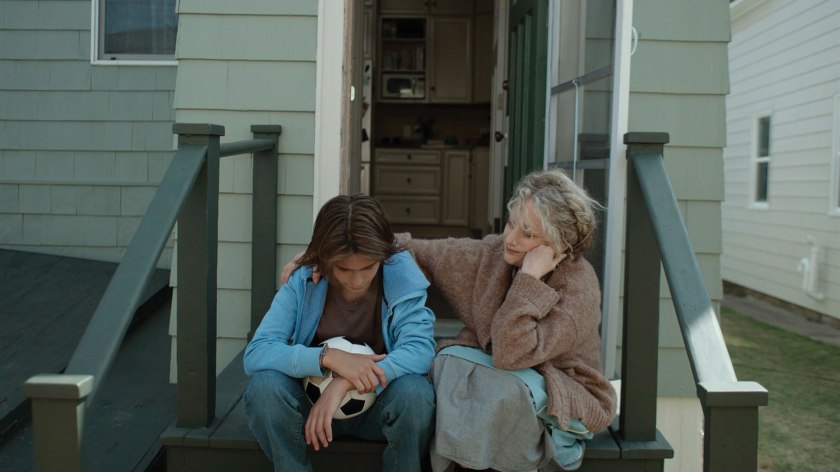
Set in Northern Minnesota, the story follows 12 year old Michael Murray (Etienne Kellici), whose carefree summer revolves around friends, first crushes, and the ordinary adventures of adolescence. That sense of security vanishes when his mother (Allison Miller) comes home with a black eye and swollen lip and refuses to explain what happened. His father (Bill Heck) becomes increasingly distant. His granny (Carol Kane) shuts down every question. Rumors spread through the neighborhood, and everyone seems to know more than Michael does.
From his perspective, the mystery feels almost impossible to solve because he doesn’t yet understand the complicated moral failures of the adults around him. Blake wisely keeps the audience rooted in Michael’s point of view, allowing the truth to emerge gradually rather than through manufactured twists. What initially appears to be a story about domestic abuse ultimately reveals something different, and perhaps even more devastating: the lasting consequences of sexual violence and the generations of silence that allow it to linger.
Kellici delivers a remarkably assured performance. Michael isn’t written as unusually precocious or overly sentimental, but he’s simply a kid trying to make sense of a world that suddenly feels unpredictable. His confusion, frustration, and determination never feel forced, making him an easy character to invest in. The film rests squarely on his shoulders, and Kellici carries that responsibility with impressive naturalism.
Blake approaches the material with admirable restraint. She never sensationalizes the violence or treats trauma as a narrative device. Instead, the film focuses on its aftermath and the awkward silences, fractured trust, and impossible choices families make when they convince themselves that keeping a secret is somehow kinder than confronting it. The screenplay consistently asks what adults owe children and whether shielding them from painful truths actually protects them at all.
At times, the balance between youthful nostalgia and the story’s darker themes isn’t entirely seamless. Some scenes lean so heavily into Michael’s innocent adventures that they briefly soften the urgency of the central conflict. Even so, those moments ultimately underscore the film’s mourning of the loss of innocence that arrives long before childhood should end.
“If I Tell You” recognizes that healing begins only when silence is broken. Blake has made a compassionate, quietly powerful film that explores difficult subjects without exploiting them.
By: Louisa Moore

