
Independent films are often defined by what they don’t have, be it a big budget, major stars, or endless resources. Once in a while, one comes along that proves creativity and determination can matter just as much. “Hamilton House” is one of those films.
Written, directed, edited, produced, and scored by Los Angeles filmmaker Jordan Rowe, this is about as independent as independent filmmaking gets. Taking on five major creative roles is an enormous undertaking, and the finished film is proof that Rowe understands exactly how to maximize limited resources without losing sight of the story he wants to tell. I have to give a massive amount of respect where it’s due.
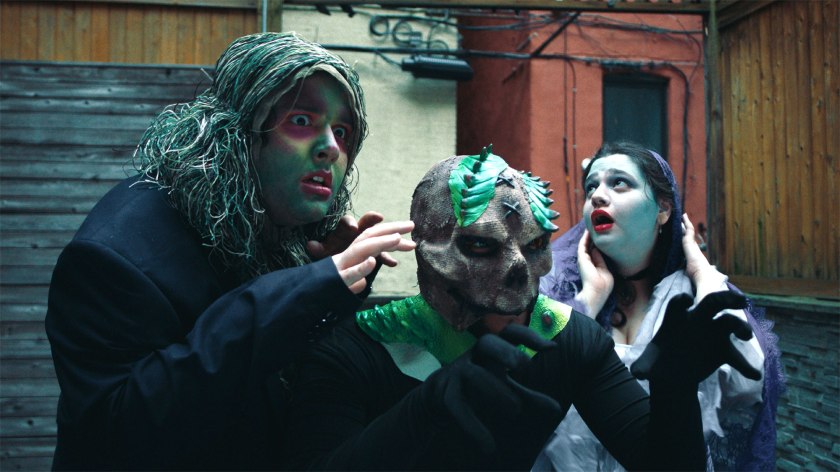
Set during Halloween, the film follows a group of struggling young actors crammed into a tiny New York City basement apartment. When Zach (Elijah Lawrence) learns that a legendary horror director has moved into the neighborhood, he convinces his girlfriend and roommates to transform their home into an elaborate haunted house, hoping the stunt will finally get him noticed. Naturally, things don’t go according to plan. As Halloween approaches, his increasingly frantic scheme starts pulling apart friendships, relationships, and whatever stability these aspiring artists had left.
What makes the movie work isn’t the haunted house gimmick, but the very recognizable desperation underneath it. Zach’s obsession with landing his big break feels painfully familiar in an industry where talent alone rarely seems enough. The film captures the exhausting reality of twentysomethings trying to survive creatively while paying the bills, constantly wondering if success is just one lucky opportunity away. That pressure slowly clouds Zach’s judgment, and the story becomes less about chasing fame than about what gets sacrificed along the way.
The comedy doesn’t rely on rapid-fire jokes or obvious punchlines. Most of the laughs come from watching an increasingly ridiculous ten day plan go horribly awry. Anyone who’s ever poured everything into a creative dream (or watched someone else do it) will recognize pieces of themselves in these characters. The story is a little too low key at times, especially because the anxiety driving these characters feels very rooted in the Gen Z creative experience, which may not resonate as strongly with everyone.
Rowe also deserves credit for directing with confidence while clearly understanding the production’s limitations. Rather than trying to imitate a much larger studio film, he leans into what he has available and makes smart creative decisions that keep the movie feeling authentic instead of cheap. It’s a film filled with raw talent, and that ambition comes through in nearly every scene.
The film runs longer than it needs to, and there are stretches where the momentum comes to a near halt. The story begins to overstay its welcome by the final act, and trimming fifteen or twenty minutes would have made the experience considerably stronger. It’s also not the kind of spooky comedy that’s packed with memorable set pieces or nonstop entertainment.
Still, I walked away admiring it more than I loved it. “Hamilton House” may not be the most consistently engaging film, but it’s an impressive example of what independent filmmaking can look like when someone wears nearly every creative hat and knows how to make those limitations work in the film’s favor. Rowe has delivered a true DIY passion project and even when it stumbles, it’s hard not to appreciate what he pulled off.
By: Louisa Moore

