
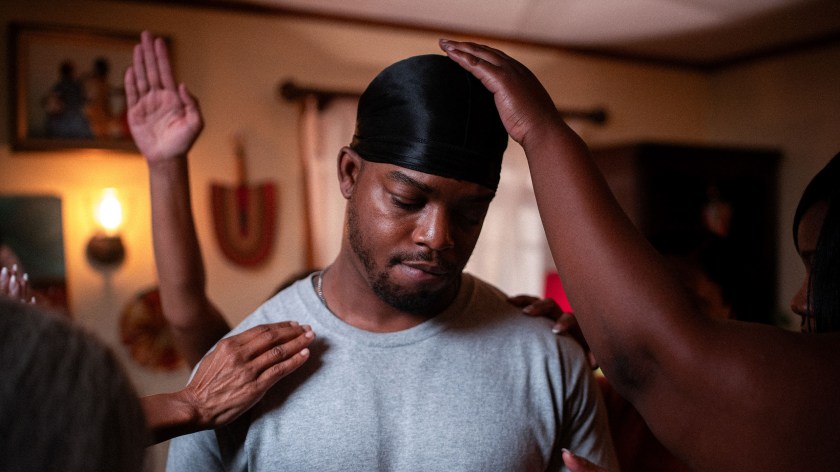
“Ricky” is a raw, compassionate, and quietly powerful look at life after incarceration. Director Rashad Frett‘s debut feature doesn’t lean into melodrama or preachy messaging while capturing the complex struggles of a man trying to rebuild his life in a world that feels alien and indifferent, which makes the film’s emotional punches land even harder.
Stephan James delivers a strong performance as Ricky, a man who’s spent half his life behind bars after being incarcerated as a teenager. Now 30, he faces the harsh reality of being judged by everyone, from potential employers to his own family, who still see him as an unreliable criminal. James’s portrayal is layered, balancing his character’s desire to do better with the simmering frustration of a man who feels set up to fail.
The film thoughtfully explores themes of societal reintegration and personal growth without becoming heavy-handed. Ricky’s quiet gift as a barber becomes symbolic of his yearning to find meaningful work and stability, but life outside isn’t as simple as cutting hair. The pain of missed milestones, from learning how to date or to embrace social media with modern-day technology, adds a heartbreaking element to his journey.
What makes the film work so well is that it never paints a portrait of something cynical. Frett uses his story (which he co-wrote with Lin Que Ayoung) to acknowledge how broken the system is. The climb is steep for those reentering society, but it never lets go of that idea of hope.
Frett’s direction is subtle and honest, letting moments breathe without pushing for drama. This is a story about resilience, dignity, and the quiet fight to reclaim a life that was stolen too soon. “Ricky” is one of those thoughtful, understated, and moving films that comes out of nowhere and delivers a real gut punch.
By: Louisa Moore

