
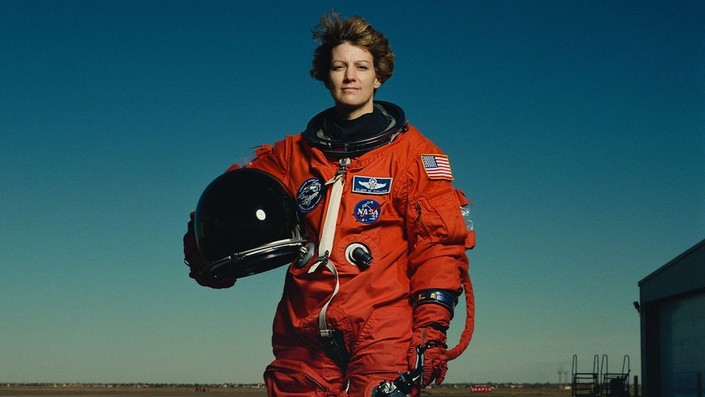
“Spacewoman,” directed by Hannah Berryman, is a compelling and deeply inspiring documentary that serves both as an informative portrait and a powerful time capsule of what it meant (and still means) to be a woman breaking into a male-dominated profession. Chronicling the life and career of astronaut Eileen Collins, the first woman to pilot and command an American spacecraft, the film captures not only her historic achievements but also the personal and emotional landscape behind them.
From her humble beginnings on the “other side of the tracks” in upstate New York, Collins’s journey is nothing short of remarkable. The documentary thoughtfully traces her path from working multiple jobs to afford flight lessons to ultimately commanding increasingly complex and dangerous Space Shuttle missions. Along the way, she smashes one glass ceiling after another in both the U.S. Air Force and NASA, paving the way for future generations of women in space exploration.
The film finds a nice balance between technical and scientific achievements and an enjoyable human interest story. Through an incredible array of archival NASA footage and intimate interviews, the film doesn’t just celebrate Collins’s accomplishments, but explores the emotional toll of a high-risk career on her family. The perspectives of her husband and children add depth, highlighting the sacrifices and constant tension between professional ambition and family life.
The storytelling is fantastic, as Berryman weaves together history, personal narrative, and broader questions about risk and human endeavor. The editing keeps the pacing tight and engaging, and hearing from Collins herself (especially as she doesn’t shy away from the inherent dances of space travel) is something that commands your attention. She’s a likeable historical figure, and also extremely brave.
“Spacewoman” is a well-made and thoroughly engaging documentary. It offers great information, a fascinating subject, and an inspiring story, all while serving as a well-deserved tribute to a true pioneer.
By: Louisa Moore


Sounds great.
LikeLiked by 1 person