
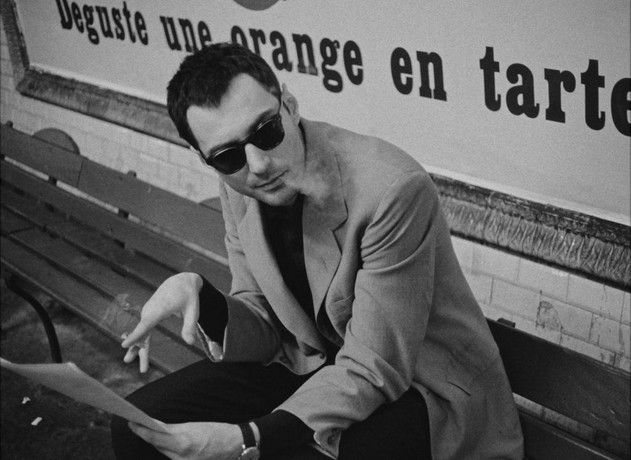
Enchanting but also irritating, Richard Linklater’s “Nouvelle Vague” feels like the cinematic equivalent of hanging out with your coolest, most pretentious film school friends in a Paris café circa 1959, and I mean that as both a compliment and a mild warning. This is not going to be a film for everyone but if overinflated grandiosity and the French New Wave is your cinematic scene, you’re going to love this one.
Shot in black and white and buzzing with handheld energy, this stylish film drops us right into the scrappy, half- improvised madness of Jean-Luc Godard’s first feature, the now-classic “Breathless.” Linklater clearly relates to this moment in film history, from the youthful rebellion, the figure it out as you go attitude, the belief that cinema should feel alive and free. You can feel his affection in every jump cut and tonal swerve. At times, though, that reverence tips into indulgence. The movie can feel a bit tedious, and there’s an unmistakable French cinephile smugness that occasionally comes off as condescending, especially if you’re not already inclined to worship at the altar of Godard.
The cast is terrific, and they all look the part. Guillaume Marbeck plays Godard as brilliant, impulsive, and kind of insufferable, which honestly feels just right. Zoey Deutch (as Jean Seberg) captures that mix of movie star glow and slightly adrift vulnerability, while Aubry Dullin nails Jean-Paul Belmondo’s effortless cool. The performances are a real highlight, especially as the cast sells the idea that no one quite knows what movie they’re making until it’s already happening.
While you don’t have to be well-versed in the history presented here, it does help to at least have a mild familiarity with Godard’s body of work. I can’t imagine this film would resonate with non-cinephiles, and it’s not the most easily accessibly narrative. Still, if you love movies (and I mean if you really love movies) there’s a lot to admire here.
“Nouvelle Vague” isn’t just about the making of “Breathless,” but it’s about the intoxicating idea that art can be messy, impulsive, and change the world all at once. It doesn’t always crackle with the same electricity as its subject, but as a nostalgic love letter to cinema itself, it’s hard not to at least partially get swept up in its charm.
By: Louisa Moore
 Screen Zealots