
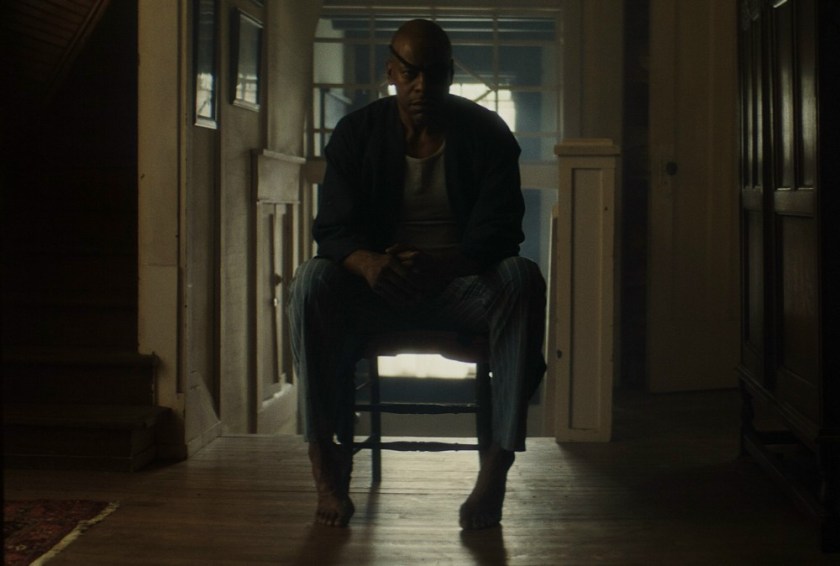
“Death Letter Blues” is a moody, atmospheric slice of Southern noir that feels both timeless and urgently alive. Set against the sweltering, decaying backdrop of rural Mississippi, the film thrives on its sense of place and character. Shadowy interiors, dark and stormy skies, and worn down streets are dripping with Gothic dread. This is a small town where every corner seems to carry a secret, and every spoken word or glance adds to the tension.
When the mysterious death of a teenager (Layton Miller) rattles the townsfolk, troubled priest Father Moss (Sherman Augustus) does his best to comfort the couple that raised the boy. The young man, known as Feral Boy, has been a local legend since his discovery in the woods as a child. As he gets wrapped deeper in the mystery, Father Moss discovers haunting parallels between the tragedy, an unsolved crime from five decades earlier, and his own recurring nightmares.
The film skillfully weaves crime mystery with hints of the supernatural, blending in elements of magical realism through dream sequences and the ominous weight of the Southern landscape. The directing and writing are impressive, and the cast delivers grounded, lived-in performances that never feel forced.
The film is co-directed by Strack Azar and Michael Stevantoni, both who clearly understand the visual language of cinema. Their use of light, shadow, and command of atmosphere is remarkable, all lending a general unease and suspense that also gives the film a lived-in, authentic feel.
Azar and Stevantoni lean on classic Southern Gothic tropes of secrets, decay, and lingering guilt while still feel modern and fresh. Not everything is tied up neatly, however.
Some plot turns seem as thought they’re meant to mislead, and the lack of full resolution may frustrate those who prefer clean and tidy answers. At least the ambiguity feels deliberate, underscoring the film’s themes of loss, faith, and the shadows of the past. The pacing is also on the slower side and allows the tension to build slowly, but it never feels stagnant.
“Death Letter Blues” is a visually rich and beautifully crafted indie gem about grappling with the past and confronting truths we’d rather ignore. This is smart, atmospheric filmmaking that asks questions about faith, morality, and human nature.
By: Louisa Moore
 Screen Zealots
Congrats Sherman , can’t wait to see you in this.
LikeLike