
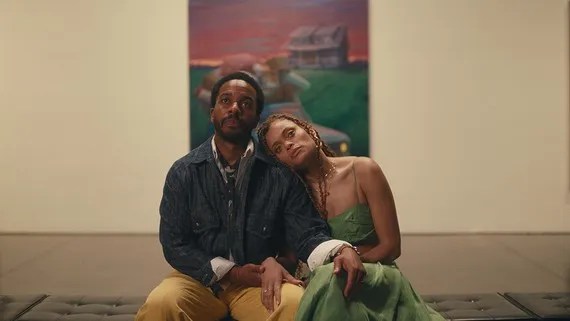
I truly wanted to have an emotional connection with writer / director Titus Kaphar’s “Exhibiting Forgiveness,” but almost everything about Kaphar’s film felt hollow, contrived, and manipulative to me. This story about the healing power of art is too calculated and packed with so much forced symbolism that it becomes more tiring rather than effective.
After an unexpected visit from his estranged, recovering addict father La’Ron (John Earl Jelks), artist Tarrell (André Holland) finds his professional and personal life turned upside down. His paintings have provided a proven way to escape the trauma of a painful past, and the arrival of his old man has shattered his form of retreat. By finally facing the abuse he suffered at the hands of his dad when he was younger, Tarrell may finally be able to embrace forgiveness.
Kaphar’s script is one of healing and intense therapy, but he doesn’t find much success with a film that’s seeking universal appeal. The story feels highly personal to the point that it’s not compelling to an outsider. The idea of finding an emotional escape through art is nothing new, and Kaphar beats his audience over the head with the themes. There are slow scenes of painting, heated arguments between Tarrell and his dad and partner (Andra Day), and lots of sweating while jolting awake in bed from trauma-induced nightmares. This isn’t a film that’s enjoyable to watch, and it’s more frustrating than entertaining.
The narrative gets a bit more interesting when it’s told in flashbacks from the past, with Ian Foreman as a young Tarrell. But the story doesn’t break any new ground, and what you expect will happen, does.
I do appreciate what Kaphar is trying to say with “Exhibiting Forgiveness,” and it had to be a painful emotional journey for him to make this film. He just doesn’t do a great job with the overall execution.
By: Louisa Moore
 Screen Zealots
your assessment of an art piece is clearly bound to its relation to you and your experience. as an “outsider,” you should polish your ability to empathize with demographics outside of your own. this is a highly relatable story that resonates with and reflects patterns plaguing an entire community, on both a personal and systemic level. there are some elements of this story that you cannot see or appreciate because, culturally, you just don’t get it. as a critic, you’ve got to work on this. otherwise, what good is your opinion?
LikeLike
Interesting take, thanks for sharing. But if we didn’t draw from personal experience when consuming art, wouldn’t everything just be a 5 star rating? That’s the joy of criticism: everyone’s opinion will be different. I appreciate you taking the time to leave a comment.
LikeLike
Thanks for taking the time to comment. I’m glad the movie resonated with you, but it clearly didn’t with me for many reasons — and that’s okay! Our personal experiences absolutely shape our opinions, of course.
LikeLike