
LOUISA’S 10 WORST MOVIES OF 2025:

10. Coyotes
There’s a certain kind of midnight horror flick where logic takes the night off, characters make impossibly dumb decisions, and the audience alternates between laughing, groaning, and gleefully anticipating the next kill. Colin Minihan’s “Coyotes” fits that mold perfectly, for better and worse.
The premise itself is solid B-movie gold. During a raging wildfire in the Hollywood Hills, a family is trapped in their burning home while a pack of feral, disoriented coyotes closes in. Workaholic dad Scott (Justin Long), his wife Liv (Kate Bosworth), and daughter Chloe (Mila Harris) do their best to hold it together as the night becomes a dual battle against fire and fangs. It’s a set-up that promises equal parts animal horror and siege thriller, and the film mostly delivers.
The kills are fun and frequent because this is a movie with no qualms about thinning its cast quickly and brutally. It’s bloody and sometimes gruesome, and genre fans will enjoy the horror elements. The CGI coyotes are obvious, but they’re menacing enough in the attack scenes to make you forget that they’re merely cartoons. There’s a goofy energy to the way the movie plays its corny concept straight and for a while, it’s genuinely entertaining.
But here’s what the movie can never overcome: the characters are unbelievably, almost comically stupid. They make decisions so jaw-droppingly bad that suspension of disbelief shatters. These characters are quite possibly the dumbest humans to ever walk the face of the Earth. I eventually found myself internally shouting at the screen, “Why doesn’t anyone just shut the damn dog door?!”
The script is littered with logic holes so wide you could drive a fire truck through them, and by the second half, the nonsense piles up faster than the bodies. What starts off as enjoyably silly horror eventually tips into the territory of pure idiocy, capped off with a finale that’s more eye-roll than payoff.
“Coyotes” makes it really difficult to get past the fact that its characters are so stupid.
9. The Housemaid
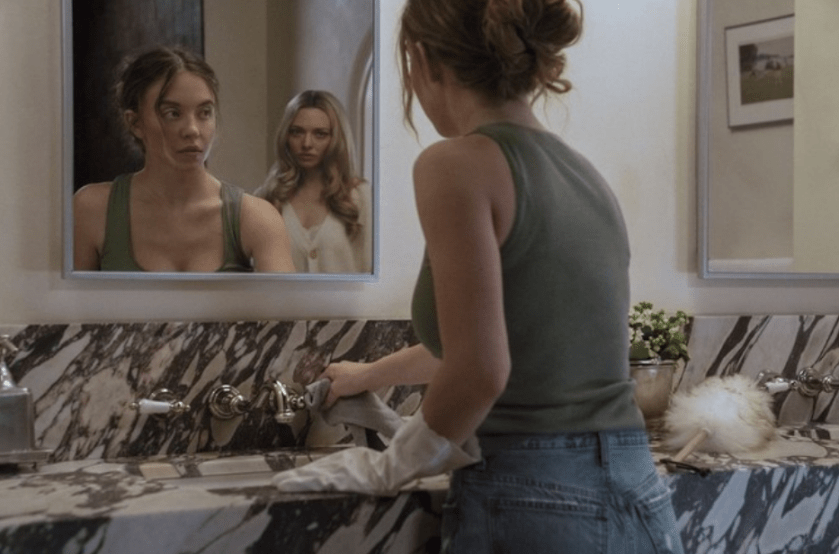
Director Paul Feig clearly wants his big screen version of Freida McFadden‘s bestselling novel “The Housemaid” to be a racy, subversive thriller about power, secrets, and women reclaiming control, but what he actually delivers is a trashy, shallow mess that mistakes shock value for substance. Framed as a sleek suburban nightmare, the film positions itself as prestige pulp. It has a facade of being dangerous, sexy, and socially aware, but collapses almost immediately under the weight of its own self-importance. Every moment screams with a longing to be provocative, yet nothing about it feels earned, daring, or even particularly entertaining.
The setup is familiar to the point of parody. Down-on-her-luck Millie (Sydney Sweeney) takes a live-in housekeeping job for Nina (Amanda Seyfried), an icy, brittle rich woman married to a controlling husband (Brandon Sklenar) in a picture-perfect mansion. From the moment Millie crosses the threshold, the movie telegraphs its intentions with all the subtlety of a foghorn. Secrets lurk behind closed doors. Power dynamics are skewed. Everyone is lying. And yes, the house itself is a metaphor (one so obvious it may as well turn to the camera and explain itself). You can feel the “big twist” coming from miles away and when it finally arrives, it’s not shocking or clever. This film is so aggressively stupid it becomes laughable.
What’s most frustrating is how smug the movie is about its own emptiness. Feig piles on voyeuristic scenes, ominous stares, and overwrought confrontations that mistake cruelty for depth. The film gestures toward themes of abuse, class resentment, and female solidarity, but it handles them with such clumsiness that they end up feeling exploitative rather than empowering. It feels like the film fetishizes (and even gets close to celebrating) acts of degradation rather than successfully using them to make a powerful statement.
The characters are barely fleshed out at all. Millie and Nina are written less as people and more as delivery systems for plot twists, with almost zero psychological complexity. When the women evolve into stronger, more defiant figures, it feels like nothing more than a box the screenplay has to check to justify its nastiness. The film wants credit for depicting women taking control but it can’t be bothered to give them believable inner lives. Empowerment here isn’t discovered, but is slapped on in the final act like a cheap label.
I think the story would have worked much better if Feig had picked a lane and stayed in it. Tonally, he can’t seem to decide whether he wants his film to be camp, satire, a psychological thriller, or straight melodrama, so it ends up being none of them. Scenes drag on endlessly, and attempts at light horror are undercut by laughable dialogue and ridiculous plotting. In other words, it’s a mess.
It’s a shame “The Housemaid” lacks the sharp satire, psychological bite, and suspense that Feig has been known to handle so well. Instead, the film is a sour and unpleasant experience that’s lazy, mean-spirited, and embarrassingly obvious. If you’re looking for a smart, tense thriller with something to say, this one isn’t it.
8. The Friend
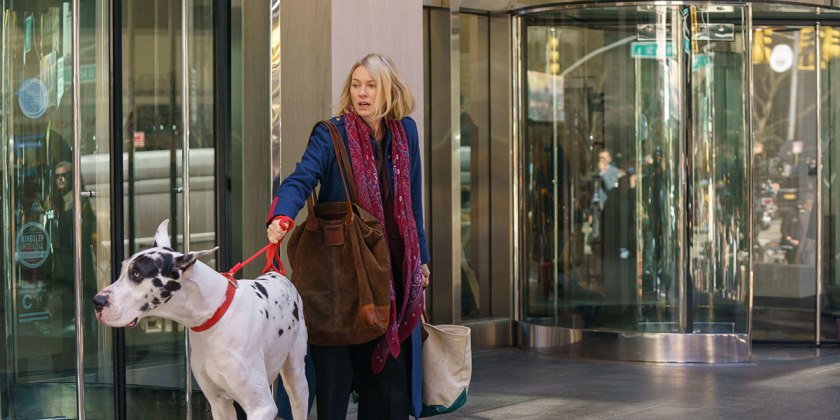
The core of the charm in “The Friend” lies in its heartfelt exploration of friendship, love, and the way we leave fragments of ourselves behind. Adapted from Sigrid Nunez’s National Book Award-winning novel, the film aims to delve into these themes with a gentle touch (and the comforting presence of a Great Dane named Bing). Despite a noble sentiment and a solid cast, co-writers and directors Scott McGehee and David Siegel struggle with execution. Overall, this is a very disappointing movie.
Iris (Naomi Watts) is grappling with the aftermath of the sudden death of her longtime friend Walter (Bill Murray), a charismatic author with a knack for leaving chaos in his wake. Little has changed with his death, as the man has left Iris to sort out his tangled relationships, unfinished literary work, and the care of his beloved dog, Apollo. The film sets up a promising narrative around the impact of Walter’s departure and Iris’s journey through grief and responsibility, but it falters in its delivery.
One of the primary issues here is the film’s disjointed structure as it veers unpredictably from one scene to the next, shifting tones in a way that undermines its emotional impact. While there are moments of genuine poignancy, particularly those involving the bond between Iris and Apollo, the overall narrative feels paper-thin. The predictability of the plot further detracts from the story.
The film relies too heavily on frequent attempts at cuteness overload from Apollo, and it feels like a series of desperate distractions to charm the audience. While it’s undeniable that Bing delivers a captivating performance as the lovable canine, the focus on his antics sometimes overshadows the deeper emotional threads the film strives to explore.
The human actors are effective, too. The always-reliable Watts delivers another strong performance here, weaving through the complexities of her character with a nuanced approach. Her portrayal captures the struggle of balancing personal grief with the responsibilities thrust upon her, offering a glimpse of the depth she brings to the role. Murray’s performance, though limited in screen time, is also a highlight.
Despite a meaningful story about the enduring power of companionship and the pain of loss, “The Friend” just can’t get a firm grasp on its desired sentiment. The slow pacing, disjointed storytelling, and heavy reliance on its canine star detract from what could have been a moving and insightful drama.

7. Lilly
Director Rachel Feldman’s “Lilly” is a biopic that tells an incredibly important story but struggles to find its footing. The subject itself is inspiring, as the film tries to highlight Lilly Ledbetter’s fight against gender pay inequality and her journey from a factory worker to a key figure in women’s rights. Unfortunately, it feels more like a t.v. movie of the week than the type of feature film Ledbetter deserves.
The structure of the film itself sometimes feels confusing, especially as Feldman blends archival footage with dramatized scenes in a way that doesn’t feel seamless. One particularly strange choice is the repeated use of clips of Ruth Bader Ginsburg narrating Lilly’s (Patricia Clarkson) story. While it’s a powerful voice from a very respected woman, editing these clips into the middle of scenes feels jarring and disrupts the emotional flow. Instead of enhancing the story, these interruptions constantly pull you out of it.
The writing also leans too heavily on obvious emotional beats. There’s a lot of “wow, her life sure was tough!” type commentary, which comes across as over-the-top and lacking in subtlety. Moments that could have felt nuanced or insightful often feel forced, and the occasional corny pop music interludes make the tone feel inconsistent and awkward. The film clearly wants to be uplifting and inspiring, but it ends up being clunky and uneven because it gives too much attention to cheesy melodrama rather than the quieter (and more profound) elements of Lilly’s story.
The performances are fine, but the material doesn’t exactly give the actors a lot of room to breathe. The emotional highs and lows are spelled out too clearly, leaving little room for the audience to connect on a deeper level. Scenes that should be tense or moving often feel artificial because the script hits you over the head with the message rather than letting the story unfold naturally.
Despite the film’s laundry list of problems, it’s impossible to overlook the significance of Lilly Ledbetter’s story. The film makes clear just how unjust gender pay discrimination is, showing how Lilly discovered she was earning significantly less than her male colleagues for the same work at Goodyear. It also illustrates the perseverance required to fight a system stacked against her and the emotional toll it took on her personal life. These are powerful themes, and the movie does succeed in highlighting why Lilly’s journey matters even if the execution is flawed.
Ambitious and well-meaning, “Lily” is mostly just frustrating. The heavy-handed writing, jarring editing choices, and overly dramatic (and often unintentionally silly) scenes all work in tandem to sink the film. It’s a shame because this feminist icon certainly deserved better.
6. Another Simple Favor
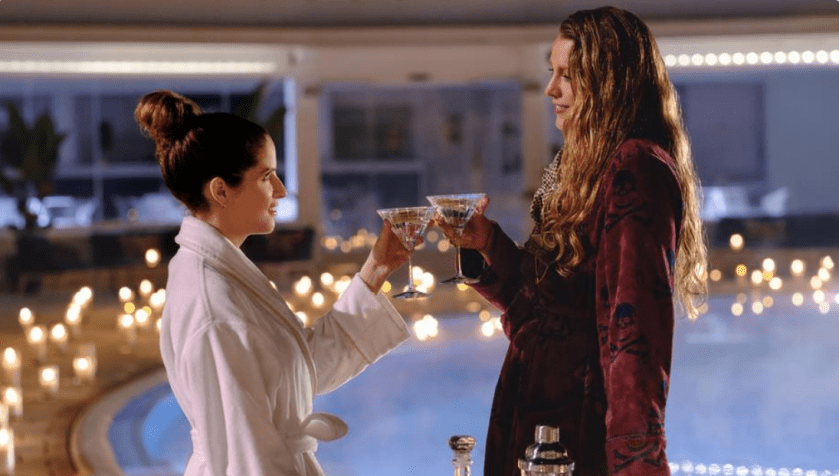
There’s a certain brand of sequel that feels like it was green lit by accident (or worse, as an excuse for a studio-paid vacation to a gorgeous locale) and “Another Simple Favor” fits that category all too perfectly. Set in the stunning backdrop of Capri, Italy, Paul Feig’s follow-up to the 2018 original is a mess of lazy writing, shallow characters, and uninspired twists. What should’ve been a darkly fun, stylish thriller-comedy is instead a dull, campy disaster that fails to deliver on every front except knockout scenery.
Anna Kendrick and Blake Lively are back as Stephanie and Emily, but even their considerable charm can’t save this bloated, tone-deaf sequel. Stephanie, once a quirky suburban sleuth with heart, is now reduced to a caricature of a clueless tagalong. Emily, the once enigmatic femme fatale, now feels more like a bored rich girl playing dress-up in a revenge plot so convoluted and meaningless, you stop caring halfway through. Their chemistry (which helped power the first film) feels phoned in, probably because the script gives them nothing interesting to do or say.
The script is the major problem here, with a trio of screenwriters trying desperately to be clever by cramming in one twist after another like a checklist of shock-value tropes, but nothing sticks because the foundation is so barren. The dialogue is clunky and often groan-worthy, the humor is flat, and every supposed big moment lands with a thud. Even the title feels like a careless shrug.
The whole movie plays like a rejected episode from a bad streaming show that got canceled mid-season. It’s not funny. It’s not smart. It’s not even stylish enough to be fun, campy trash.
Adding insult to injury, no one can be bothered to pronounce Capri correctly — a small detail, sure, but also symbolic of the film’s general laziness. The gorgeous Italian setting feels like a tax write-off rather than a meaningful location, and Feig seems more interested in vacation aesthetics than telling a story with any emotional or narrative weight.
“Another Simple Favor“ wastes its talented, appealing leads, insults the intelligence of its audience, and offers nothing in return except a few costume changes and an endless string of dumb, hollow twists. It’s a movie that raises the question: who asked for this? And more importantly, who cares?
5. Die My Love
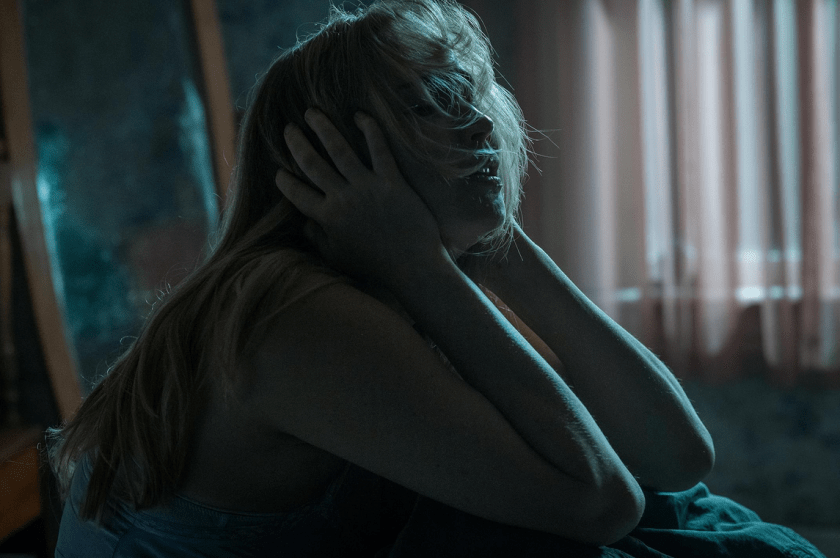
Adapted from Ariana Harwicz’s novel, “Die My Love” is a suffocating, overwrought exercise in self-importance. Director Lynne Ramsay wants so desperately to be profound with her unflinching exploration of postpartum depression, isolation, and the breakdown of identity. Unfortunately, the end result is an agonizing, self-indulgent experience that mistakes chaos for depth and misery for meaning.
Jennifer Lawrence gives an undeniably committed performance as Grace, a young mother unraveling in the wake of childbirth. She crawls on all fours, screams, and thrashes her way through the film with feral intensity. But despite her raw energy, the character feels one-note. The film traps her (and the audience) in an endless cycle of hysteria and suffering that’s painfully repetitive. It’s not that Lawrence isn’t good, but the script gives her nowhere to go except down. Way down.
The story itself is paper-thin, stretched painfully across nearly two hours. Grace’s husband Jackson (with a disappointing and bland performance from Robert Pattinson) remains frustratingly passive as she spirals deeper into psychosis, and the film’s refusal to address her obvious need for help borders on maddening. The themes are rich in potential but the execution is muddled and repetitive. The result feels less like a daring psychological portrait and more like a punishing endurance test.
Ramsay leans heavily into surreal imagery (a black horse, a phantom motorcyclist) meant to symbolize Grace’s repressed desires and primal instincts. But these sequences come off as forced and pretentious where the blurred line between reality and hallucination might have been intriguing if it weren’t so sloppily handled.
What’s most frustrating is that the film flirts with interesting ideas (particularly the notion that not all women are suited to motherhood, the claustrophobia of domestic life, and suffocating societal expectations), but it never truly engages with them. There is a potentially fascinating conversation to be had, but the film instead reduces Grace’s experience to a series of chaotic outbursts and is content to wallow in misery and abstraction.
By the end, “Die My Love” is so consumed by its own darkness that it forgets to be about anything other than itself.

4. On Swift Horses
Adapted from Shannon Pufahl’s 2019 novel of the same name, “On Swift Horses” aspires to capture the lyrical restlessness of 1950s America. Weaving a tale of hidden desires and personal reckoning, director Daniel Minahan tries his best to effectively translate the material to the screen. While the film’s aesthetics and period detail are visually well done, it struggles to translate the depth of its source material into a compelling and entertaining cinematic experience.
Set against the backdrop of mid-century America, the story follows newlyweds Muriel (Daisy Edgar-Jones) and Lee (Will Poulter) as they relocate from Kansas to San Diego, seeking stability and the promise of a happy, conventional life. Lee’s brother Julius (Jacob Elordi) returns from the Korean War and finds himself drawn to the vibrant world of Las Vegas, where he befriends the charismatic Henry (Diego Calva). The film explores their parallel lives and hidden desires, including Muriel’s secret gambling hobby and Julius’s burgeoning homosexual relationship with Henry.
Minahan’s adaptation succeeds in capturing the film’s aesthetic charm, thanks in part to the beautifully expressive cinematography by Luc Montpellier. The film’s visual style is rich with the textures plucked from the 50s, and the period details add a layer of authenticity. The production design and costumes are impeccably crafted, creating a sense of nostalgia and longing that complements the film’s themes.
Despite these strengths, the film faces significant challenges in its narrative execution and often feels like it is struggling to juggle too many elements at once. The ambitious adaptation of Pufahl’s novel sometimes falters in its translation to the screen, leaving several storylines and character developments feeling disjointed. The film’s pacing suffers from an overabundance of unnecessary scenes that do little to advance the plot or deepen the motivations of the characters.
The exploration of LGBTQ+ themes is central to the story but ultimately falls short. The film attempts to address the complexities of sexuality in a repressive era but does so in a manner that feels more exploitative than insightful. The focus on sexual content without a deeper examination of the characters’ emotional and psychological states seems superficial, missing the opportunity to provide meaningful commentary on LGBTQ+ experiences during that time in American history.
The film’s attempts at poignant moments and dramatic tension occasionally veer into unintentional corniness, with the ending feeling particularly unsatisfying and melodramatic. What should be a powerful conclusion instead lands as an anticlimactic and somewhat laughable finish, which definitely isn’t what the filmmaker intended.
In the end, “On Swift Horses” is a case of style over substance. It’s a beautifully crafted world inhabited by a talented cast, but it struggles to provide a substantive exploration of its themes and ultimately falls short of delivering anything particularly meaningful or memorable.
3. A Minecraft Movie
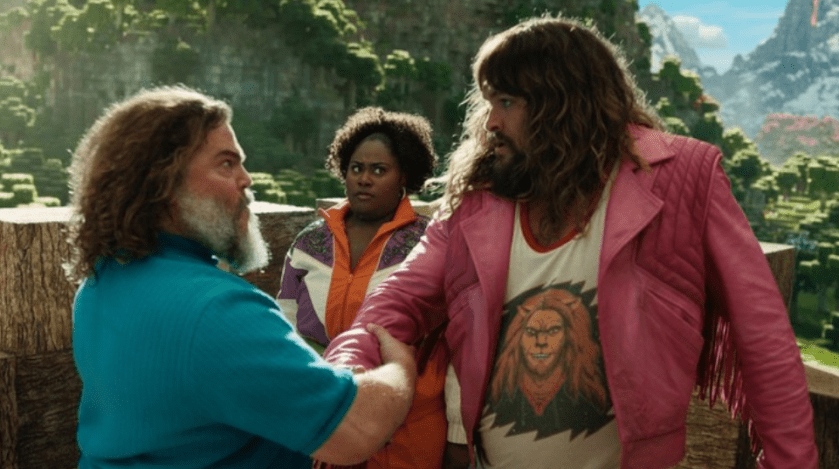
I let out a huge sigh of relief when the final credits of the loud, lazy, and painfully unfunny “A Minecraft Movie” finally rolled. This nearly unbearable adventure squanders the already minimal creative potential of its source material and even worse, wastes the charming quirks of its director (Jared Hess) and blockbuster cast. Not even the combined star power of Jack Black and Jason Momoa can salvage this.
The film follows five misfit characters, expert crafter Steve (Black), Garrett (Momoa), Natalie (Emma Myers), Henry (Sebastian Hansen), and Dawn (Danielle Brooks), who stumble through a portal into Minecraft’s Overworld. Here, they must master the game’s blocky mechanics and fight off Piglins and Zombies. On paper, it’s a premise that could have offered a playful tribute to the imagination and creativity that make Minecraft so beloved, especially by children. Instead, what we get is a barrage of constant yelling, frantic running, and an embarrassing lack of story or character depth.
There’s a kernel of humor early on, but the movie wears out its welcome fast. The script leans on tired jokes, chaotic slapstick, and endless exposition dumps which rarely let the audience breathe (or care). The characters are so thinly drawn they feel like placeholders for merchandising opportunities rather than anyone you’d want to spend 100 minutes with. This movie manages to make Black and Momoa unlikable, which isn’t a brag-worthy feat.
Even the uninspired but passable animation can’t save things. The film is bright, playful, and faithful to the blocky Minecraft aesthetic, but does nothing imaginative with the world. Everyone in this film, from those behind the camera to the ones in front of it, seem like they’re phoning it in for an easy paycheck. The film lacks spark, energy, and imagination at every turn.
While the movie might technically appeal to very young fans of the game, it’s a joyless, clumsy mess that does nothing to capture the magic of the phenomenon it’s based on. The film frequently confuses wacky antics for comedy and pop culture game references for story. I gave “A Minecraft Movie” every chance to win me over, but it never could. Instead, I was counting the minutes until it was finally over.
2. The Naked Gun
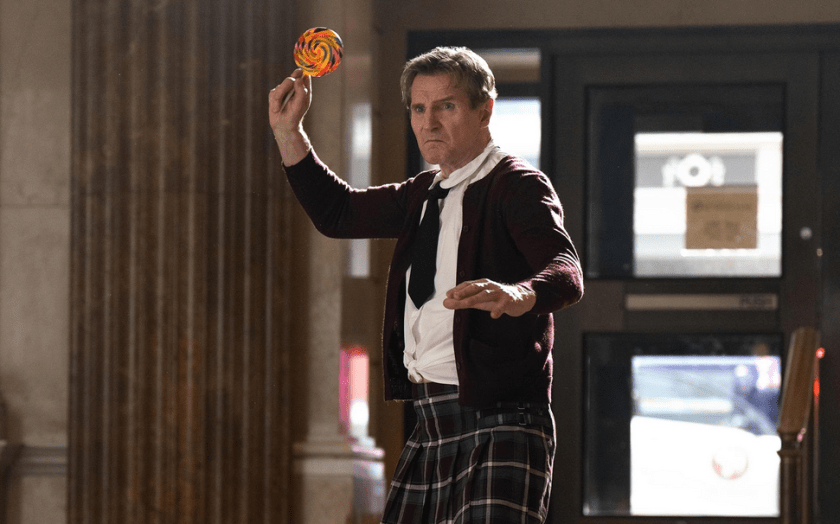
Liam Neeson is the one bright spot in director Akiva Schaffer‘s otherwise disappointing reboot of “The Naked Gun.” His deadpan delivery and complete commitment to absurdity prove he was the right actor to inherit the legacy of Leslie Nielsen’s iconic Lt. Frank Drebin, but even he can’t carry the film all by himself. With a script peppered with unfunny Millennial pop culture references and mostly lazy, ill-timed jokes, this is one of the biggest disappointments of the year.
For the first half, it’s a promising, chuckle-filled ride with a couple of inspired gags that even had me laughing to the point of tears. But then something goes horribly wrong. The laughs evaporate, the energy dies, and the film collapses into a pit of painfully unfunny slapstick and stale parody.
What starts off as a decent spoof with real comedic potential quickly devolves into a slog of cheap, juvenile humor that never lands. The story is serviceable and the tone mimics the original ridiculousness of the original films, but the second half is so lacking in wit or timing that it feels like a completely different (and far worse) movie.
It’s frustrating, because this could have worked. Neeson is great, and there are flashes of brilliance in the form of creative sight gags and one-liners, but they’re buried in a script that runs out of steam far too early.
Instead of revitalizing the beloved franchise, “The Naked Gun” limps to the finish line with the kind of sophomore-level comedy that makes you cringe more than laugh.

1. The Roses
Despite its prestige casting and literary pedigree, director Jay Roach‘s “The Roses” is a tough one to sit through. On paper, the prospect of seeing two terrific actors (Olivia Colman and Benedict Cumberbatch) tear into each other in a dark marital comedy sounds like a gift. While their chemistry is undeniable, the movie around them is more exhausting than entertaining.
Based on Warren Adler’s novel “The War of the Roses” (which was previously adapted for the screen in 1989), the film follows Ivy (Colman) and Theo (Cumberbatch), a seemingly perfect couple with enviable careers, children, and a glossy suburban life. But when Theo’s professional dreams implode just as Ivy’s ambitions take flight, old resentments boil to the surface. The seemingly happy pair begin waging psychological and physical warfare against each other. What starts as sniping escalates to petty sabotage, cruel games, and eventually, outright life-threatening behavior.
The problem is that Roach doesn’t quite find the balance between venom and wit. The first hour is glacial, laboring to establish Ivy and Theo’s supposedly idyllic life before letting it unravel. Once the “war” does finally break out, it feels rushed, like we’re getting the Cliffs Notes version of the real descent into madness. The pathetic attempts at humor also rarely land. What should be biting satire instead comes across as awkwardly unfunny, and the cruelty at the heart of the film isn’t laced with enough sharpness to make the ugliness palatable.
Cumberbatch and Colman do their best to wring nuance from the material, and there are moments where you can glimpse the movie this could have been: a razor-edged battle of wills between two brilliant performers. But too often, the film mistakes misery for entertainment. Watching a marriage collapse can be compelling when it’s illuminated with insight or wit but here, it’s just bleak. This movie actually made me feel bad while watching it.
In the end, “The Roses” is less a cautionary tale about miscommunication and resentment than a test of the audience’s endurance.
LOUISA’S WORST MOVIES OF 2025: DISHONORABLE MENTIONS
Among some of my picks for the worst of the year, these films came close to cracking the bottom 10:
 Screen Zealots