

10. The Substance
Operating under the guise of a feminist film that has something profound to say, Coralie Fargeat’s “The Substance,” is not only lacking in all respects, but it is an absolute chore to watch. This is a film that doesn’t just push boundaries, but gleefully smashes them into pieces and smugly parades over the rubble. It’s ambitious, grotesque, and undeniably provocative, but it’s also maddeningly indulgent in a way that leads to self-sabotage.
The film tells the story of fading and aging Hollywood actress Elisabeth Sparkle (Demi Moore), a woman who is desperate to retain her beauty and relevance. Worried about her career, she chooses to undergo a black-market procedure that clones her younger self that she calls Sue (Margaret Qualley). This clone becomes both a symbol of Sparkle’s vanity and her worst nightmare.
What follows is a grotesque, body-horror-laden exploration of beauty, youth, and the parasitic relationship between the two versions of Sparkle. The themes of aging and celebrity are nothing new, and Fargeat attempts to inject new life into this well-worn topic with an over-the-top approach that fizzles. There’s a lot of shock value, but the heavy-handed commentary on beauty standards and celebrity culture is so over-the-top that it’s punishing.
The concept of the film seems ripe for exploration, but Fargeat’s execution feels more like a blunt force trauma than an incisive commentary. The satire here is almost as hideous as the body horror. This is a world where men are uniformly depicted as vile chauvinists (led by a caricatured Dennis Quaid, whose slimeball executive feels like a one-note villain in an already overstretched allegory). While the intention is clear and correct (men — and by extension, the entertainment industry– are almost solely to blame for the unsustainable beauty standards placed on women), it quickly becomes tiresome. Every male character in the film is a walking, talking stereotype. After an hour of this, I found myself internally screaming “WE GET IT! MEN ARE PIGS!” I am by no means a male apologist, but enough is enough.
When paired with the relentless shock value, the film’s overuse of its themes eventually drowns the story’s potential. Instead of a layered exploration of self-destruction and the corrupting influence of vanity, the whole thing becomes a grotesque series of shock moments where each one is more extreme and nauseating than the last. Fargeat leans heavily into body horror and medical gore (think “The Fly” meets “Requiem for a Dream”), which becomes an exercise in sheer excess. Even worse, she tends to sexualize the female characters in a way that seems contradictory to what the film is trying to say.
On a positive note, the film is visually inventive. Fargeat’s sharp, vivid style works well here, and she certainly is not afraid to be audacious. The makeup and practical effects are terrific. The bodily mutations, spinal taps, and flesh-ripping rebirths have a nauseating allure for those who appreciate boundary-pushing body horror. It’s a shame that they become so overly indulgent.
I also wasn’t a fan of the performances, which are both something people are irritatingly going to call “brave.” This is one of those things that really needs to stop. Just because an over 50 actress decides to be nude in a film doesn’t make her “brave.” It’s just another example of ageism and the cruelty in which Hollywood views older female actors.
The characters feel underdeveloped, too. Sparkle is trapped in an endless cycle of self-loathing, while the bold and brash Sue lacks depth. Their duality is interesting up to a point, at least until their relationship becomes a never ending tug of war with no satisfying resolution.
With its bloated two hour run time, “The Substance” is a lot to stomach. There are some interesting ideas here, but Fargeat fails to dig deeper and instead opts to wallow in gross, bloody, shock imagery. The messaging is far from subtle, and its relentless excess left me emotionally drained.

9. The Fall Guy
Director David Leitch set out to make an old school Hollywood movie that has everything: action, drama, romance, even a little criminal detective work when he decided to create a film loosely based on the 1980s television series “The Fall Guy.” He did not make a good movie. This disappointing project can be summed up in just four words: “great stunts, weak script.” And despite a couple of fun moments sprinkled throughout, there isn’t enough here to live up to the film’s full potential.
After a stunt gone wrong derails his career, Hollywood stuntman Colt (Ryan Gosling) comes out of retirement when his crush Jody (Emily Blunt) needs a pro while directing her first movie. Sparks are rekindled, but then Colt finds himself entangled in a conspiracy and murder that becomes his most dangerous job yet.
For the most part, the film at least respects its audience, refraining from openly explaining its many wink-wink, pop culture references. It gets irritating, but at least it’s not dumbed down.
Another major problem with the film is that I did not buy Jody and Colt’s romance at all. Gosling and Blunt, as appealing as they are individually, just don’t have a lot of chemistry together. Their romantic scenes are awkward and forced, and it completely took me out of the movie when I was supposed to believe they are the perfect couple who are destined to be together.
That’s not to say Gosling isn’t great (I mean, let’s be honest, who doesn’t love him? He has that true “it” factor — that bonafide movie star charisma– and he is a delight here. It’s his co-star (despite her talent, of course) that sticks out like a sore thumb.
With the romance completely tanking, the rest of the subplots have to pick up the slack. Unfortunately, they break down as well. The drama doesn’t work because you know Colt will be okay in the end, and the crime angle is easily solvable. The only part that delivers is the action, but there isn’t enough of it.
I have to give credit where credit is due, and this is a movie that’s true to the world of stunts. Leitch gives a huge cinematic shout out to the men and women who put themselves in danger for our entertainment and for that, I applaud him. It’s one of the few things the film gets right (now it’s your turn, Academy: let’s get an Oscars category for Best Stunts).
Look, I know fans are going to go see “The Fall Guy” and their opinions may vary. But I was sorely disappointed in what could’ve been a fun, kick-off-the-summer-movie-season studio blockbuster. Instead, Leitch has delivered a certified dud.

8. Moana 2
In a world where a majority of animated movies feel like cheap corporate cash grabs, “Moana 2” may be among the worst offenders. On the surface, the movie has all the ingredients for another mega hit: quirky characters, rich cultural elements, captivating mythical references, and lush animation that has become the hallmark of Disney films (and rightfully so). Unfortunately, the paint-by-numbers narrative lacks the heart, soul, and originality of its predecessor, taking what could’ve been a new adventure in Moana’s continuing journey and squandering it away.
The wayfinder Moana (voice of Auli’i Cravalho) has spent the last three years exploring new islands with the hope of finding other people. One day, she has a vision from an ancestor and is called to embark on an expansive new voyage to the far (and dangerous) seas of Oceania with the mission of reviving an island that has plunged into the depths of the sea. Moana recruits a group of unlikely companions to serve as her crew, including craftswoman Loto (voice of Rose Matafeo), the strong Moni (voice of Hualalai Chung), grumpy farmer Kele (voice of David Fane), her beloved pet pig Pua, and dim-witted rooster Heihei. Of course, Maui (voice of Dwayne Johnson) shows up along the way.
The story really falls short here, with a thin plot and very lazy writing. Not much happens until the film’s final act, with the majority of the narrative feeling like stretched filler with strange creatures who like to vomit and burp and drool (at one point, a character makes a reference to a “snot cave”). There are a few bright spots, though. By drawing inspiration from the rich cultural traditions of the Pacific Islands, the film weaves in mythology and folklore which infuses it with a sense of magic. Elements of ancient legends, ancestors, and magical beings provide an interesting backdrop for Moana’s new journey, bringing the diverse heritage of Oceania to life.
The animation is absolutely gorgeous, as Disney continues to be the gold standard for the art form. The visuals are realistic with a richness and depth that conveys the vibrant colors of the ocean, and the intricate designs of mythical creatures and lush landscapes allow the whimsy to shine. This is a world that feels alive and immersive, and the attention to detail is exceptional.
Unfortunately, the movie’s soundtrack doesn’t live up to the same level. The absence of Lin-Manuel Miranda, who was responsible for the iconic songs in the first film, is glaring and sorely missed. From the first song onward, it becomes painfully obvious that none of the new tracks are going to be instant classics. There’s no “How Far I’ll Go” or “You’re Welcome” here. Instead, the songs are forgettable and in some cases, downright cringe-worthy. Several numbers are instant certified stinkers and others border on the unredeemable. The soundtrack is so bad, it’s hard to imagine anyone wanting to hear any of these tunes ever again.
Audiences will still flock to the film simply because of its pedigree and the fact that it’s a passable family-friendly adventure. The fact that it’s just okay makes it all the more disappointing, especially when you consider the studio’s track record. We all know that Disney is capable of producing a product far better than this, and “Moana 2” sorely lacks the magic, heart, and cherished original songs that made the original film so memorable.
7. Harold and the Purple Crayon
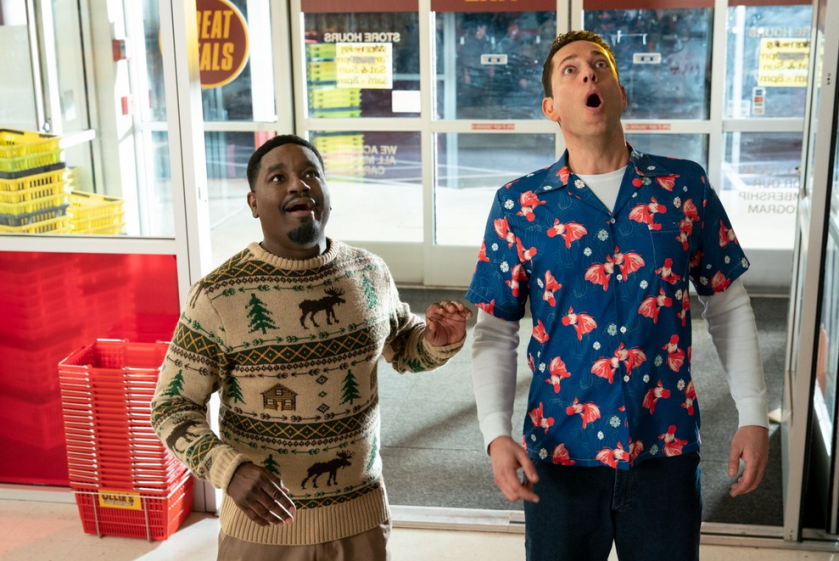
Based on the beloved 1955 children’s book, “Harold and the Purple Crayon” should’ve been a vibrant, whimsical exploration of imagination and creativity. Unfortunately, this adaptation falls flat on nearly every level, offering little more than a soulless attempt to cash in on nostalgia while failing to capture the magic of its source material.
In this version, Harold (Zachary Levi) is no longer the innocent child wielding a crayon to shape his world. Instead, he’s an adult who somehow manages to escape his book and into the real world, bringing along his pals, Moose (Lil Rel Howery) and Porcupine (Tanya Reynolds). From there, things quickly spiral into chaos as Harold’s overpowered crayon creates more problems than solutions, which feels more like a series of haphazard events than a fun adventure.
The movie struggles with tone. While the original book’s simplicity and charm made it accessible for toddlers and preschoolers, this film’s attempt at creating more complex action sequences and outlandish hijinks muddles the story. Mean bullies taunt a child, Harold’s creations cause serious damage and destruction, and there’s even a climactic sequence involving fire-breathing creatures. These moments feel out of place, turning what was supposed to be a light-hearted, imaginative experience into something a bit too intense for the intended audience.
The film’s attempt to add some adult humor with suggestive comments feels out of sync with Harold’s innocent, child-like nature. Why, exactly, is Harold suddenly romantically interested in another character? The character of Harold doesn’t need a romantic angle, and it’s jarring to see it shoehorned into a story that was never about that.
The movie tries to promote positive messages like creativity, courage, teamwork, and friendship, which are great themes—if only they were explored with any depth. The film delivers these ideas with such superficiality that they come off more as a checklist of things the filmmakers think kids should learn rather than genuine moments of growth or insight.
For a film centered around imagination, “Harold and the Purple Crayon” is frustratingly unimaginative. Its chaotic scenes, forced humor, and lackluster exploration of creativity make it a missed opportunity to breathe new life into a classic. Instead of embracing the endless possibilities of imagination, it feels stuck in a rut of contrived, unoriginal gags. It’s hard to imagine anyone, young or old, leaving the theater feeling inspired or entertained. If anything, it’s a reminder that some stories are best left in their original, simpler form.
6. Trap
Writer / director M. Night Shyamalan‘s most annoying filmmaking traits are on full display in his latest movie “Trap,” a psychological thriller that initially promises an engaging narrative but ultimately collapses into the void of ridiculous twists and turns. This is far from Shyamalan’s finest hour, and the film rambles and sputters into one of his most unbelievable and absurd revelations yet, one that is so inanely dumb that it’s impossible to suspend disbelief.
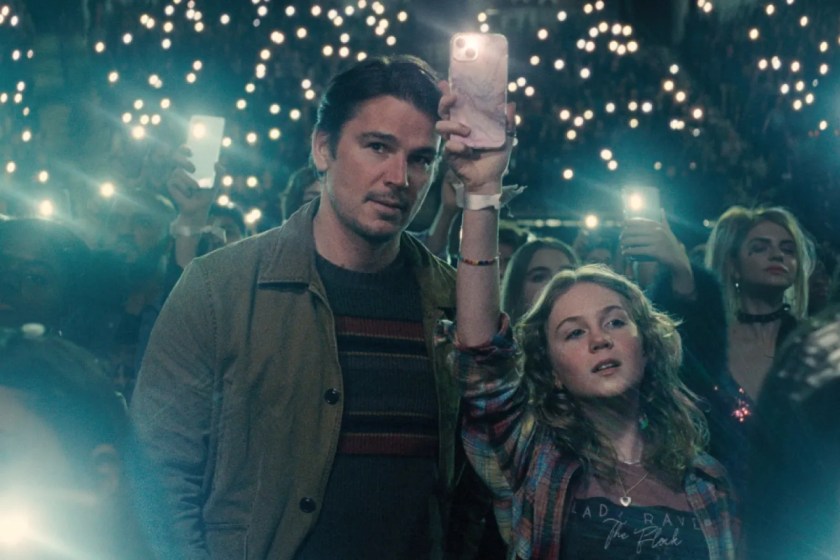
The story follows everyday dad Cooper (Josh Hartnett) attending an afternoon concert with his teenage daughter Riley (Ariel Donoghue). Lady Raven (Saleka Shyamalan) is the hottest ticket in town, and Cooper splurged on floor tickets to make his little girl happy. Things seem fine until they’re not, and it’s revealed that Cooper is actually a serial killer nicknamed Butcher. Turns out the cops have set up a complex police blockade at the show with the intent on capturing him, and it’s clear he has no way out. Forced to use his wits to evade and escape, Cooper comes up with a series of clever distractions in order to keep his deep, dark secret hidden away from the FBI agent and criminal profiler in charge (Hayley Mills).
The first half of the movie is compelling enough, with a tense atmosphere and a buildup that hints at a plot that could have some sophisticated intricacies. It’s fun to watch how Cooper’s mind works, and it’s uncomfortable once you realize you’re rooting for a serial murderer to escape. This is done reasonably well and is the best part of the movie. The second half, however, derails spectacularly. The story becomes increasingly convoluted and nonsensical, introducing a series of ludicrous twists that undermine any semblance of coherence. This is bad even for Shyamalan.
Hartnett does a great job with his performance and is tasked with playing two men in one. He’s believable as the calm and goofy dad, but also switches to a dark psychopath on a dime. He’s by far the best part of the movie. Of course, while Harnett’s performance is one of the most enjoyable aspects, one of the film’s most glaring flaws is the weak turn from Saleka Shyamalan. I don’t want to pick on her as she is the director’s own daughter, but the forced nepotism reeks here. Saleka can’t act, she’s a mediocre singer and songwriter (a half dozen of her original songs are prominently featured during a majority of the film’s run time), and the movie comes across as being made solely to showcase M. Night’s kid while trying to make her a star. Her performance is as unconvincing as Harnett’s is credible.
With a contrived and nonsensical plot, bad performances, and an illogical twist that will leave you more frustrated than entertained, “Trap” is another disappointing effort from a director who could do so much better.

5. Nutcrackers
“Nutcrackers” is absolute garbage that fails to live up to even the lowest of low expectations. There is nothing redeeming about this half-hearted drivel, from a lousy script complete with multiple fart “jokes” and an irritating cast of unknown kid “actors” to a pathetic attempt to turn it into a holiday cash grab by inserting Christmas trees and candy canes in the background while blasting a soundtrack of seasonal tunes. This is, in the most plain and simple language I can muster, an awful movie.
After the sudden and tragic death of his sister, Chicago real estate developer Michael (Ben Stiller) is informed by a state social worker (Linda Cardellini) that he has become the temporary guardian of her four unruly children (real-life brothers Homer Janson, Ulysses Janson, Atlas Janson, and Arlo Janson). Michael travels from the big city to their rural farm, and he soon learns that he is far out of his element. Desperate to corral the feral four, Michael works hard at trying to find a new, suitable home for the boys.
Do I need to tell you where the story goes from here?
Michael’s journey from city slicker to makeshift father is meant to be heartwarming and transformative, but instead, it comes off as contrived and tedious. The script is a predictable parade of clichés, featuring a city man struggling to adapt to rural life, misfit kids who are more annoying than endearing, and a Christmas setting that feels like it was added as an afterthought rather than an integral part of the story.
Every comedy fan knows that Stiller has the skills to back it up, but here he is reduced to playing a role that is far beneath his talents. I’m sure the paycheck was nice but if he refuses to exercise more care in choosing roles going forward, he runs the very real risk of being relegated to junk movies like this in the future. The supporting cast is left with little to worth with, too. Cardellini tries her best, but she’s often overshadowed by the chew-the-scenery kids and their forced, unpolished, amateur performances. These four boys are cute enough, but I don’t see any acting careers in their future.
Billing this movie as a comedy is a stretch. There are barely any laughs, and director David Gordon Green certainly makes very little effort to incorporate actual jokes into his film. If you are expecting even an ounce of humor, you’re going to be sorely disappointed.
It’s clear that Green and screenwriter Leland Douglas envisioned “Nutcrackers” to be a heartwarming Christmas tale with a message about the importance of family, but the emotion is almost completely stripped away by uninspired dialogue and predictable plot points. There’s just no substance here, and there’s certainly a very low entertainment value.

4. Argylle
As a fan of director Matthew Vaughn (“Kingsman: The Secret Service” is one of my personal all-time favorite movies), I was let down by his latest project “Argylle,” a borderline total debacle from start to finish. Everything from the weak story (by screenwriter Jason Fuchs) to the gross miscasting of the lead and supporting actors make this goofy, overhyped action film one thunderous, disappointing dud.
Reclusive author Elly Conway (Bryce Dallas Howard) has found her calling writing espionage novels about a suave secret agent named Argylle (Henry Cavill) and his crackerjack team (John Cena, Ariana DeBose). Her latest bestseller has attracted the attention of a sinister global spy syndicate, a group of clandestine operatives who realize the plot of Elly’s book has somehow begun to mirror real events. Fiction becomes reality as the introverted author is swept up in a cloak-and-dagger world by Aidan (Sam Rockwell), a man who claims to be a spy himself. With her beloved (and distractingly bad CGI) cat Alfie in tow, Elly and Adian travel the globe as the line between truth and imagination begins to blur.
The film is overly long and feels slow, especially during the first half. The stakes aren’t that high because you aren’t sure what’s fictional and what’s real, and the story leads you to assume much of what Elly is experiencing is all just fantasy. The narrative takes a welcome dramatic turn that cranks the adrenaline up a notch, making the second half of the film far better than the first. The most unfortunate thing is that the movie is more of a chore than the entertaining escape it could’ve been (and needed to be).
Piling on the problems is the biggest elephant in the room, which is the nonexistent chemistry between Rockwell and Howard. It almost feels as though off-camera, the two actors don’t care much for each other. Something is definitely “off” here, and they simply do not work well together. Rockwell is talented and does his best, but Howard brings everything down. She’s okay as a mousy, lonely author, but her character goes through a transformation that shows just how poorly cast she really is.
Vaughn is a terrific director, and his trademark style is on full display. There are cartoonish action scenes and thoughtfully choreographed fights that are accompanied by questionable choices in music. There’s a particularly enjoyable “meet cute” (for lack of a better word) on a train that features some clever editing, but Vaughn overuses the gimmick so many subsequent times throughout the film that it aggravates more than it delights. It’s clear the director had grandiose ideas for some super memorable set pieces (the oil slick, smoke dancing) but built a weak film around it, causing them to feel out of place rather than iconic. There are a couple of “hold for applause” moments that I cannot imagine would elicit any from the audience.
Taking over two hours to stretch out his story with bursts of assaulting action visuals, Vaughn doesn’t know when to stop. It’s just too much, of everything. A victim of unrestrained overkill, “Argylle” is a bust.
3. Between the Temples
I don’t have one positive thing to say about “Between the Temples,” one of the worst films not only to come out of the Sundance Film Festival this year, but one of the most disastrous films I have seen in a long time. From its lackluster screenplay to borderline incompetent directing, this is a complete fiasco.
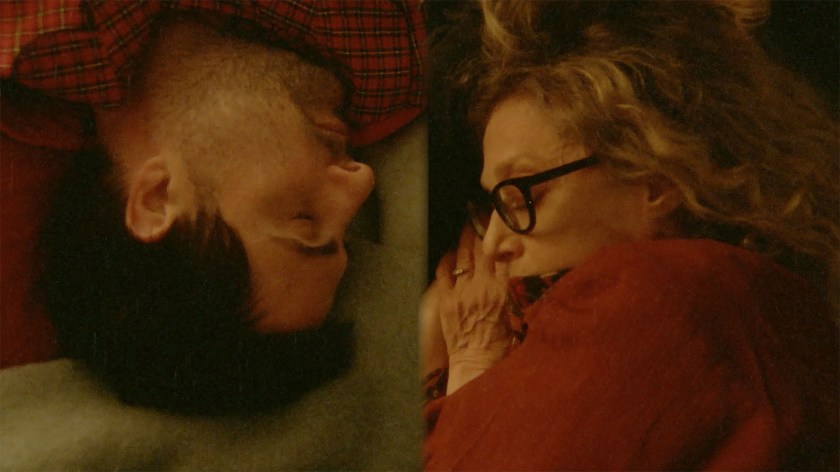
Cantor Ben (Jason Schwartzman) is having a crisis of faith, and his life is about to get more interesting when his grade school music teacher Carla (Carol Kane) comes back into his life as his new adult bat mitzvah student. It sounds like a terrific premise for a film, but director Nathan Silver executes everything so poorly that he completely squanders the could’ve-been-fun narrative.
The film probably will resonate more with the Jewish community than the average moviegoer, as the humor and tone is geared almost totally to that very specific culture. The story is not universal at all, with uninteresting characters and too-specific humor that’s either horribly unfunny or even worse, milked so much that it becomes exasperating (case in point: mudslides).
The mechanics behind the camera are grossly amateurish. The editing looks as if it was done by a 3-year-old with the world’s shortest attention span, and the quality of the filmmaking is irritating (and actually nauseating). The cinematography is terrible too, with a retro look that adds absolutely nothing to the already weak story.
Don’t get fooled into thinking that this is a good film because of the talented cast. It’s a cinematic crime to waste Kane and Schwartzman in this way, but they do their best with the garbage material they’ve been given. Nothing can save “Between the Temples.”
2. Sasquatch Sunset
As a fan of the filmmaking brothers David and Nathan Zellner and their offbeat brand of humor and awkward storytelling style, I had much higher hopes for “Sasquatch Sunset” than I guess I should have. Disappointingly unfunny and too reliant on gross-out gags, this weird movie about the antics of a bigfoot family is a massive misfire on every level.
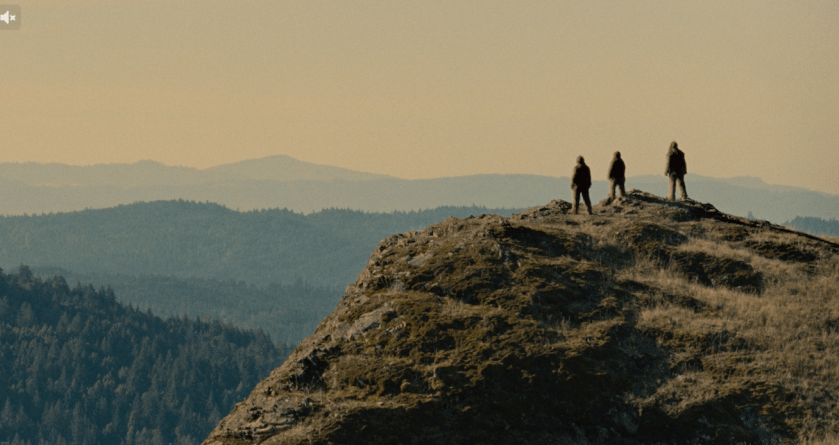
This absurdist film is set up like a bad nature documentary, a strictly observational look at a year in the life of a sasquatch clan. There’s the alpha (Nathan Zellner), the female (Riley Keough), the male (Jesse Eisenberg), and the child (Christophe Zajac-Denek), and their existence is not all that interesting. They forage for food and explore the forest around them, with lots of sniffing, barking, farting, defecating, and scratching along the way. Even a fictional look at the day-to-day routine of a sasquatch brood quickly wears thin.
Perhaps if the Zellners had gone with a more traditional mockumentary route, the movie wouldn’t feel so sluggish. There’s only so much the talented indie cast can do when their dialogue amounts to nothing more than a series of barks and grunts. Buried under layers of fur and makeup, the roles demand a lot of physicality, which would’ve worked far better with more slapstick gags.
The script feels like it was written by 14 year old boys who wanted to include every single poop, pee, and sex joke they could dream up. It also isn’t a good sign that the majority of the time I was questioning whether or not something was supposed to be funny, as it was all so unclear. I do know one thing that was crystal, however: I never laughed. I found nothing to be humorous, just weird and gross (and for the Zellners, that’s saying something).
The interesting thing about all of this is that while the movie isn’t compelling, I was still invested in the outcome. I wanted to know what happened to each of the creatures, even if their eventual fate is a bit of a letdown. The film teeters on the verge of being a total train wreck, yet I couldn’t seem to tear myself away. It’s not bad enough to walk out of, but it’s also not good enough nor enjoyable enough to recommend, which leaves “Sasquatch Sunset” in niche film purgatory. It begs the question, “who is the audience for this?

1. Megalopolis
Around the 90 minute mark, well after I realized I had already wasted over an hour of my life watching legendary writer / director Francis Ford Coppola‘s self-financed passion project “Megalopolis,” a character muses that there are two things impossible to stare at for too long: “the sun and your own soul.” I’d like to add a third: this trainwreck of a movie. It’s not a “so bad it’s good” situation, and anyone who willingly sits through the entire thing because they want to and not because they have to deserves a medal for their stamina.
In a sprawling, rambling, outrageous epic, Coppola brings his visions of grandeur to the screen with almost zero success. The film tells the story of architect Cesar Catilina (Adam Driver) and his ambitious utopian project called “New Rome.” Catilina wants to build the perfect city using the newly discovered miracle material Megalon. This pits him against the city’s current mayor, Cicero (Giancarlo Esposito), a staunch conservative who is vehemently opposed to Catilina’s radical ideas. Tensions are high and things are further complicated by Cicero’s spoiled adult children (Shia LaBeouf, Chloe Fineman), the romantic relationship between his daughter Julia (Nathalie Emmanuel) and Catilina, Caesar’s wealthy banker uncle Hamilton Crassus III (Jon Voight), and an overly ambitious television reporter Wow Platinum (Aubrey Plaza) who wants to control all the money and power in the city.
Coppolla’s story attempts to draw parallels between the fall of Rome and the future of the United States, but his messaging is messy. It certainly is ambitious, exploring big ideas about genius, power, and the fragility of empires, but the blend of political drama, philosophical science fiction, and romance is a tangled disaster. Coppola struggles mightily to find coherence in his storytelling.
The film’s musings on power and corruption are overshadowed by overwrought, clunky dialogue and downright bizarre performances. Driver, a usually reliable actor, delivers a performance that veers wildly between earnest and unintentionally funny. His character’s tortured genius is undermined by some truly cringe-worthy scenes (one instance where he repeatedly screams “no, no, nooooooo!” is one of the worst offenders).
Plaza and Voight chew the scenery too, and Emmanuel’s accent work here is so bad it’s unacceptable. Despite playing a wildly eccentric character, LaBeouf fares better and offers the most grounded performance, but even his efforts can’t save the film. I find it not only difficult but actually impossible to believe that the entire cast of actors isn’t embarrassed by their involvement in this movie. The writing is so bad – so bad – that it makes all the actors look bad, too. (I’m talking to you, too, Laurence Fishburne, and your voiceover delivery of abysmally-written narration).
The film gets even weirder with random psychedelic and sci-fi moments, and Coppola isn’t subtle with his messaging. The story is filled with heavy-handed metaphors that leave little to the imagination, and Coppola’s attempt to comment on modern society’s obsession with greed is too blunt and at times, openly condescending. Instead of provoking thought and discussion, it comes off as forced, preachy, and out of touch. It’s not that I didn’t “get it,” it’s that Coppolla beats audiences over the head with ideas that feel simultaneously modern yet outdated. The fact that Coppolla calls this disaster a “prescient Modern American epic” shows just how full of himself he really is. This film simply is not as profoundly important as he thinks it is, either.
In case you haven’t gotten the message by now, let me assure you that no matter how low your expectations, you aren’t prepared for how truly bad this movie is. There are many scenes that are clearly not intended to be funny, yet caused my stifled snickers to burst forth as a roar of laughter. The best part of the film is a tie: either a scene where a bruised and bloodied Driver sings opera in his underwear, or the one where Elvis shows up holding an American flag. That’s how weird this movie is.
“Megalopolis” is a film that will undoubtedly be talked about, but not for the reasons Coppola might have hoped. His visionary ambition is overshadowed by poor writing and incoherent execution, and instead of delivering a modern epic, Coppola has crafted a cinematic misfire that is more exhausting than exhilarating. For those willing to bravely stick it out, the reward is witnessing one of the most baffling films of the year — although you will regret not walking out long before the credits roll.
___________________________________________________________________________
DISHONORABLE MENTIONS
Among some of my picks for the worst of the year, these films came close to cracking the bottom 10:
 Screen Zealots