
Although far from perfect, I found a lot to admire about indie horror film “Rock Springs,” a highly ambitious debut feature from writer and director Vera Miao. Drawing from the real life Rock Springs massacre of 1885, when white coal miners in Wyoming brutally attacked and killed dozens of Chinese workers, the film connects past and present through folklore, memory, and inherited trauma. This is horror where the ghosts aren’t just supernatural, but also historical.
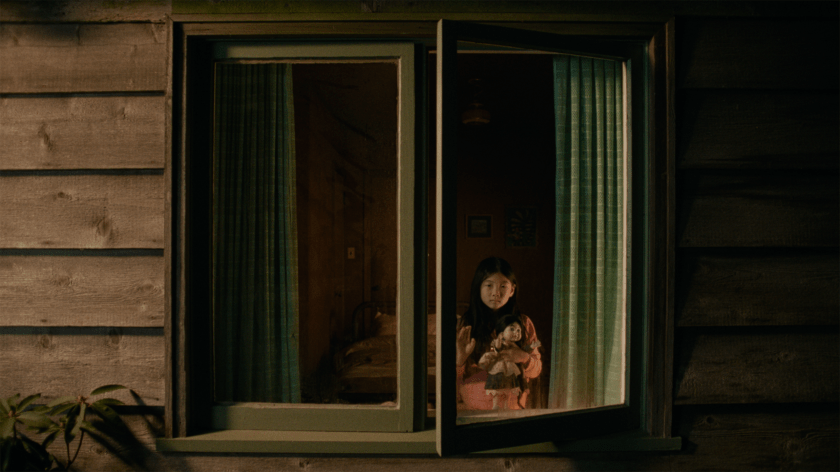
After her father’s death, a young girl (Aria Kim) moves with her mother (Kelly Marie Tran) and grandmother to an isolated house in a new town, only to realize something deeply wrong is buried in the woods (and in the town’s past). What starts as a quiet, creepy ghost story keeps expanding into something much heavier and more resonant.
Tran is excellent as a mother trying to protect her child while carrying her own unspoken fears, and Benedict Wong delivers a haunting, visceral performance that pulls the violence and grief of the past into sharp focus. The cast is firing on all cylinders here, with everyone giving strong turns.
The film oozes atmosphere, which adds to the overall haunting tone. Heyjin Jun’s cinematography wraps everything in dread, making the forest, the house, and even silence feel threatening. This film nails the mood its going for.
Miao takes big swings with her storytelling, structuring the film in nonlinear chapters that revisit the same events from different perspectives. It’s challenging and sometimes feels a bit showy, but the amateurish visual effects occasionally bring things back down to Earth (and will totally take you out of the movie). The ambition largely pays off, though, because history never moves in a straight line. It’s also a stark warning to listen to the past or else be doomed to repeat it.
“Rock Springs” is eerie, thoughtful, and emotionally charged, offering a fresh and unsettling take on the immigrant experience in America. It feels urgent and deeply relevant, reminding us that healing doesn’t come from forgetting the past, but from finally facing it.
By: Louisa Moore
 Screen Zealots