
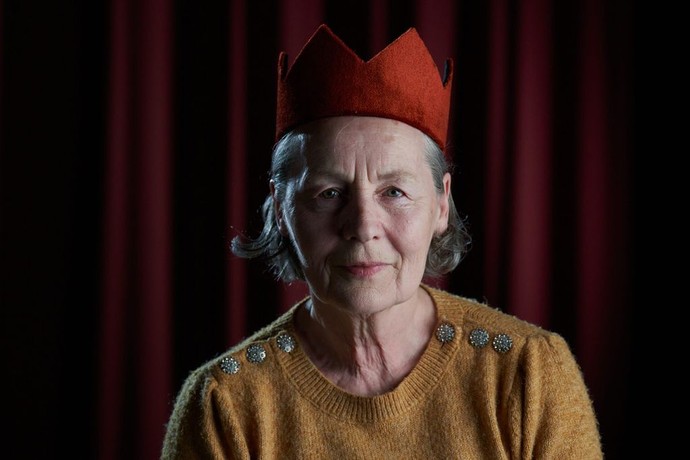
“Birita” is an incredibly intimate documentary, one where you’re being invited into something deeply personal rather than just watching from a distance. Directed by Búi Dam, the film centers on his mother, Birita Mohr, a celebrated stage actress who is now living with Alzheimer’s. The story follows their family’s attempts at something both beautiful and controversial: staging King Lear with her in the lead role.
Set against the lovely backdrop of the Faroe Islands, the film balances big emotional stakes with surprisingly bright and joyful moments. A lot of documentaries about Alzheimer’s choose to lean heavily into tragedy instead, and while that grief is absolutely present here, Dam makes space for laughter, playfulness, and connection with his mother in a way that feels honest rather than forced.
The film explores the pain of lost memory. Even as Birita can no longer communicate in traditional ways, there’s this sense that something essential about her as a performer is still there. Through music, acting, and the rhythms of rehearsal, the film suggests that emotional memory (including the feeling of being on stage and expressing feelings) can outlast the more functional parts of the mind. It’s something that comes across as not only comforting, but also quietly heartbreaking.
The film isn’t without controversy. Dam’s decision to cast his mother raises real ethical questions, and the documentary doesn’t shy away from that. You can feel the push and pull between artistic intention and care giving responsibility, especially as his father (a former theater director) tries to balance supporting the project with the realities of extensive daily care.
“Birita” never feels exploitative, coming across as an act of love between a son trying to reconnect with his mother in the language they both understand best. It’s a story that’s less about the disease and more about identity, legacy, and what it means to truly live in the present.
By: Louisa Moore
 Screen Zealots