
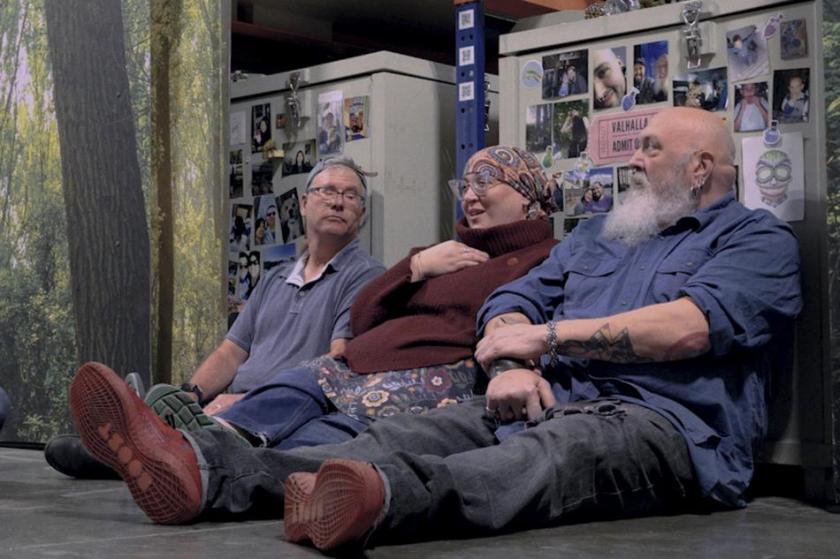
Director J.J. Gerber’s “The Life We Leave” is a documentary where the subject alone is enough to make you do a double take. Human composting (which is referred to in the funeral industry as terramation) is not exactly the kind of thing most people spend their free time thinking about, and the movie knows that. Right from the start it leans into the curiosity factor, asking is this the future of deathcare, or just a really, really strange idea?
The film follows entrepreneur Micah Truman as he tries to launch the world’s first large-scale terramation facility after Washington became the first place on Earth to legalize human composting. Truman is clearly passionate about the environmentally-friendly concept of returning bodies to the earth naturally instead of embalming them or cremating them, and the film at first plays out like a business startup story. He is a visionary who is trying to build something new, shake up an old industry, and convince people that this option makes a whole lot of sense.
Of course, it doesn’t go as smoothly as he hopes. The traditional funeral industry isn’t exactly thrilled about this new competitor, and Truman quickly realizes the business side of things is only half the challenge. Working alongside funeral directors Brie Smith and Katey Houston, the film shifts from being about an innovative business idea to being about the people who actually have to deal with death every day.
That shift is where the documentary gets a lot more interesting, especially as it turns into a bigger conversation about grief, rituals, and how families process loss. The people working in this space aren’t just running a business, but helping people through some of the hardest moments of their lives. The film spends a lot of time exploring that highly emotional side of deathcare and how important those rituals can be for grieving families.
The film is pretty matter-of-fact about the science and process behind human composting, which means there are moments that might be uncomfortable for some viewers. The documentary includes frank discussions (and sometimes gruesome imagery) that don’t sugarcoat what happens to a body after death. It’s not presented in a sensational way, but it can definitely be disturbing if you’re squeamish or not prepared for the subject matter. Anyone curious about the film should probably make sure they’re okay with that before going down this particular rabbit hole.
At times, the documentary does run a little long. Some of the themes and explanations get repeated, and you can feel the runtime stretching a bit in the middle. Still, the topic itself is so unusual and thought-provoking that it’s easy to stay engaged even when the pacing slows down.
What ultimately makes “The Life We Leave” work is its willingness to look beyond the novelty of human composting and focus on the deeper questions around death, legacy, and how we remember the people we lose. It’s a fascinating look at an industry most of us rarely think about until we have to, and it raises interesting questions about how our cultural attitudes toward death might evolve in the future.
By: Louisa Moore
 Screen Zealots