
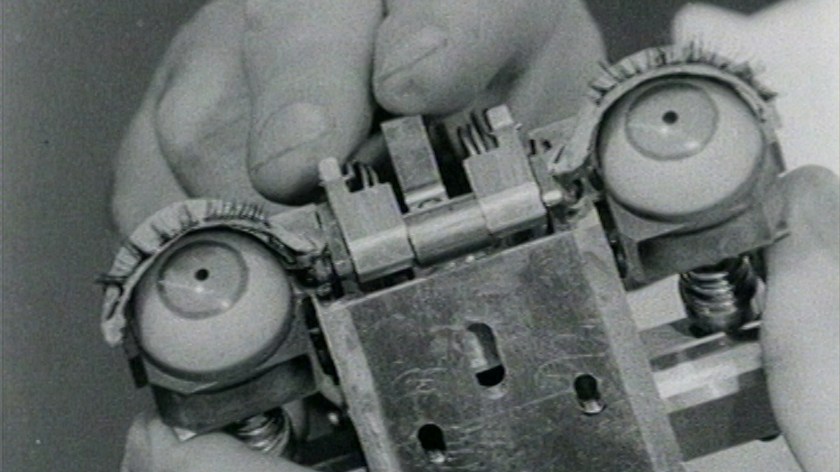
“Ghost in the Machine” wants very badly to be urgent, mind-expanding, and revelatory. Instead, it ends up feeling like an overlong lecture. This it the type of documentary that mistakes sheer volume of information for insight, and it doesn’t even have anything that urgent nor revelatory to say.
The documentary sets out to explore the untold origins of artificial intelligence, arguing that AI’s roots lie not in machines but in political, cultural, and economic power. It promises to interrogate who builds AI, who benefits from it, and how it reshapes identity, labor, and global inequality. It sounds like a timely, fascinating, and genuinely important subject, but director Valerie Veatch’s execution is painfully dry.
Veatch assembles an impressive lineup of historians, philosophers, sociologists, journalists, and other thinkers from around the world, but the film quickly becomes overstuffed with bland academic information. It drones on while piling fact upon fact, figure upon figure, and concept upon concept until it feels less like a documentary and more like a tedious corporate training session that you can’t leave. It quickly reaches the point where it’s easy to throw up your hands and mentally check out.
That’s what makes the film so frustrating. The material cries out for sharper storytelling and a more dynamic point of view, and this documentary buries the growing complexities of AI under an avalanche of data. The result is a film that feels impersonal and oddly toothless given how much it wants to warn us about exploitation and loss of agency.
“Ghost in the Machine” isn’t just boring, but it’s disappointing. For a film about one of the most consequential technologies of our time, it’s extraordinarily dull and lifeless.
By: Louisa Moore
 Screen Zealots