
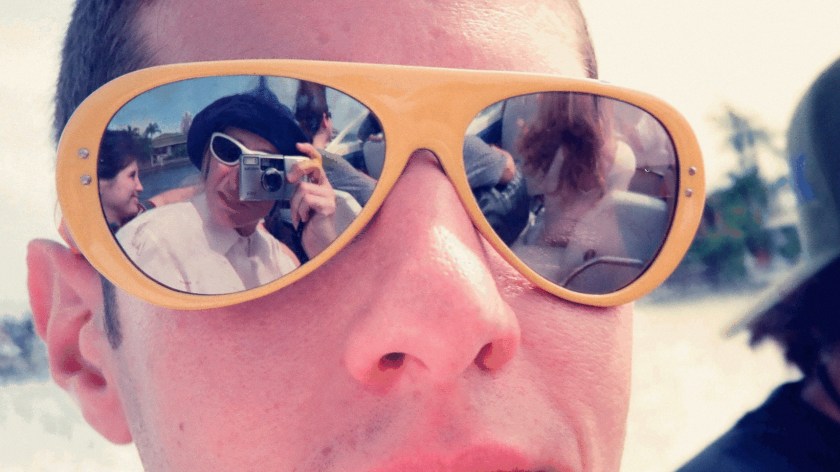
“The Best Summer” is the kind of documentary that mistakes access for substance. In what amounts to nothing more than a young woman’s (in this case, director Tamra Davis) video of the 1995 Summersault music festival spent with friends and artists like the Beastie Boys, Sonic Youth, Pavement, Bikini Kill, and Beck, this rediscovered footage is undeniably cool on a purely archival level. But as a film, it barely exists beyond the novelty of what’s on screen.
If you’re a fan of these bands, you’re going to enjoy seeing the behind-the-scenes and candid moments captured up close while these artists were loose and young. What you’re really watching is a box of old videotapes emptied out in chronological order and labeled an “all-access” documentary, which feels generous at best.
Shot on 8mm from a fan’s perspective, it has that jittery, intimate cinema verité energy that immediately signals the pre-social media era, a time when cameras were rare and people weren’t performing for them. Long, uninterrupted takes of entire songs let your eye wander naturally and nothing feels staged or polished. That rawness is the film’s greatest strength, yet also its biggest limitation. Davis films exactly what she wants to see, and we see nothing more than that. The performances, backstage chatter, and casual interviews may all be unfiltered, but they’re also ultimately shallow.
For a movie sold as an immersive oral history, this documentary offers surprisingly little context, insight, or reflection. Here we are thirty years later, and there’s no real discussion of what Summersault meant, why it mattered, or how this moment in music connects to anything beyond nostalgia. The bands are charming, funny, and charismatic, but the film never builds an argument, a narrative, or even a point of view beyond “hey man, look at how cool we were back then!” Concert footage and chatty interviews don’t make for the most interesting documentary.
If you’re already a fan of these bands, the movie works as a pleasant time capsule and plays like a home video of kickass mid-’90s performances you’ll be happy to hang out with for a while. If you’re not, there’s almost nothing here of any interest or importance. “The Best Summer” preserves a moment in time, but preservation alone isn’t filmmaking. A documentary needs more than access and vibes, and this one never finds anything deeper to say.
By: Louisa Moore
 Screen Zealots