
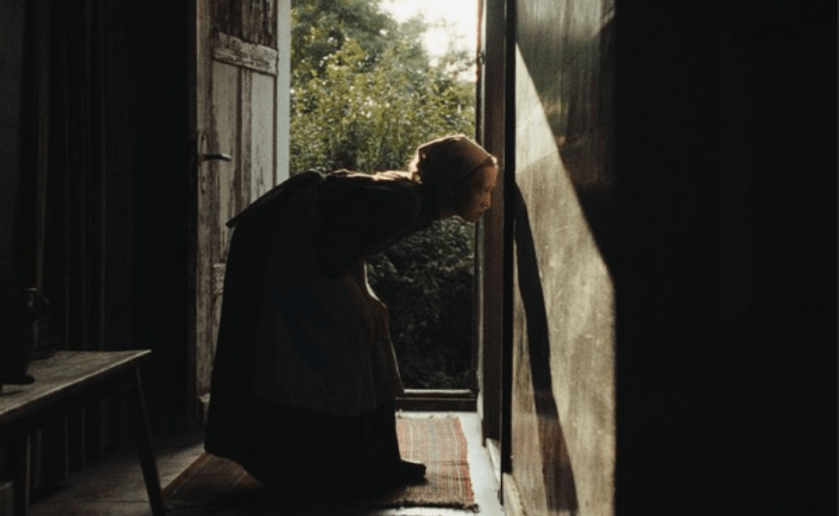
Director Mascha Schilinski’s “Sound of Falling” is like a hypnotic meditation on time, memory, and the quiet violence that echoes through generations. Set on a remote German farm near the Elbe River, the film braids together the lives of four girls, Alma, Erika, Angelika, and Lenka, each growing up in the same house across a span of more than a century. Though separated by decades, their experiences begin to mirror one another so closely that chronology itself seems to erode.
The story sounds gimmicky, but Schilinski structures the film with an impressionist’s eye, moving fluidly between eras rather than following a linear progression. The early 1900s bleed into the Second World War, the German Democratic Republic of the 1980s, and present-day Germany, creating a sense that the past is never fully buried and that history will follow humans until the literal end of time. Political and personal trauma lingers in gestures, spaces, and silences. The farmhouse becomes a living archive of fear, repression, and endurance, reflecting a nation shaped by repeated upheaval.
The stories are woven together through the casual horrors endured by women, including normalized violence, emotional neglect, and the steady erosion of agency under society’s male dominance. Across decades, the girls confront different manifestations of the same oppressive structures. These disturbing realities feel all too familiar.
Rather than offering any sort of resolution, the story lingers in ambiguity. It suggests that gender trauma is not simply remembered but absorbed and passed down in ways that are felt before they are understood. The more things change, the more they stay the same.
Somber, demanding, and meticulously crafted, “Sound of Falling” is an unsettling but deeply resonant film, an elegy for the ghosts women carry and those they leave behind.
By: Louisa Moore
 Screen Zealots