
“Sentient” is one of the most emotionally difficult documentaries I’ve ever had to watch and review. It literally has given me nightmares for the last couple of nights, and I can’t shake some of the stories and imagery in the film. Director Tony Jones has made a documentary that I wholeheartedly wish I had never seen, but I also realize it was important to do so.
This film is devastating (especially if you’re an animal lover), but it’s also deeply thoughtful, measured, and important. This is not a film that shocks for the sake of it, but one that confronts you with reality and then asks you to sit with the consequences.
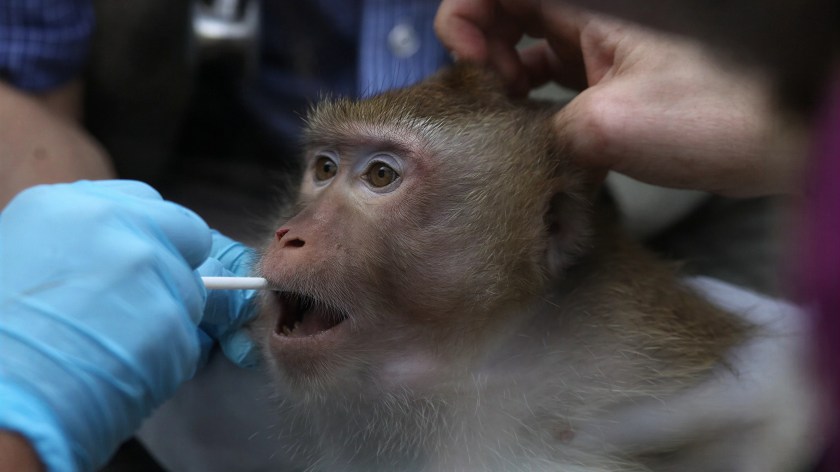
The documentary takes viewers inside the secretive world of high security animal testing laboratories, including unprecedented access to one of the largest animal research facilities in the U.S. (at the University of Washington in Seattle). What unfolds is absolutely heartbreaking. The footage from inside these labs is traumatic, even truly horrific at times, showing innocent animals (particularly primates) trapped in what the film describes as a “care-kill complex.” This is a place of torture where these animals are nurtured, studied, harmed, and ultimately killed. It’s distressing on a level that’s hard to put into words.
What makes the documentary especially powerful is that it doesn’t only focus on animal suffering, but it also shines a light on the human cost of this industry. Interviews with former lab workers and technicians reveal profound psychological damage, moral dissonance, and lasting trauma. Watching people wrestle with the knowledge that they caused harm, often while genuinely caring for the animals, is absolutely heartbreaking. The film makes it clear that the industry itself understands that damage is being done not just to animals, but to the people involved. That being said, I personally would never accept a position at any place of employment that required me to do these things to another living creature, so I found it impossible to have much sympathy for any of the human subjects in the documentary.
At the center of the film is Dr. Lisa Jones-Engel, a highly respected primatologist who spent decades working with chimps and monkeys before coming to the realization that her life’s work had caused profound harm. Her journey from insider to animal welfare advocate is devastating and compelling, and it gives the film a deeply human anchor. Through her story, the film asks its central question: can we still justify harming animals (and ourselves) in the name of science?
The information presented is very balanced. There are serious, damning statistics about animal testing and questions about its effectiveness, but Jones also includes conflicting voices and acknowledges the complexity of medical research. The film approaches the subject with empathy rather than accusation, allowing the ethical questions to emerge naturally. Do we need to continue to test on animals? Do we have the right to? What cost is too high for scientific progress?
“Sentient” exposes a hidden world where suffering is normalized and asks viewers to reconsider long-accepted assumptions about science, progress, and ethics. It’s upsetting, emotionally exhausting, and at times overwhelming, but it’s also one of the most important and thought-provoking films you’re likely to see. This is a documentary that stays with you long after it ends, whether you want it to or not.
By: Louisa Moore
 Screen Zealots