
Park Chan-wook has always excelled at turning human desperation into something wickedly funny and deeply unsettling, and “No Other Choice” may be one of his sharpest social takedowns yet. Adapting a crime novel by Donald E. Westlake and relocating it to present-day South Korea, Park reframes a classic noir setup as a scathing satire about late capitalism, fragile masculinity, and a job market so ruthless it turns the best of colleagues into the worst of enemies.
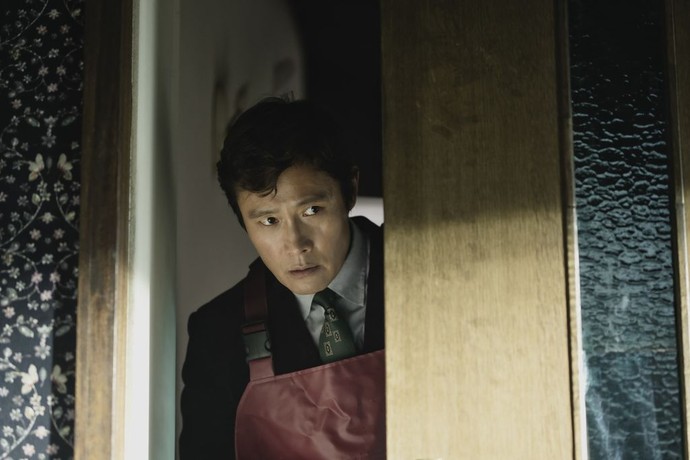
Lee Byung-hun is terrific as Man-soo, a man who appears to have done everything right in his life. He’s devoted decades of loyal service to Solar Paper, earned accolades like Pulp Man of the Year, and built a comfortable life for his wife Mi-ri (Son Ye-jin), their children, and even their dogs. But loyalty proves meaningless in a system that values efficiency over people. When Man-soo is abruptly laid off, his identity collapses almost overnight. Mortgage payments pile up, his wife pushes to sell the family home, and his sense of dignity begins to rot from the inside.
What follows is an often bleak and sometimes hilarious, morally corrosive tale. Desperate to secure a coveted position at Moon Paper, Man-soo concocts an outrageous plan that involves creating a fake paper company to lure rival job candidates into private meetings where he can quite literally eliminate the competition. It’s an escalation that feels absurd yet disturbingly plausible within the film’s worldview, where economic pressure erodes ethical boundaries with ease.
The film relentlessly skewers workplace politics, seniority worship, and the way capitalism reduces human beings to interchangeable, machine-like parts. The repeated phrase “no other choice” becomes a haunting mantra, used by characters to absolve themselves of responsibility for actions that are increasingly indefensible. This is a world where self-preservation is the only thing that truly matters.
Despite its dark subject matter, the film finds a lot of humor in its premise. Park leans into black humor and moments of near slapstick, using comedy to underline the sheer absurdity of the situation. The laughter only makes the moral rot hit harder, highlighting how humiliation, pride, and despair intertwine in a system that equates self-worth with employment and masculinity with financial dominance.
“No Other Choice” is a nasty, incisive critique of capitalism and the violence it can breed. Given the right pressures, anyone can become monstrous (especially when survival, status, and pride are on the line).
By: Louisa Moore
 Screen Zealots