
“The Secret Agent” is a smart, immersive, slow burn thriller that wears its political history lightly while never letting you forget the weight of what’s at stake. I loved everything about writer and director Kleber Mendonça Filho’s fantastic film, and it’s an outstanding achievement in every possible way.
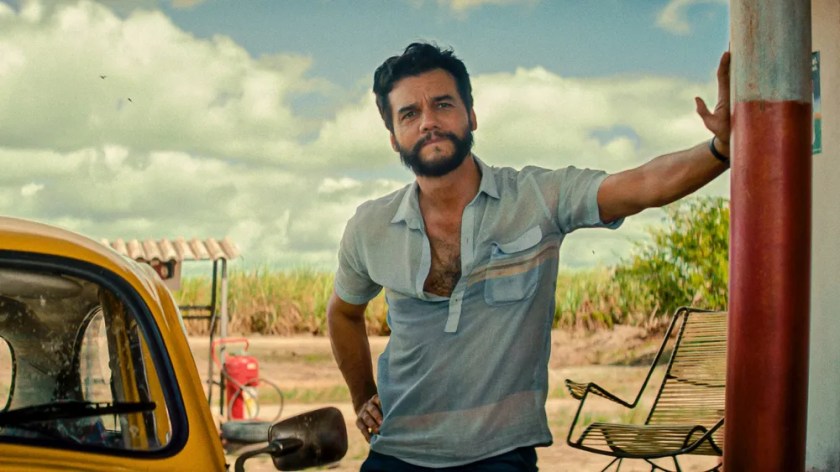
Set in Brazil in 1977, the film follows Marcelo (Wagner Moura), a technology expert in his early 40s who arrives in Recife during Carnival hoping to reunite with his son. What he finds instead is a city pulsing with danger, paranoia, and unspoken rules. It’s hardly the safe haven he imagined.
This is a deeply layered film about Brazil’s oppressive military dictatorship, filtered through an imaginative (and sometimes harsh) genre lens. While it borrows the texture of 1970s espionage thrillers (hidden identities, forged documents, secret networks, and the constant fear of surveillance), Marcelo is no glamorous spy. He’s simply a man trying to survive the best he can. The film is less about the slick spy trade and more about the quiet, exhausting vigilance required to stay alive under authoritarian rule. In that sense, Filho powerfully reframes the idea of a secret agent as an ordinary citizen forced into secrecy by circumstance.
Without being dry or academic, the film explores themes like systemic corruption and the way power collapses distinctions between the military, police, and criminal worlds. It also digs into collective trauma, including how political violence fractures memory, suppresses truth, and leaves people grasping for identity and belonging while on the run. Threads of resistance run throughout and are portrayed as overt acts of defiance as well as tight knight community bonds that are fueled by stubborn refusals to disappear. The power often lies in the people who are fighting back.
What’s amazing is how entertaining the film is. The tension builds patiently, conspiracies unfold organically, and the sense of dread never goes away. The film even weaves in coded journalism and popular culture references (including “Jaws”) as clever commentary on how historical truths are buried and distorted under state violence.
Even better, the film is a visual knockout. Detailed production design and cinematography capture late 1970s Brazil, from the vibrancy of Carnival to the violent, bloody menace lurking beneath the surface. It genuinely looks and feels like a film from that era, anchoring the story in a specific, turbulent moment in the country’s history.
Balancing such complex ideas with genre thrills isn’t easy, but “The Secret Agent” pulls it off perfectly. It’s thoughtful, tense, politically sharp, and consistently engaging, and how refreshing to see a film that not only respects its audience, but delivers tenfold.
By: Louisa Moore
 Screen Zealots