
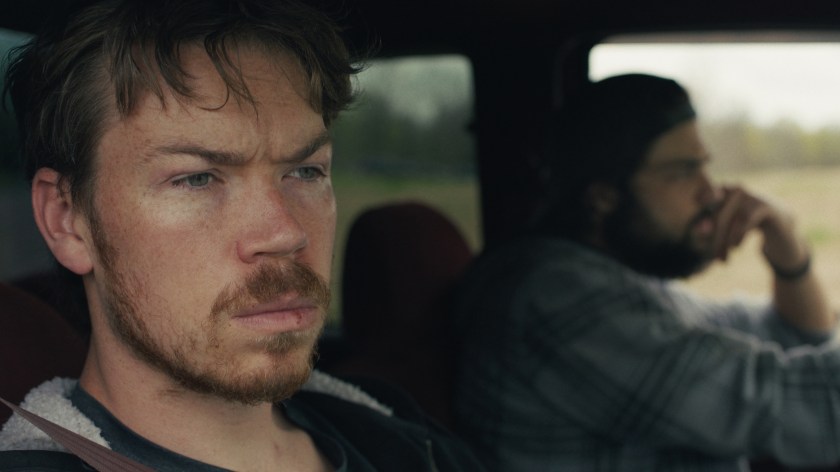
“Union County” is a quietly earnest little drama that’s more about recovery than addiction itself. It’s authentic in a way you don’t always see, which makes it feel almost like a hybrid narrative / documentary. The film includes real members of an Ohio recovery program sharing their stories alongside the fictionalized parts, which makes the story feel grounded and lived-in. Unfortunately, this approach also occasionally pulls you out of the story when real-life collides with fiction.
While the cast of local non-actors adds a layer of honesty that’s rare in these kinds of small-scale addiction / recovery films, Will Poulter is strong as Cody Parsons. He fits the part and is quiet and affecting in the lead role. This also makes him stand out from the crowd as a trained professional, and it’s too easy to pick out the career actors versus the normal folk who co-star. I understand what director Adam Meeks was going for, but that really hurt the movie for me.
At least the film doesn’t go for sensationalism. Meeks opts for a slow, steady look at people taking life one day at a time. These are recovering addicts who are religiously going to meetings, working hard at getting jobs, and sadly facing setbacks, and the film does a decent job of showing the cyclical nature of recovery without turning it into melodrama. Anyone who has ever been in recovery or has shared the journey of a recovering addict will find so much that rings true here, mostly because the film is depicting real life. Then again, it’s a pretty typical recovery story, and some of the documentary-style interjections make the fictional scenes feel uneven and too staged.
The film clearly cares about the town and the people in it, and that sincerity gives the film a whole lot of respectful dignity. Conversations about addiction and recovery aren’t often hopeful, and the film does not shy away from that harsh reality (which is refreshing and honest).
“Union County” doesn’t quite rise above being a quietly competent indie drama, but it will certainly resonate with viewers who personally know someone who’s been through the system.
By: Louisa Moore
 Screen Zealots