
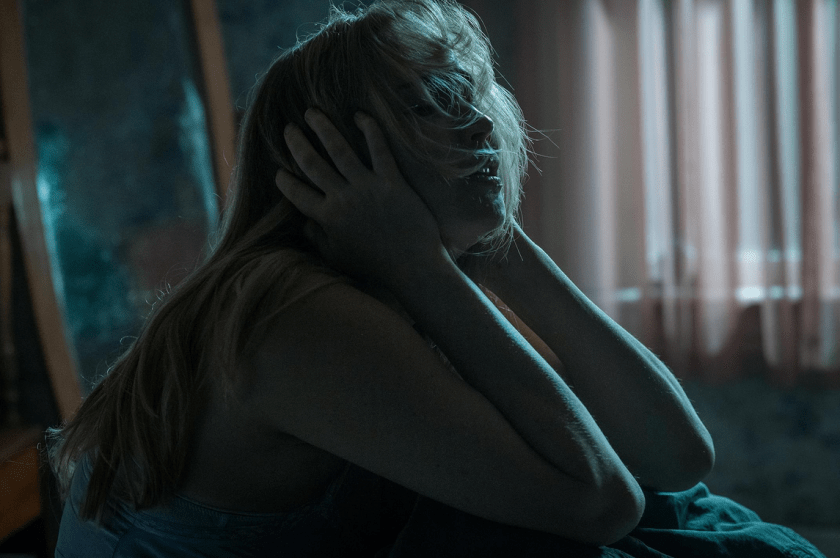
Adapted from Ariana Harwicz’s novel, “Die My Love” is a suffocating, overwrought exercise in self-importance. Director Lynne Ramsay wants so desperately to be profound with her unflinching exploration of postpartum depression, isolation, and the breakdown of identity. Unfortunately, the end result is an agonizing, self-indulgent experience that mistakes chaos for depth and misery for meaning.
Jennifer Lawrence gives an undeniably committed performance as Grace, a young mother unraveling in the wake of childbirth. She crawls on all fours, screams, and thrashes her way through the film with feral intensity. But despite her raw energy, the character feels one-note. The film traps her (and the audience) in an endless cycle of hysteria and suffering that’s painfully repetitive. It’s not that Lawrence isn’t good, but the script gives her nowhere to go except down. Way down.
The story itself is paper-thin, stretched painfully across nearly two hours. Grace’s husband Jackson (with a disappointing and bland performance from Robert Pattinson) remains frustratingly passive as she spirals deeper into psychosis, and the film’s refusal to address her obvious need for help borders on maddening. The themes are rich in potential but the execution is muddled and repetitive. The result feels less like a daring psychological portrait and more like a punishing endurance test.
Ramsay leans heavily into surreal imagery (a black horse, a phantom motorcyclist) meant to symbolize Grace’s repressed desires and primal instincts. But these sequences come off as forced and pretentious where the blurred line between reality and hallucination might have been intriguing if it weren’t so sloppily handled.
What’s most frustrating is that the film flirts with interesting ideas (particularly the notion that not all women are suited to motherhood, the claustrophobia of domestic life, and suffocating societal expectations), but it never truly engages with them. There is a potentially fascinating conversation to be had, but the film instead reduces Grace’s experience to a series of chaotic outbursts and is content to wallow in misery and abstraction.
By the end, “Die My Love” is so consumed by its own darkness that it forgets to be about anything other than itself.
By: Louisa Moore
 Screen Zealots