
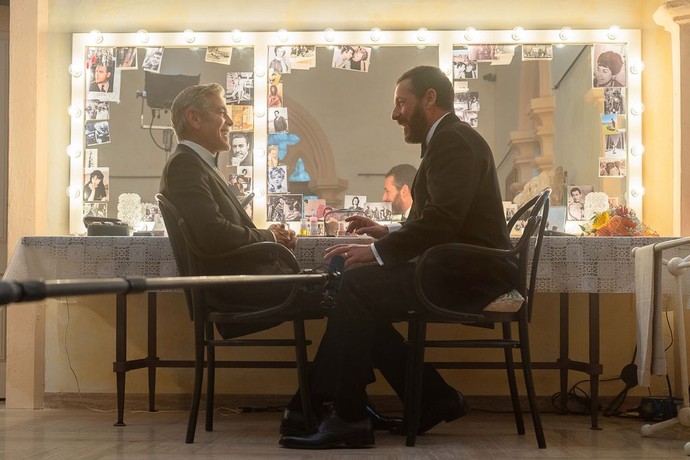
“Jay Kelly” is a lopsided, sometimes irritating, sometimes wonderful piece of filmmaking, one that begins on the wrong foot but ultimately finds its stride in moments of genuine poignancy. The opening act is almost aggressively grating, filled with Hollywood caricatures behaving in ways so exaggerated and self-satisfied that you might wonder if director and co-writer (with Emily Mortimer) Noah Baumbach lost the plot entirely. But then, almost quietly, the film shifts. It stops trying to impress you and instead invites you into something warmer, more reflective, and significantly more human.
The film tells the story of Jay (George Clooney), a famous movie star who embarks on a journey of self-discovery after the death of his mentor and a chance encounter with a former colleague (Billy Crudup). Feeling lost and disconnected in life, Jay impulsively heads to Europe with his devoted manager Ron (Adam Sandler) in tow to hopefully reconnect with his daughter (xx).
Baumbach’s structure may be wobbly, but there’s still a lot of like about the movie. This is absolutely a case of great scenes strung together by a not-so-great story, yet those scenes that work well are often so resonant they nearly redeem the film’s unevenness. The portrayal of memory is where the movie shines, with Jay picturing the soft flashes of past loves, missed opportunities, and alternate lives that he might have lived. These moments feel lived-in, intimate, and far less superficial than the film’s overarching plot, which strains a bit too hard to seem meaningful.
Clooney carries the film with a kind of effortless melancholy, grounding even its most self-indulgent stretches. He plays Jay as a man who has spent his life performing, only to suddenly discover that he doesn’t know how to stop. The cost of fame, regret, the longing for redemption are all things Clooney sells with a mix of charm, vulnerability, and a hint of self-mocking awareness. He’s perfectly cast here.
Sandler, however, is not. While his performance is humble, sometimes funny, and offers a counterweight to Jay’s spiraling self-reflection, the actor doesn’t seem right for the role. He and Clooney go together like oil and vinegar. They simply don’t make a terrific big screen duo.
The story reverberates with Baumbach’s usual concerns, like the divide between public personas and private selves, the uneasy reckoning with one’s legacy, and the desperate desire to be a better parent, partner, or friend than the record might show. The film wants so badly to be profound (and Baumbach clearly thinks it’s far more profound than it actually is) and while it doesn’t always earn the weight it places on its own ideas, the sincerity behind those ideas gives the movie a gentle glow that feels like an endearing pat on the collective heads of the audience.
“Jay Kelly” is messy yet meaningful, and frustrating yet touching. Stay past the rocky beginning and you’ll find a film full of beautifully crafted moments and little truths about fame, regret, and the fragile possibility of redemption.
By: Louisa Moore
 Screen Zealots