
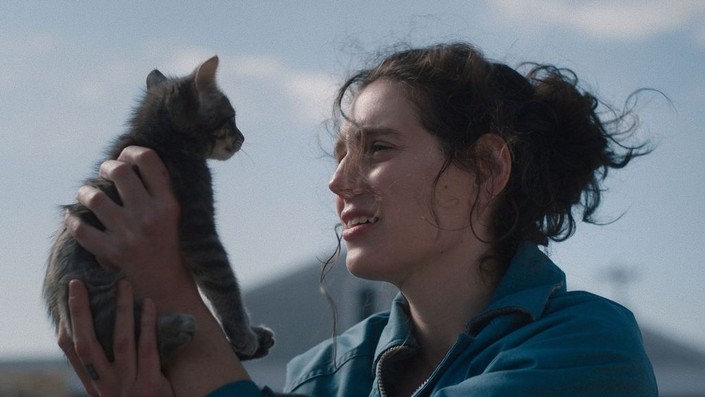
In her remarkable debut feature “Sorry, Baby,” writer, director, and star Eva Victor delivers a quietly devastating and deeply humane portrait of trauma, recovery, and the uneven process of healing.
The film centers on Agnes (Victor), a graduate student whose life is upended by a sexual assault. Rather than depicting the event directly, Victor focuses on the aftermath, the slow, often contradictory process of reclaiming a sense of self in the years that follow.
Set over a five-year period and structured nonlinearly, the narrative mirrors the fragmented nature of memory and trauma. The film moves fluidly between past and present, capturing the ways in which grief and resilience coexist. Victor’s direction is marked by restraint and emotional precision. She allows space for silence and ambiguity, trusting the audience to engage with the nuances of Agnes’s experience. It’s an astonishing accomplishment for a first-time director, and her future behind the camera is very bright.
As both filmmaker and performer, Victor exhibits a remarkable degree of control and vulnerability. Agnes is sardonic yet fragile, oscillating between self-protective humor and quiet despair. Her performance is grounded in emotional authenticity and stays free from sentimentality and melodrama. The supporting performances are equally strong, with Naomi Ackie bringing warmth and intelligence to her portrayal of Agnes’s candid, empathetic roommate Lydie, while Lucas Hedges offers sweet tenderness as a neighbor whose kindness underscores Agnes’s tentative re-engagement with the world.
What distinguishes the film is its refusal to sensationalize trauma. The assault itself is implied rather than shown (the way Victor frames this is chilling and has stuck with me for months), and the film’s focus remains squarely on its psychological and emotional repercussions. Victor’s screenplay captures the complexities of living after a sexual assault, from the dissonance between internal pain and external normalcy, the small rituals of survival, and the evolving dynamics of friendship and trust. Themes of power, gender, and social expectation are subtly woven subtly throughout, but they never overpower the grounded, human elements that make the film feel so heartbreaking.
The film sits somewhere between drama and comedy, balancing moments of dark humor with unflinching emotional truth. The story resists platitudes about moving on, and healing is accurately portrayed as a complex process that’s awkward and often frustrating. Thankfully, the film never feels hopeless, but honors the reality of what it’s like to live after a traumatic event.
At its heart, “Sorry, Baby” is a story about survival in the quiet persistence of everyday life. It’s a remarkably mature and empathetic film about friendship, womanhood, and the courage to keep showing up for yourself when no one else quite knows how to.
By: Louisa Moore
 Screen Zealots