
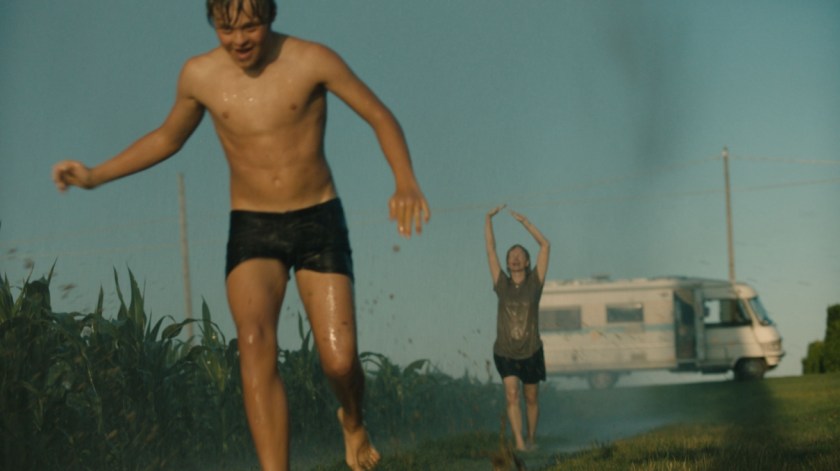
Zuzana Kirchnerová’s “Caravan” is a quietly devastating, tenderly observed debut that takes on the timely themes of motherhood, disability, and personal freedom with an honesty that’s disarming and deeply moving. This is a film that doesn’t immediately announce its power, but slowly builds it through quiet moments, aching silences, and the subtle unraveling of a woman on the edge.
The story follows Ester (Anna Geislerová), a single mother worn down by years of sole caregiving for her intellectually disabled teenage son, David (David Vostrcil). Hoping for a brief escape, she heads to a friend’s place in Italy. But when plans fall through, Ester is forced to bring David along, turning what was meant to be her own slice of peace and relaxation into a chaotic and emotionally charged road trip. As they travel in a borrowed, aging caravan through the Italian countryside, what unfolds is less of a traditional road movie and more of an emotional excavation that challenges Ester to reconsider who she is beyond the label of “mother.”
What makes this quiet film so effective is Kirchnerová’s incredible restraint and emotional insight. There’s no melodrama here, and no neatly tied resolutions. Instead, we get real life: the small tensions, the fleeting joys, the exhaustion, and that ever-present desire to escape not from your child, but from the suffocating, one-dimensional role society imposes on women (and especially parents of disabled children). Ester’s journey isn’t the naive rebellion of a teenager, but the deeply human search for a life that feels like her own.
The film’s slow pacing is tough to sit through, but it seems like a deliberate and rewarding choice that allows space for the story to breathe, (and for Ester’s fatigue and longing to truly land). The sun-drenched Italian landscapes mirror the emotional terrain and general melancholy that she’s navigating.
There’s also a surprising amount of warmth and humor woven throughout, particularly in the scenes involving Zuza (Juliana Olhová), a drifter who brings a much-needed brightness and connection into Ester and David’s world.
Kirchnerová, drawing on her own experiences as a mother to a child with autism and Down syndrome, brings an authenticity to the film that’s hard to fake. It’s clear this story comes from a deeply personal place, but she tells it with such poise and grace that it never veers into self-indulgence.
There’s also a quiet boldness in how the film questions the societal expectations placed on women, especially the assumption that perfect, selfless maternal love should override all personal needs and desires.
Grounded in social reality, “Caravan” is a film that understands the emotional complexity of motherhood in all its contradictions. This is not just another story about caregiving or disability, but one about identity, autonomy, and the quiet revolution of reclaiming your life.
By: Louisa Moore
 Screen Zealots