
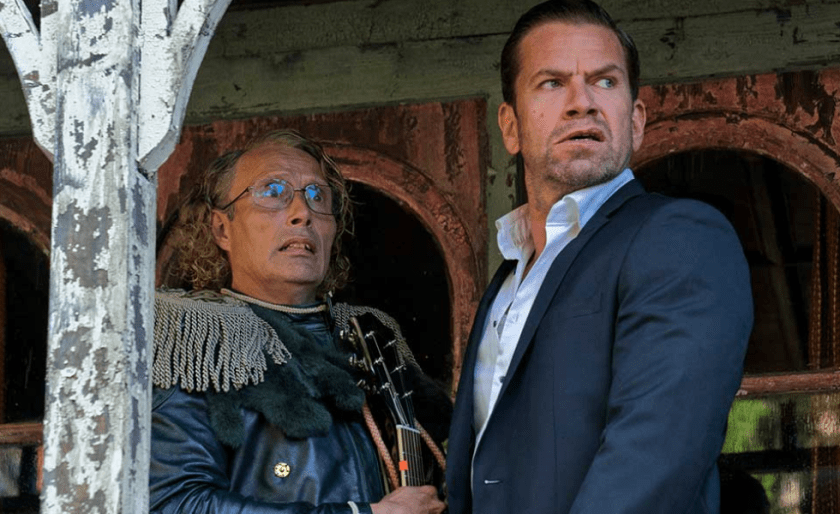
Director and writer Anders Thomas Jensen’s “The Last Viking” is a story that dares you to laugh at people you probably shouldn’t, then challenges you to care deeply about them anyway. With almost equal parts twisted comedy, sudden bursts of shocking violence, and surprisingly heartfelt character drama, this film delivers a whole lot of disturbing, brutal fun.
The film tells the story of two brothers reconnecting after spending years apart. Anker (Nikolaj Lie Kaas) is fresh out of prison after a bank robbery gone wrong, and his mentally ill brother Manfred (Mads Mikkelsen) is the only one who knows where the stolen money is buried. The duo embark on a road trip to their former family home to locate the loot that’s hidden somewhere in the vast woods.
Manfred has serious mental health struggles, including the belief that he’s John Lennon. Reality bends around his delusions in ways that are darkly funny, uncomfortable, and totally original. Things get even stranger as the people around Manfred just adjust their reality to fit his delusion.
That’s where the humor comes in, and it’s not the safe kind. You laugh, then immediately feel a little bad for laughing. The movie pokes at those parts of your brain where empathy and discomfort collide. Manfred’s delusions, his outbursts, and the absurdity of how others accommodate them create some truly bizarre, laugh out loud moments. But right when you’re thinking, “Should I really be laughing at this?” the movie hits you with a flashback to the brothers’ childhood (including disturbing scenes of them surviving with a drunk, abusive father) that reframe everything. Suddenly, their brokenness makes sense. The comedy doesn’t erase the pain, it grows out of it.
Mikkelsen deserves a lot of credit here. His portrayal of Manfred is layered and complex, and he’s funny, frustrating, and deeply sad, often all in the same scene. Kaas adds the counterbalance of menace and loyalty. You never forget that Anker is a dangerous man, but you also see his love for his brother and the unconditional bond of family.
The supporting cast is stacked with colorful misfits, a menagerie of criminals and oddballs with their own quirks and personal obsessions. None of them feel like throwaway characters; they each add texture to the world and help push the story along. The film has found family vibe that’s funny but also strangely comforting, even as the violence and absurdity escalate.
One of the movie’s best qualities is how tightly the story is put together. Jensen doesn’t waste time with loose ends, and every joke, every detour, and every flashback eventually ties back into the bigger picture. The flashbacks to Anker and Manfred’s childhood are not just there for shock value, but they explain the way these men turned out, why they cling to each other despite their dysfunction, and why they can’t quite let go of the past. By the time the film reaches its clever and satisfying conclusion, you realize just how carefully everything was constructed.
This film is not going to be for everyone. If your sense of humor is more on the safe or lighthearted side, it might feel uncomfortable or even offensive at times. The comedy comes from mental illness, trauma, and people behaving in ways that are definitely not “normal.”
But if you’re open to darker, riskier humor, you’ll probably find yourself laughing harder than you expect (and then caring more than you ever thought possible about these broken characters). That push and pull between laughter and empathy is exactly what makes “The Last Viking” work so well.
By: Louisa Moore
 Screen Zealots