
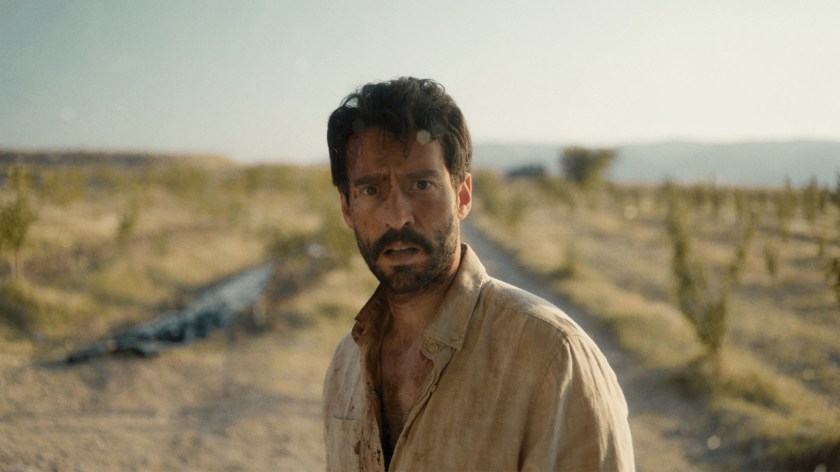
“The Things You Kill” is a quietly intense thriller that digs into some heavy themes like violence, patriarchy, trauma, masculinity, and what it really means to break free from the past. Written and directed by Alireza Khatami, the slow burn film has a psychological depth that packs one heck of a punch.
The story is simple and straightforward, but the emotional weight is anything but. University professor Ali (Ekin Koç) is haunted by the mysterious death of his mother. At home, he and his wife (Hazar Ergüçlü) are struggling with crippling infertility, which makes him feel like even less of a man. When a drifter (Erkan Kolçak Köstendil) shows up at his off the beaten track garden, Ali hires the man to help tend to things. Consumed by rage and a general darkness, he eventually enlists Ali in helping him get revenge against his abusive father.
Khatami crafts a tense atmosphere where the protagonist’s struggle with grief and masculinity takes center stage. He’s a man who can’t show weakness, trapped in a world where vulnerability is a luxury he can’t afford.
This is the type of film that’s less about what happens and more about what’s lurking beneath the surface. The narrative peels back layers of generational trauma, showing how cycles of violence and silence get passed down (especially among men). The film doesn’t rush to provide answers but instead slowly reveals the emotional burden of carrying these deep-rooted pains.
The performances here are really fantastic, clearly conveying an inner turmoil that is ready to boil over. Köstendil plays his role with a mysterious air and quiet tension, and Koç captures his character’s desperate need for revenge in a way that’s equally unsettling and heartbreaking.
Disturbing yet brutally honest, “The Things You Kill” doesn’t shy away from making the audience uncomfortable in its reflection of the cost of escaping from the past. Its portrayal of silence, violence, vengeance, and the burden of being a man in a world where emotions are meant to be buried offers a uniquely bold and timely perspective on generational horrors that so many are forced to carry.
By: Louisa Moore
 Screen Zealots