
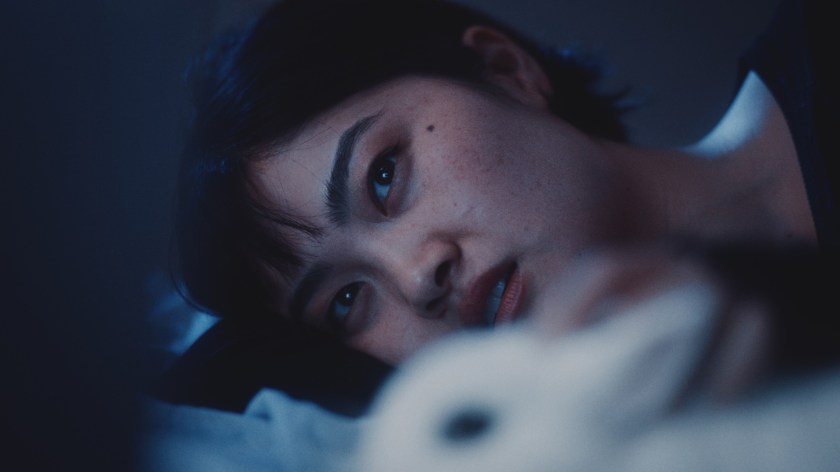
In her evocative debut feature “Bunnylovr,” writer, director and lead actress Katarina Zhu delves into modern themes of women’s autonomy, alienation, and the delicate complexity of family bonds.
The film offers an intimate exploration of Rebecca (Zhu), a Chinese American “cam girl” navigating both a toxic digital relationship with a mysterious client (Austin Amelio) and the bittersweet reconnection with her estranged, dying father, William (Perry Yung).
Zhu crafts a grounded and layered portrayal of Rebecca, who oscillates between the anonymity of online performances and the vulnerability of familial reconciliation. The film deftly balances Rebecca’s search for connection with the looming threats that come with online intimacy, highlighted by a chilling scene in a movie theater that nudges the narrative toward thriller territory without fully embracing the genre. This tonal shift injects tension into an otherwise meditative story, but this never becomes the type of movie you think it will be.
Zhu clearly has an empathetic, nonjudgmental depiction of sex work. She portrays it as a complex but normalized part of Rebecca’s life rather than a sensationalized plot device. She doesn’t shy away from alluding to the dangers that lurk in virtual spaces, maintaining a sense of unease throughout.
For those concerned about animals in the film, a cuddly white bunny named Milk is a major element of the story. He is put in a precarious situation that’s disturbing and may upset some viewers. He isn’t hurt or killed, though, so animal lovers can rest easy.
“Bunnylovr” succeeds in telling a raw, emotional tale about modern womanhood, fractured families, and the quest for authentic connection. This is a timely story of aimless youth and self-destructive behavior that’s done quite well.
By: Louisa Moore
 Screen Zealots