
Slow-burn period piece “The Devil’s Bath” takes a harrowing plunge into the darkest corners of the human psyche. Hauntingly crafted by Veronika Franz and Severin Fiala, this horror story is not so much a film to enjoy as it is one to endure. This is a slow, methodical journey into isolation, religious oppression, and mental deterioration that has an awful lot to say.
Set in 18th-century Austria, the film uses historical accuracy and emotional rawness to tell a disturbing, squirm-inducing story. Agnes (Anja Plaschg) is getting ready for married life with her beloved. She lives during a time where killing a baby gets a woman sentenced to death, but Agnes continues to pray for a child after multiple attempts to conceive prove fruitless. As her mind begins to grow darker inside this suffocating prison of marriage and disappointment, she has to wrestle with increasingly evil thoughts.
This is a feminist story of suicide by proxy that’s brought about by loneliness and societal expectations, and you can feel the weight of Agnes’ despair thanks to the intense, deliberate pacing and grim atmosphere. Her descent into madness is at first subtle but no less terrifying, and her eventual contemplation of violence feels both shocking and tragically inevitable. There are a lot of complex themes bubbling beneath the surface, and this is a film that demands to be studied and analyzed.
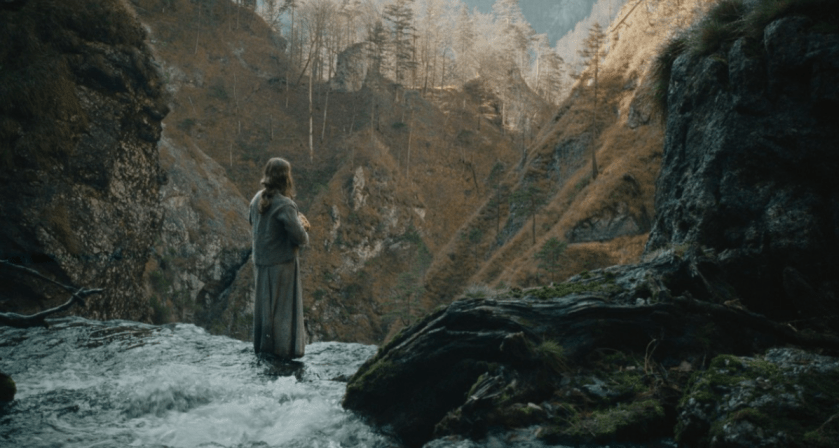
Visually, the film is quite effective. The muted tones and dark, shadowy interiors reflect the bleakness of Agnes’ world, while the rural Austrian landscape feels as foreboding as it is beautiful. Each frame is meticulously composed, drawing you in to the claustrophobic and oppressive life Agnes leads. The slow pacing allows the tension to build gradually, which makes the climax utterly devastating.
This isn’t a traditional horror film that relies on cheap jump scares. Instead, Franz and Fiala focus on the psychological horror that festers in the mind when someone is pushed to the brink by forces they cannot control. The film tackles heavy themes like the societal and religious oppression of women, mental health, and how historical institutions of power (particularly the church) shaped lives through fear.
Due to its unrelenting psychological torment, this is not a film for the faint-hearted. This is a story of inhumanity and a terrible lack of compassion, including a lead character whose body and mind are clearly not her own.
For those who appreciate slow-burn, art-house horror, “The Devil’s Bath” delivers a chilling, thought-provoking exploration of despair and inner darkness. It is a film that forces viewers to confront the unsettling realities of power, faith, and mental collapse.
By: Louisa Moore
 Screen Zealots