
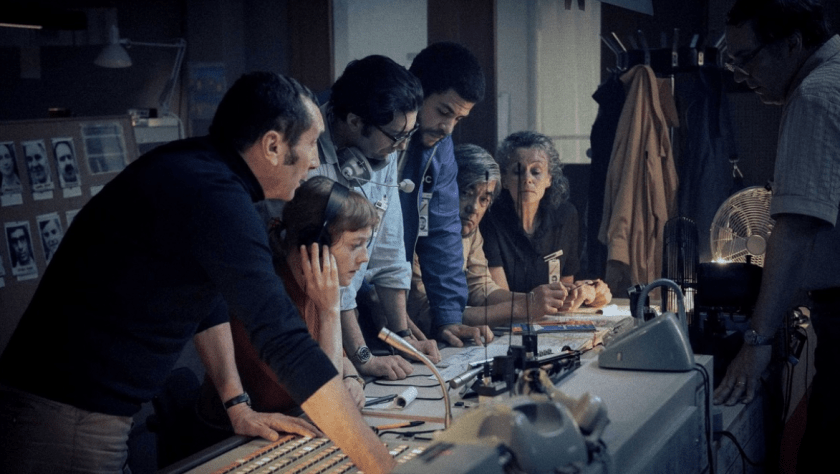
The hostage crisis during the 1972 Munich Olympics is an event that’s not only well know, but one that has been dramatized in several films over the years. With “September 5,” director Tim Fehlbaum takes a different approach to telling the story by shifting the focus from the incident itself to the media control room at ABC. It’s an angle that works well, as the narrative explores the behind-the-scenes tension and on-the-spot decision making that shaped television coverage of the tragedy. While the film’s unique perspective offers some fresh insights, it sorely lacks in the visual storytelling department. For this reason, it sometimes feels sluggish and overly talky.
When an American sports broadcasting crew finds itself thrust into covering a terrorist and hostage crisis involving Israeli athletes and coaches, the situation is extremely chaotic. Instead of focusing on the events unfolding in the Olympic Village, the story examines the frantic activities of the media’s production team as producers, technicians, and journalists scramble to manage the flow of information, making split-second decisions on what to air and how to shape the narrative. The story offers a fascinating look at the intersection of media, politics, and public perception in relation to one of modern history’s most well-known events.
While the film provides a unique viewpoint on the Munich crisis, it doesn’t quite succeed in bringing the story to life in a way that feels compelling or cinematic. The emphasis on voice-based communication (phone calls, radio communication, t.v. clips) may highlight the urgency and uncertainty of the moment, but ultimately detracts from the overall pacing and energy of the film. Audiences are kept at a distance and disconnected from the event at hand, especially as the conversations grow increasingly repetitive and stale. Those interested in the technical side of news reporting might find all this talking compelling, but it does take away from a great deal of emotional investment in the characters. Movies are designed to be a visual experience, and this one feels like it’s more suited to an audio drama or documentary format rather than a full-fledged feature.
Then again, this is a story about the journalists behind the scenes, and the movie does offer a look at the role of the media during times of crisis. The control room is depicted as a place of tension, where every word spoken over the phone or radio has the potential to influence public perception. The pressure on the crew to manage not just the technical side of broadcasting but also the ethical considerations of how to report the crisis is one of the more compelling aspects presented here.
If you’re interested in history or the world of broadcast journalism, “September 5” is probably worth a watch. It’s good but not great, and at least the storytelling approach gives the dialogue-heavy film a bit of a fresh perspective.
By: Louisa Moore
 Screen Zealots