
Diving deep into the life of opera legend Maria Callas (Angelina Jolie), director Pablo Larraín’s “Maria” is an undeniably striking biopic that’s also a bit of a mixed bag. The balance between the woman’s glamorous exterior and inner struggles feels a bit off, and the film paints Callas are more of a tragic figure than a fully realized person.
Set in 1970s Paris during Callas’ final days, the non-linear structure of the film jumps between flashbacks of her past and her quieter, more somber present. Callas is in a quiet decline as she reflects on her past loves, career triumphs, and the judgment she faced from others and most of all, herself.
The narrative leans heavily into melodrama, often veering into excessive sentimentality when hammering home the singer’s tragic fate. Callas certainly lived a complicated life, but the movie really piles it on so thick that it loses much of its emotional impact. It’s as if Larraín keeps reminding us, “Hey, isn’t this sad?” when we already get it.
The narrative focuses a lot on Maria’s toxic relationship with Aristotle Onassis (Haluk Bilginer) and her tough childhood. Jolie tries to show both Callas’ strength and vulnerability, but the script keeps pushing her into “damaged diva” territory, which gets a bit repetitive. That being said, Jolie is so immersed in her performance that she doesn’t just play Callas, she becomes her.
Showing an incredible dedication to her craft, Jolie actually sings and performs in the film. Her voice may be enhanced by some technical blending of Callas’ old recordings with her own, but seeing her strain during the act of singing makes all the difference to the authenticity of the film. Through her transformation into Maria, Jolie was clearly immersed in the role. It’s one of her strongest performances to date.
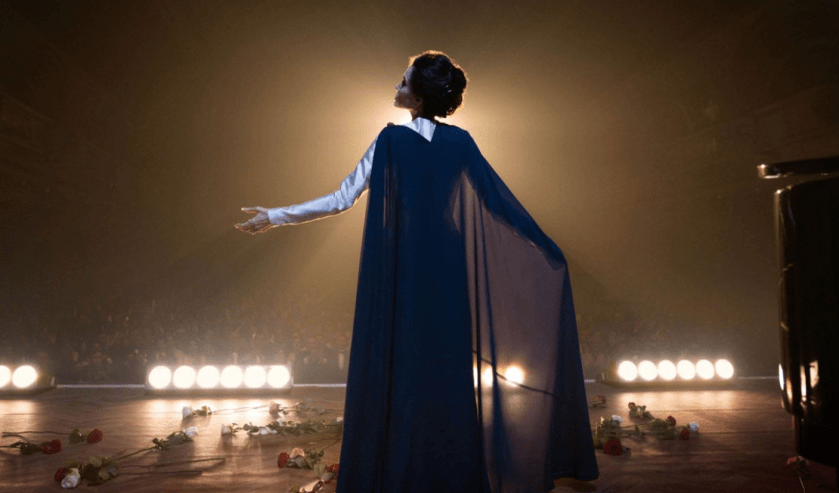
The film is beautifully shot as well, with Paris shown in a soft, nostalgia-filled light. The musical numbers and accompanying soundtrack provide the perfect pairing to the biopic, even when it gets too stagy.
The main reason “Maria” works is because Jolie gives it her all. Even when the movie gets a little too melodramatic, it’s hard not to be moved by her performance. The finished product offers an interesting, if somewhat uneven, look at a woman who lived for her art but struggled with everything fame brought her. If you enjoy dramatic biopics or have a passion for learning about artists, this film tells a story that’s worth knowing.
By: Louisa Moore
 Screen Zealots