
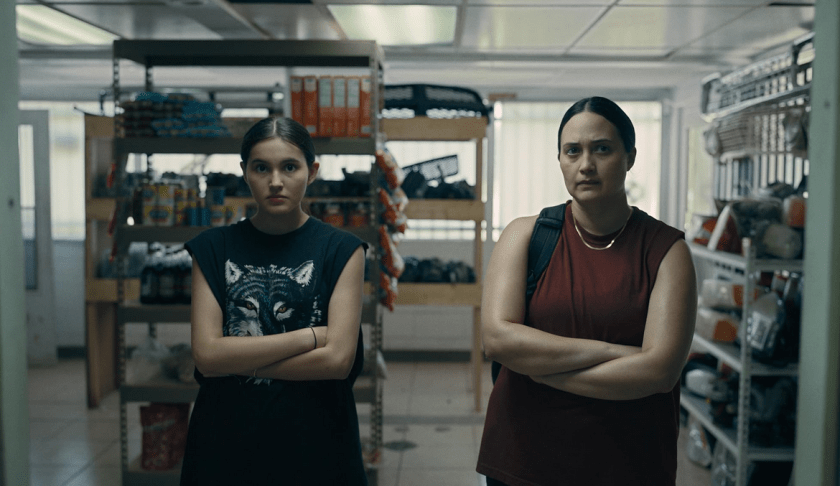
Set against the backdrop of the Seneca-Cayuga reservation in Oklahoma, “Fancy Dance” delivers a heartfelt exploration of family, resilience, and cultural preservation. Directed with nuance and sensitivity by Erica Tremblay, the film weaves together themes of love, loss, and the persistent fight for justice for Indigenous women.
After her sister’s disappearance, Jax (Lily Gladstone) has taken in her niece Roki (Isabel Deroy-Olson). With the risk of losing the teenager to her grandfather Frank (Shea Whigham) growing by the day, the pair embark on a journey through the backcountry with the hope of finding Roki’s mom in time for the family tradition: attending the state powwow.
On the surface, this is a fairly simple narrative that’s brought full circle with the more complex themes about the struggles faced by females in this smaller community. At its core, it’s a story of two women who are doing everything they can to keep their fractured family together. The characters are each strong in their own way, and Tremblay weaves the epidemic of missing and murdered Indigenous women into the fabric her film. The inclusion of this social issue never feels forced or preachy, and the focus remains on the relationship between Jax and Roki.
One of the film’s greatest strengths is how it presents Indigenous culture with respect and authenticity. The story honors the powwow traditions while the portrayal of the Seneca-Cayuga community feels lived-in and real. There’s a subtle beauty in the way the film balances cultural specificity with universal themes of family and survival.
The restrained nature of this highly personal film complements its overall poignancy, and it’s where “Fancy Dance” finds most of its power. This female-centered story of survival, love, and cultural perseverance is not only a reminder of the harsh realities Indigenous women face, but also a celebration of their strength, resilience, and enduring connection to their heritage.
By: Louisa Moore
 Screen Zealots