
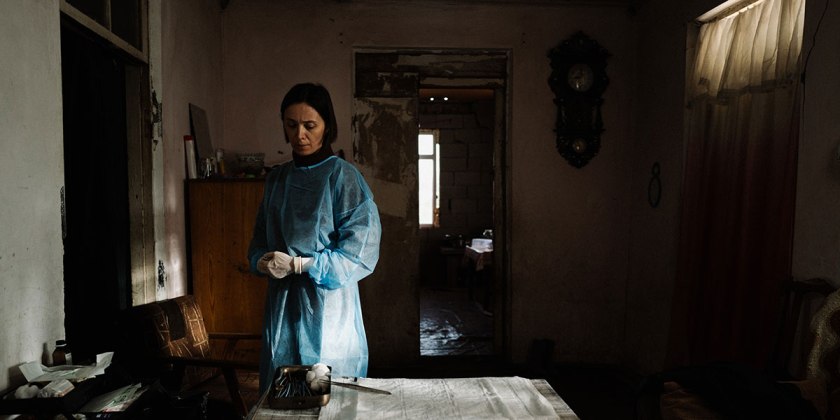
When it comes to difficult, challenging movies that demand to be seen, writer / director Dea Kulumbegashvili’s “April” has to be near the top of the list. This stark and contemplative exploration of a woman’s struggle to maintain her personal integrity while continuing her mission to keep abortions safe for those who desperately need them is important, powerful, and significant.
Set in the countryside of eastern Georgia, the film tells a the painfully intimate story of Nina (Ia Sukhitashvili), an obstetrician who lives a secret life that consists of a genuine public service: her clandestine performance of illegal abortions. When a baby dies under her care shortly after delivery at the hospital, it opens up an investigation that puts Nina under a great deal of unwanted scrutiny. Not wanting to stop giving medical aid to the area’s most desperate women, the pressures mount and the stakes are raised.
Kulumbegashvili has crafted a portrait of a woman who embodies strength, as Nina grapples not so much with ethical and moral dilemmas, but the harsh judgment from a society that doesn’t take kindly to independent females. As the character puts it so eloquently, “no one wants to do abortions, but someone has to do it.” It’s powerful to hear that in today’s current political climate, a tumultuous time where women’s rights are endangered or being stripped away across the globe. This film makes the statement that women should be in control of their own bodies, be it sexuality, motherhood, or birth control.
Kulumbegashvili places an emphasis on visuals and atmosphere rather than her narrative, which makes the film feel slow and ponderous. There are many quiet, reflective, and drawn-out scenes without any dialogue or action. The film indulges in extended shots of driving down endless roads, staring out windows at thunderstorms, and admiring fields of flowers. These contemplative shots create a brooding and atmospheric tone that emphasizes Nina’s isolation, but this style also feels irritating and repetitive.
The film does not shy away from provocation, including a very graphic opening scene of actual childbirth and another intense scene of Nina performing an abortion on a mentally challenged young woman. In the case of the latter, it’s what you don’t see that’s so effective. Depicted with unflinching realism, it’s the sounds and the static camera that make this in-your-face scene so highly effective. There are a lot of elements at play that make this a very, very tough and challenging film, but viewers who are prepared to engage with the demanding style and subject matter are in for a powerful, emotional experience.
By tackling weighty issues of morality, personal sacrifice, and the fight for women’s autonomy, “April” cements itself as a significant and timely work.
By: Louisa Moore
 Screen Zealots
Perfect timing. Men can outlaw abortion but they will never stop it. We’ll just have dead women so they can be satisfied with that.
LikeLiked by 1 person