
Director Malcolm Washington’s adaptation of August Wilson’s Pulitzer Prize-winning play “The Piano Lesson” brings the rich cultural tapestry of the original work to the screen with mixed results. As a film adaptation of a thematically complicated stage play, it grapples with the inherent challenges of translating a deeply theatrical experience into a cinematic format. Washington succeeds in some areas but falls short in others.
Set in Pittsburgh during the mid-1930s, the film centers on the Charles family and their heirloom piano, intricately carved with the faces of their enslaved ancestors. The central conflict arises when Boy Willie (John David Washington) wants to sell the piano to purchase the land where his ancestors were enslaved, while his sister Bernice (Danielle Deadwyler) is adamant about keeping it despite never daring to play it. The tension between preserving cultural heritage and seeking personal advancement drives the narrative, underscored by the haunting presence of a ghost from the past.
Wilson’s play deals with heavy themes like grief, hope, and history, while his characters confront and literal and figurative ghosts of a very painful family past. There are a few supernatural and spiritual elements thrown in that add excitement to the story, but most of the film is dry and talky in a way that feels exactly like sitting in a performing arts theater.
The performances, while passionate, sometimes veer into theatricality that feels excessive on screen. The actors (with an impressive supporting cast that includes Ray Fisher, Corey Hawkins, Stephan James, and Samuel L. Jackson) sometimes deliver their lines with the kind of grandeur that’s better suited to a stage production (and feel overdone here). The exaggerated gestures and vocal inflections seem out of place in a more intimate film setting. This overemphasis on dramatic expression occasionally undermines the naturalism that might have better served the film’s emotional depth.
The dialect work, including the frequent use of the “n-word,” adds authenticity to the characters’ interactions but can feel uncomfortable and jarring to modern audiences. That’s surely part of the point, but this authenticity is a double-edged sword, grounding the film in its cultural context while also highlighting the challenges of addressing sensitive historical and social issues on screen.
Washington’s feature directorial debut demonstrates a clear affection for the source material, and the film’s visually striking and emotionally resonant ending showcases his ability to capture profound moments on screen. The symbolic and powerful climax stands out as a high point because it’s really well done, even if the idea of battling real ghosts while exorcising long-buried emotional demons may feel a bit corny to some viewers.
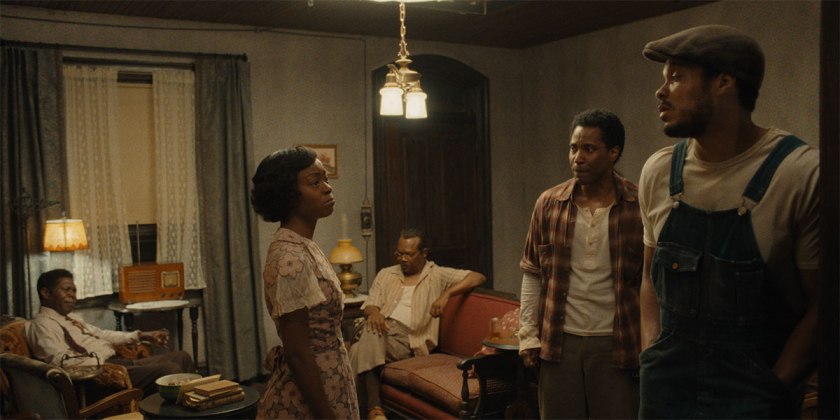
Most of the time, however, the film struggles with its transition from stage to screen. The story is primarily set within the confines of the Charles family home, which feels static, claustrophobic, and overly talky. The dialogue-heavy nature of the play translates to a slow-paced narrative that can feel drawn out in a cinematic context. The film’s tendency to linger on conversations, familial conflict, and its reliance on long, extraneous scenes all contribute to a sense of sluggishness.
“The Piano Lesson” is a film that might be more appreciated by those already familiar with Wilson’s play or those with a deep interest in African American cultural heritage. Washington does his best to make his film approachable, but the stagy quality combined with slow pacing causes this one to feel like a burden.
By: Louisa Moore
 Screen Zealots