
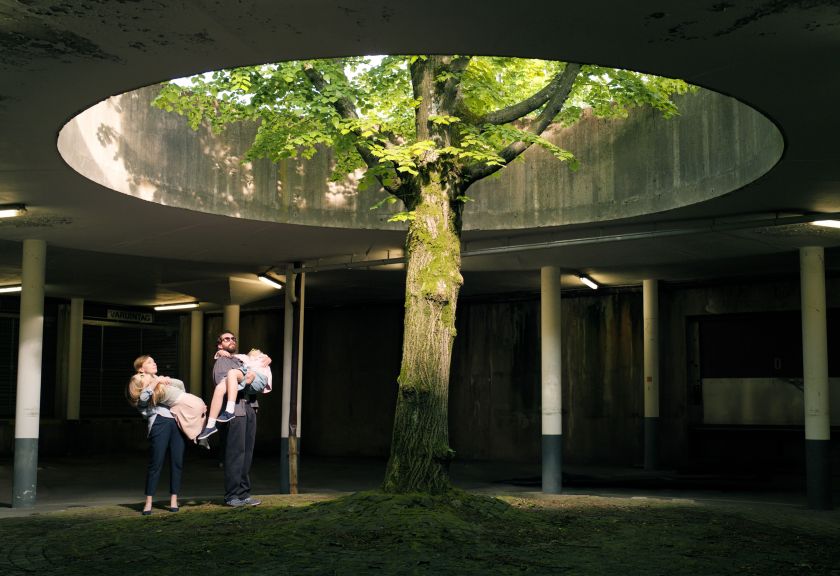
The hushed intensity of director Alexandros Avranas’ “Quiet Life” is underscored by subtle dark undertones that blend mild sci-fi and horror elements in its exploration of the human cost of a broken immigration system. Told through the lens of a family caught in a web of trauma, despair, and resilience, the film provides a viewing experience that is as emotionally taxing as it is compelling. This one will stick with me for a long time.
Seeking political asylum in their search for a better family life, Sergei (Grigoriy Dobrygin) and Natalia (Chulpan Khamatova) have fled to Sweden with their two young daughters, Katja (Miroslava Pashutina) and Alina (Naomi Lamp). Stuck in the wheels of a system that seems set up to keep them down, their hopes are cruelly dashed when their asylum application is rejected. This plunges the family into a desperate struggle for survival, especially as their situation takes a chilling turn when their youngest daughter falls into an unexplained coma and is diagnosed with a condition known as Resignation Syndrome.
The story becomes even more disturbing when it’s revealed that the film is loosely based on true events. Apparently hundreds of refugee children in Sweden have also been given the same diagnosis, a phenomenon that Avranas, for lack of a better word, exposes through his film. It’s an effective way to bring the issue to the forefront while taking a strong stand against the current immigration systems across the globe.
The film features a roster of great performances, particularly from Dobrygin and Khamatova, who bring depth and raw emotion to their roles. Their portrayal of parents struggling to protect their children in an indifferent world is both heartbreaking and powerful. Pashutina and Lamp also deliver strong performances in their supporting roles, capturing the innocence and vulnerability of children caught in a nightmare they cannot comprehend.
There’s a general sense of unease that pulses throughout the film, and Avranas’ genre-blending complements the stark realism of the story. His film offers a unique twist on the harsh realities that many seeking asylum face, from the dehumanizing effects of bureaucratic indifference to the hope and strength that comes from having your family by your side.
“Quiet Life” challenges audiences to confront the uncomfortable truths about the refugee experience, from the moral implications of a system that doesn’t protect the most vulnerable to the generic lack of empathy that feels so cold and harsh. This is an emotional rollercoaster of a film that demands to be seen.
By: Louisa Moore
 Screen Zealots