
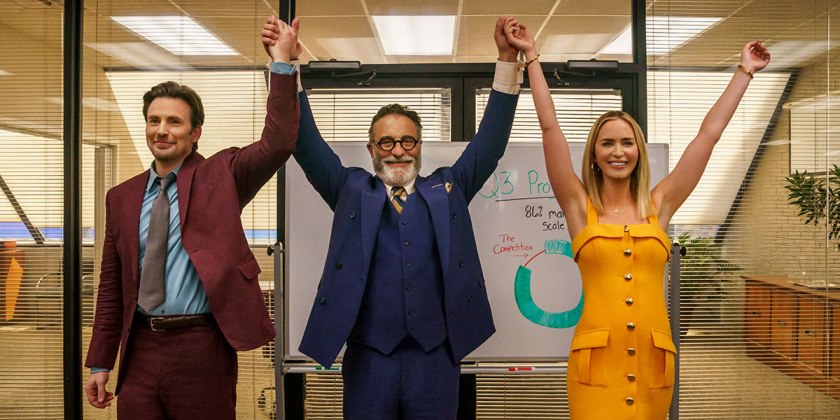
Trying to make a film about the marriage of big pharma and unchecked greed an entertaining venture couldn’t have been an easy task for director David Yates, but his success in doing so with “Pain Hustlers” also becomes the movie’s downfall. This is a story about awful people doing awful things, with characters that you simply cannot root for and whom you like even less as the story progresses. It’s slick to a fault, with a style and tone that lands somewhere between “The Big Short” and “Wolf of Wall Street,” and despite some fun performances, this is a movie that starts out with a strong potential only to blow it by the second half.
Based on the book by Evan Hughes, the film tells the story of Florida single mom Liza (Emily Blunt), a blue collar worker who has just lost her job, car, and residence. After moving into an extended stay motel with her daughter (Chloe Coleman), she has a chance meeting with pharmaceutical sales rep Pete (Chris Evans), who halfheartedly extends an informal job offer. With nowhere else to turn, Liza pays Pete a visit at his office. Without any formal experience, she’s hired on the spot by Pete and his unhinged boss (Andy Garcia), which sets in motion a venture down a shady path of legal drug peddling.
The story is one of desperation and greed, as these drug reps unwittingly help kickstart the opioid epidemic in America. The allure of money becomes too much to bear, as Pete and Liza find it increasingly easy to engage in unethical (if not technically wholly illegal) sales tactics. From offering monetary kickbacks to sketchy physicians who will write prescriptions for their brand of medication to paying for food, booze, and trips under the guise of “speaker programs,” the playbook operates like a well-oiled machine. It’s a crooked system that rewards people for straddling a gray line, with the ultimate game of seeing how close they can get to pushing ethical boundaries without going over. It’s portrayed as easy money and even as an enjoyable way to get rich quickly, which is highly problematic.
In order for the characters to justify their methods and behavior, Liza and Pete tell themselves that they are doing good work by helping patients deal with their pain. They’re getting a fast-acting drug into the hands of people “who really need it.” This is an industry that’s driven by money and greed that runs on a system of bribery and corruption. You can feel it’s all going to end badly, even when the film pushes the glamorization of this life a little too far.
The messaging here is thorny and the film seems confused with its own intentions, especially as the hundreds of thousands of people who have died from opioid addiction in this country is pushed aside in favor of a story about the reps because hey, look at this exciting life where you can get rich by indirectly inflicting suffering on others by making it so easy for them to become addicted to pain killers. I understand the employees of pharmaceutical companies may be the focus of the film, but the lighthearted and glib attitude in which the story is presented is extremely off-putting.
This is a whopper of a problem.
Despite engaging, enjoyable turns from Blunt and Evans (two well-known actors who are playing against type) and compelling storytelling (at least in the film’s stronger first half), it’s the main reason why it just doesn’t feel right to recommend “Pain Hustlers.”
By: Louisa Moore
 Screen Zealots